WARNING: This product contains nicotine. Nicotine is an addictive chemical.
WARNING: This product contains nicotine. Nicotine is an addictive chemical.
NEWSLETTER
Get special offers and find out what's new in the store. Sign up for the EV newsletter.Posted: June 08, 2025

In our previous blog post, we covered the basics of cigar shapes, sizes, and colors. Now, you’ve picked up a few cigars — maybe out of curiosity, or based on a trusted recommendation from a friend or seasoned tobacconist. You’re ready to light up, lean back, and enjoy the moment.
However, you've forgotten that you don’t actually know how to cut or light your cigar.
Before you can sink into the ritual of relaxation, you must remember two things that stand in your way: the cut and the light.
For the uninitiated, cigar cutters and cutting your cigars can be scary. Go too deep, and the cigar will unravel. Don't go deep enough, and the cigar will have a lackluster draw that clogs easily, preventing the glorious smoke from washing over your palate. However, cutting cigars shouldn't be intimidating. Instead, it's part of the ritual, letting users find their personal preference as there is quite a few ways to cut a cigar.
With just a bit of guidance — and a steady hand — you’ll be savoring smooth draws and even burns in no time.
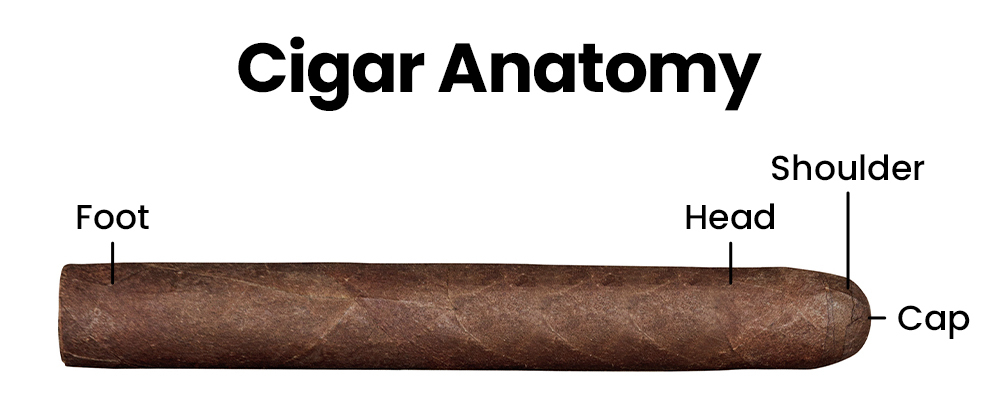
Cigars can be surprisingly simple in their anatomy. With just four main parts — the cap, head, shoulder, and foot — understanding their function is essential for anyone looking to cut and smoke properly. Knowing where each part begins and ends will help you make a clean cut, achieve a smooth draw, and fully appreciate the experience.
Let’s break them down:
Understanding these four parts isn’t just fun cigar anatomy trivia — it’s functional. When you know where to cut (and where not to), you protect the cigar’s integrity and unlock the draw and flavor it was crafted to deliver.
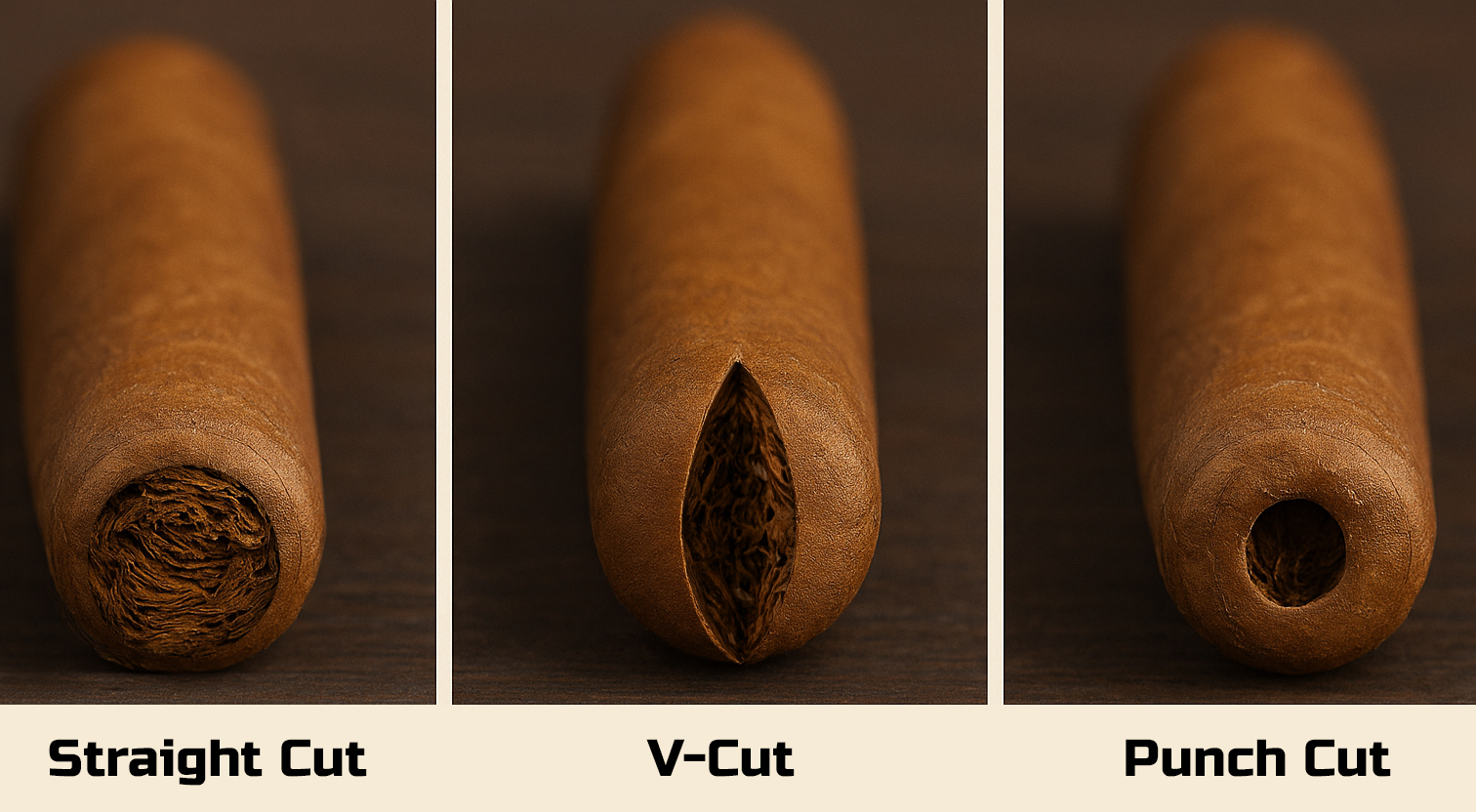
Before you find tools to cut your cigars, lets look at the types of cuts that can be done and how they affect your experience. With three main types, users can find the method that suits the cigar and style of smoking they prefer. The most common cuts are:
Each type of cut offers a different experience — from the wide, airy draw of a straight cut to the concentrated intensity of a V-cut or the tidy control of a punch. Your choice depends on the cigar you’re smoking, your personal draw preference, and how you like your flavor delivered. Now that you know what kind of cut you're aiming for, let’s look at the tools that make it happen — and how to use them correctly.
| Tool | Delivers | Best For |
|---|---|---|
| Guillotine Cutter | Straight Cut | Almost all cigars, especially Parejos |
| V-Cutter | V-Cut | Robustos, Toros, thicker cigars |
| Punch Cutter | Punch Cut | Firmer, large-ring cigars |
| Scissors | Mostly Straight | Precision, large cigars |
While proper cutters are always preferred, there are a few exceptions — and emergency solutions. For example, pigtailed cigars (those with a twisted nub at the cap) are often designed for simplicity. In a pinch, you can gently tear or rip off the tail with your fingers — no cutter required — and still enjoy a decent draw.
And yes, some old-school smokers bite the cap off. While this rugged method has its place in cigar lore, it’s best reserved for moments of true necessity — like when you’re stuck on a golf course with no tools in sight. Biting risks damaging the wrapper or pulling loose filler into your mouth. If you must do it, be gentle and deliberate, using your front teeth as the cutting blades of a guillotine cutter.
When possible, reach for a cutter. But if you’re caught without these useful cigar accessories, a little know-how (and a light touch) can still get you through the ritual.
| Lighter Type | Notes |
|---|---|
| Butane Torch | Precise and odorless. Ideal for outdoor use and even burns. |
| Soft Flame (Match/Bic) | Traditional, elegant, and gentle. Great indoors. Wind can be a challenge. |
| Cedar Spill | A refined throwback to old-world cigar culture. Burns clean, smells fantastic, and elevates the ritual. A nod to tradition. |
| Candle, Zippo, BBQ Lighter | Avoid — these use fuels or additives that taint the tobacco’s flavor. |
The flame you choose is more than just a tool — it's the first impression your cigar gets. Whether you go for the precision of a butane torch or the elegance of a cedar spill, the right flame respects the cigar’s craftsmanship and sets the tone for the entire experience. Now that you’ve selected your spark, it’s time to learn how to use it with patience and purpose. Up next: the lighting ritual itself — from toasting the foot to that perfect, glowing cherry.
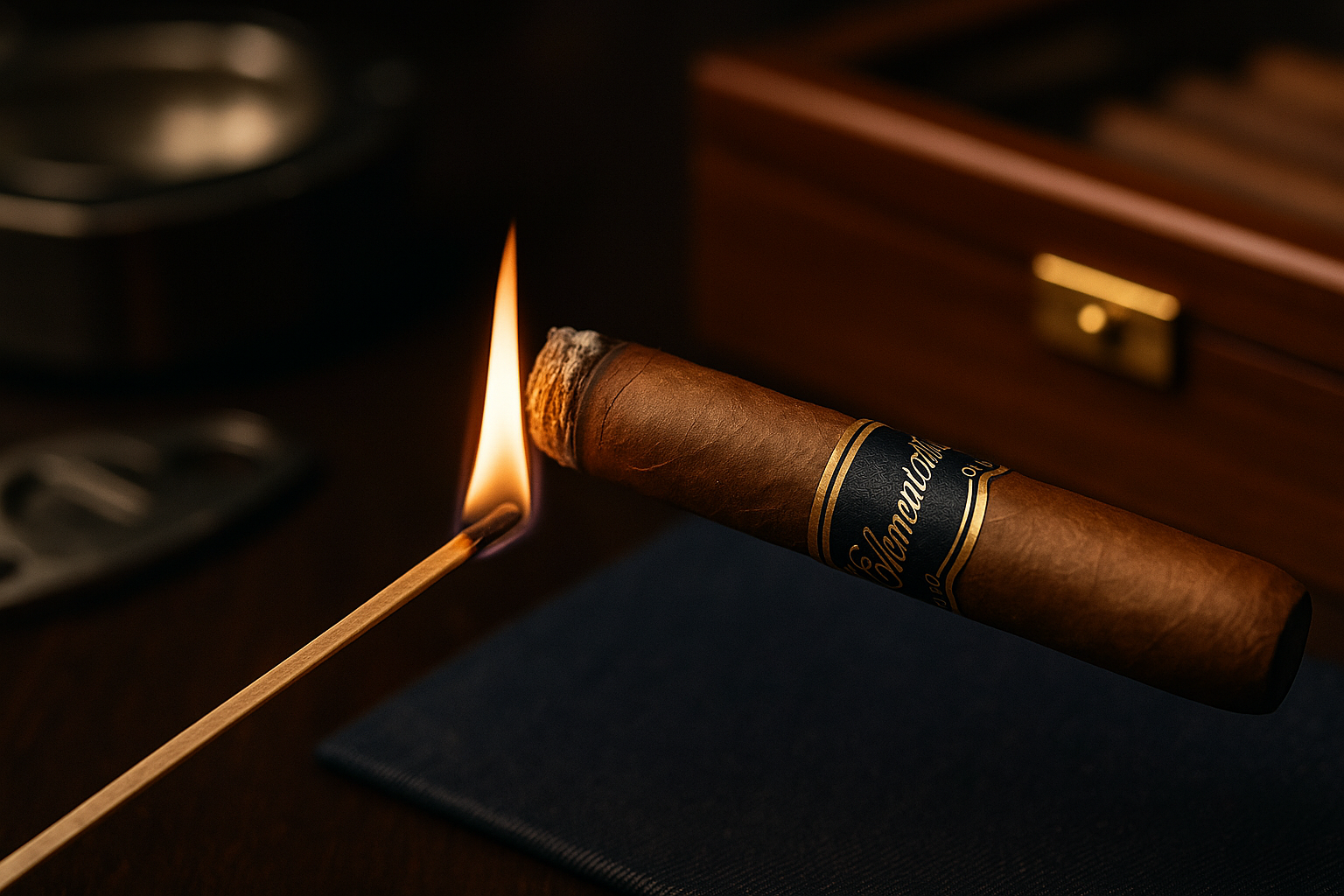
Before the first draw, there’s a quiet moment — a pause where the ritual begins. You’re not lighting a fire; you’re waking a cigar. A gentle toast sets the tone, easing the tobacco into bloom without rushing the process.
Now here’s how to do it right:
This step may feel subtle, but it’s essential. A well-toasted foot means a cleaner light, a straighter burn, and a far more enjoyable smoke.
This is the moment where it all begins — the quiet spark that brings the cigar to life. You’ve laid the groundwork with a proper toast. Now, it’s time to seal the ritual with purpose and patience.
Here’s how to light with control and care:
Raise the cigar to your lips and position the foot just above the flame — close enough to feel the heat, but never letting the flame touch the leaf.
Take slow, steady puffs while gently rotating the cigar. This helps draw the heat inward, igniting the filler evenly.
Watch the foot carefully as it glows. You're looking for a bright, even cherry across the entire surface.
If one side falls behind, re-toast gently to balance the burn — but avoid overexposing any area to direct flame.
Remember, you’re not torching a stick — you’re inviting the cigar to open up. A thoughtful light rewards you with symmetry, richness, and that perfect first billow of smoke.
Cutting and lighting aren’t just tasks — they’re the opening notes of the cigar experience. The draw, the aroma, the slow unfurling of smoke — it all begins with thoughtful preparation. As you become more comfortable with different cuts and flames, you’ll start to discover the pace and process that feel like your own.
Cigar smoking was never meant to be perfect. It's not a science. It’s meant to be present. It's meant to be artful. It’s about slowing down, tuning in, and savoring every nuance with intention.
So whether you're striking a match or lighting a torch, using a punch or a deep V — remember, this isn’t just a step. It’s your ritual. Make it meaningful to you.
0 Comment
Brandon is an eclectic creative into modified cars, cigars, and sneakers, with a background in cannabis culture as a strain reviewer. Off the clock, he’s usually at a hole-in-the-wall spot you haven’t discovered yet, ordering more than he should.
Latest