WARNING: This product contains nicotine. Nicotine is an addictive chemical.
WARNING: This product contains nicotine. Nicotine is an addictive chemical.
NEWSLETTER
Get special offers and find out what's new in the store. Sign up for the EV newsletter.Stepping into the world of cigars can be both intoxicating and overwhelming. With so many different brands, shapes, sizes, and wrapper colors available, it's easy to feel lost in the humidor in regards to cigar anatomy. But fear not — decoding cigars is part of the pleasure. Let’s demystify the essentials so you can confidently enjoy and appreciate each cigar in respect to its characteristics.
Cigars come in a myriad of forms. From a twisted braided cigar to behemoth chunky cigars, each size comes with its own tidbit of culture or history. But behind the variety, cigars fall into two categories: Parejo and Figurado. These terms help describe to novices how a cigar looks, but to the initiated, it does more than that. The vitola also reveals how the cigar burns, how it feels in the hand, and even potentially affecting its flavor.
So sit tight, and lets break down what makes a Parejo, a parejo - and how Figurados stand apart.
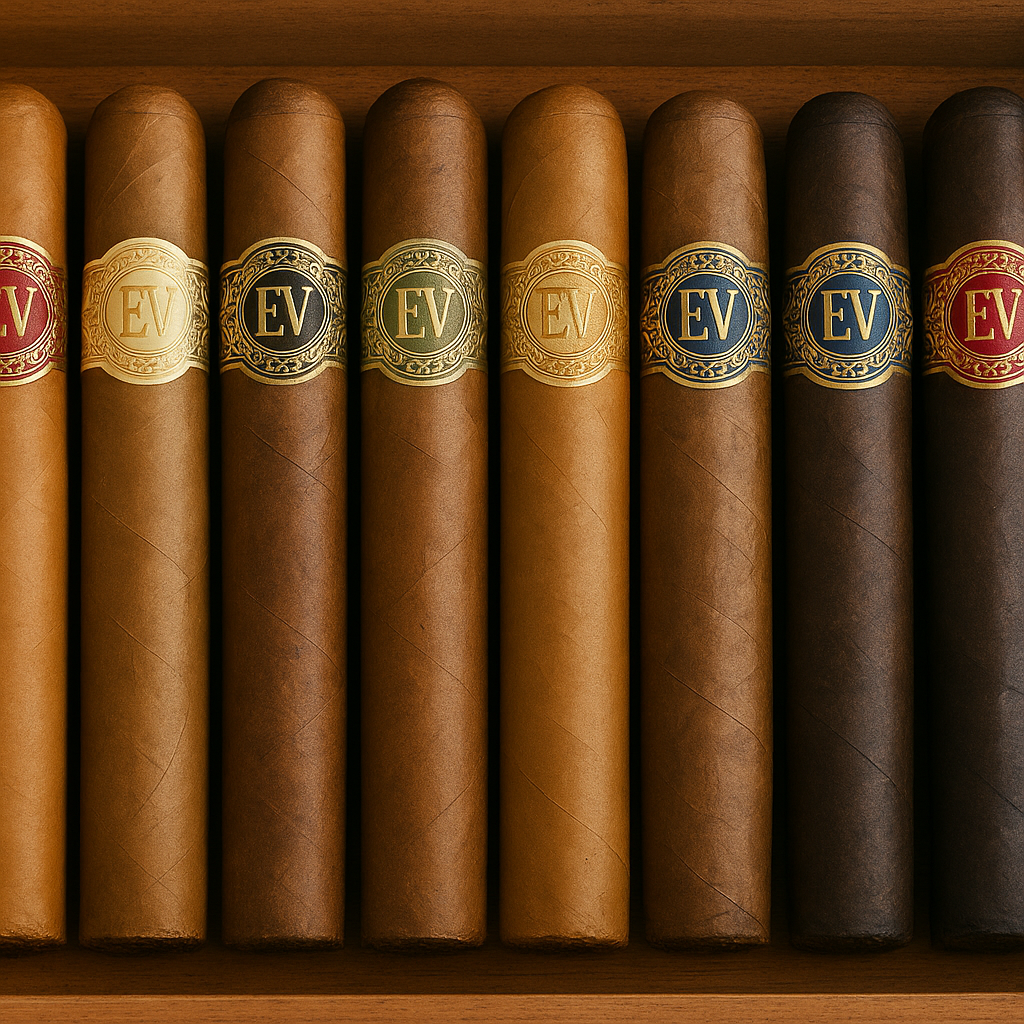
These are the most common and familiar shapes. Think of cigars with a smooth cylinder, a rounded head, and a straight body — like the robusto or corona. Parejos are typically cut at the cap (the rounded end you place in your mouth) before lighting the foot (the open end you ignite).
Examples: Robusto, Corona, Churchill
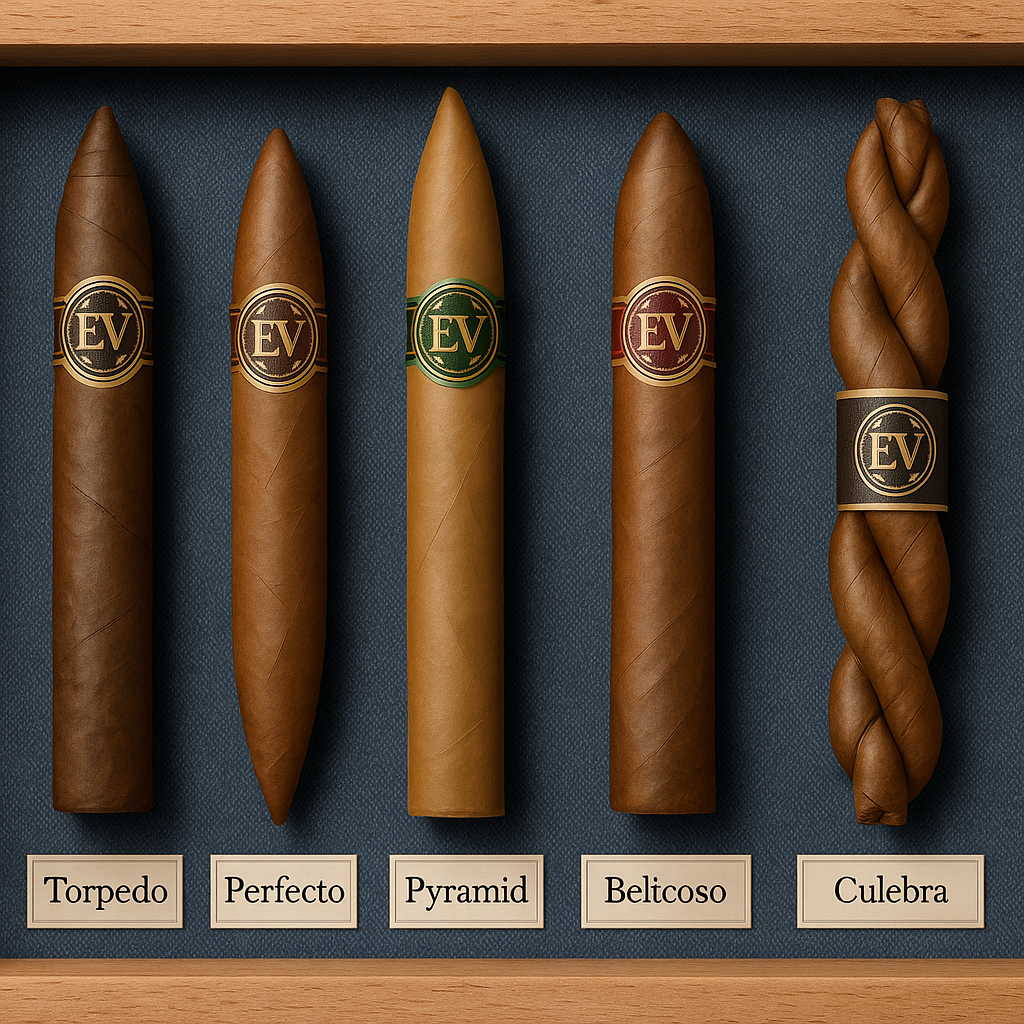
These cigars break the mold — literally. They have unusual shapes like pointed tips, bulging centers, or twisted ends. Figurados are often more eye-catching and usually require more skill to roll.
Examples: Torpedo, Pyramid, Perfecto
One especially unique Figurado is the Culebra (Spanish for “snake”). It’s made by braiding together three slim, underfilled cigars — typically panatelas — and tying them with ribbon or bands. The result looks like a twisted rope of tobacco.
You may hear people say that Culebras were originally made for factory workers, who could discreetly take one stick per day from the twist to smoke during their shift. It’s a popular story, but more cigar legend than confirmed history — there’s no clear evidence behind it, just whispers through the grapevine.
Today, Culebras are a novelty — more rare, more decorative, and fun to share.
PROTIP: Each cigar is meant to be unraveled and smoked individually, not as a bundle. If a seasoned cigar smoker is telling you otherwise, they are playing a fun joke on you!
Cigar size matters — not for strength, but for duration and flavor expression.
While there’s no universal standard, some common formats include:
Keep in mind that a longer, thinner cigar burns hotter and may deliver a harsher experience, while a shorter, thicker one tends to burn cooler and slower, blending together the various layers. Check out our blog "Wrapper Geometry: Thinner vs Thicker Cigars" for more information about how size affects flavor. There are over 50 accepted names for the variety of shapes and sizes that cigars come in.
Cigar wrappers aren’t just aesthetic — they influence taste and character. There are more than 50 recognized wrapper shades, but most fall under these general categories:
While darker wrappers may look stronger, they don’t always translate to higher nicotine content. It’s more about the flavor complexity and fermentation. Longer fermentation darkens the leaf and draws out natural sugars, which adds depth to flavor without necessarily making the cigar stronger. These factors help influence cigar flavor profiles.
Cigars aren’t about rushing. They’re about slowing down and enjoying the moment — whether you’re celebrating something or just unwinding after a long day. And like anything worthwhile, it takes a little learning to fully enjoy them. We are hoping this cigar guide for beginners will help accelerate the process.
Cigar smoking is a ritual — and knowledge enriches the experience. Understanding the interplay between shape, size, and wrapper color lets you explore cigars not just as a luxury, but as a language. Whether you’re savoring a petite corona on a quick break or nursing a long perfecto into the evening, each cigar tells a story. Learning how to choose a cigar can be difficult to the uninitiated, but now you’re ready to read between the lines — and the leaves.
Start with a few mild, medium-sized single cigars. Consider keeping a journal or notes of each cigar and your experience. Ask questions. And most importantly — don’t be intimidated. Find a couple cigars that you enjoy, potentially grabbing a cigar box of your favorites. Every cigar aficionado started exactly where you are right now.
PROTIP: Smaller vitolas and cigarillos can satisfy those looking for a quick smoke.
Understanding that the best cigar isn't always the best rated cigar. It's the cigar that fits YOUR moment. Whether you find relief in solitude or happiness with the crowd, your preferences is ultimately what matters. The ritual, the aroma, and the slow unwind - that's where the magic lies.
So go ahead: light up, lean back, and enjoy yourself as we begin our journey into the flavorful world of refined cigars!
0 Comment
Brandon is an eclectic creative into modified cars, cigars, and sneakers, with a background in cannabis culture as a strain reviewer. Off the clock, he’s usually at a hole-in-the-wall spot you haven’t discovered yet, ordering more than he should.
Latest