
Lighting a cigar is one of the more dapper parts of the smoking experience. At its essence, it's ritualistic: the dry puff, the ignition of the torch, and the toasting of the foot. There's technique in the lighting process, and it matters even more for the taste and aromatics of the session.
Without a proper light, you'll miss the layers and complexity your cigar has to offer. In other words, your smoke will fall flat. A flat smoke is not what you deserve. As an aspiring aficionado, you gotta get your lighting technique down.
So ditch the uneven burn and bitter taste, and get back to good vibes with proper cigar lighting methods.
Choosing and Cutting Your Cigar
Choosing a cigar cutter is part one of the smoking process. Cutters go hand in hand with lighters and torches, and there are even kits like Montecristo 1935 Anniversary Cutter and Lighter Set and the Alec Bradley Lighter Cutter Gift Set, that bundle all the accessories you need in one package.
The three main cutters to know are the guillotine, the punch, and the V-cut. For a full breakdown of which one to get, check out our cutter guide. Whichever you choose, cut above the shoulder of the cap so the wrapper doesn't unravel. You only need to take off a smidgen, so don't overdo it.
Cutting your cigar is arguably just as essential as lighting it. A good cut preserves the flavors of the tobacco leaf and keeps the cigar in top shape. Here's how the three compare:
- Guillotine: The most versatile option that works on a wide variety of vitolas.
- V-cut: Cuts a wedge into the head, which concentrates the draw, and is a good choice for thicker cigars.
- Punch: The most portable option, since it's small enough for a keychain. It works best on cigars with a rounded head.
Taste Before You Torch
Before you light up, there are a few things you should do to get the most out of your stogie. Dry puffing, also known as a cold draw, is one of the key steps to understanding what's in your hand. The mechanics are simple: start by slicing the cap with your favorite cutter. Then bring the cigar to your lips and take a slow, gentle draw to appreciate the flavor before it's lit. It's a preview of what the session will be like and offers some insight into the flavor profile of the tobacco blend.
The cold draw also tells you how the cigar will smoke. If the draw is too tight, expect a frustrating session. If it's too loose, expect a hot, fast burn.
You may detect flavors like cedar and wood, which may differ widely from the palate once lit or may be similar. Skipping the dry puff is like skipping the aperitivo before a meal.
Choosing Your Flame: Torch vs. Lighter vs. Match
And if the dry puff is the aperitivo, then choosing a torch is picking how the main course gets cooked. The flame you use shapes everything that follows, so it's worth choosing carefully.
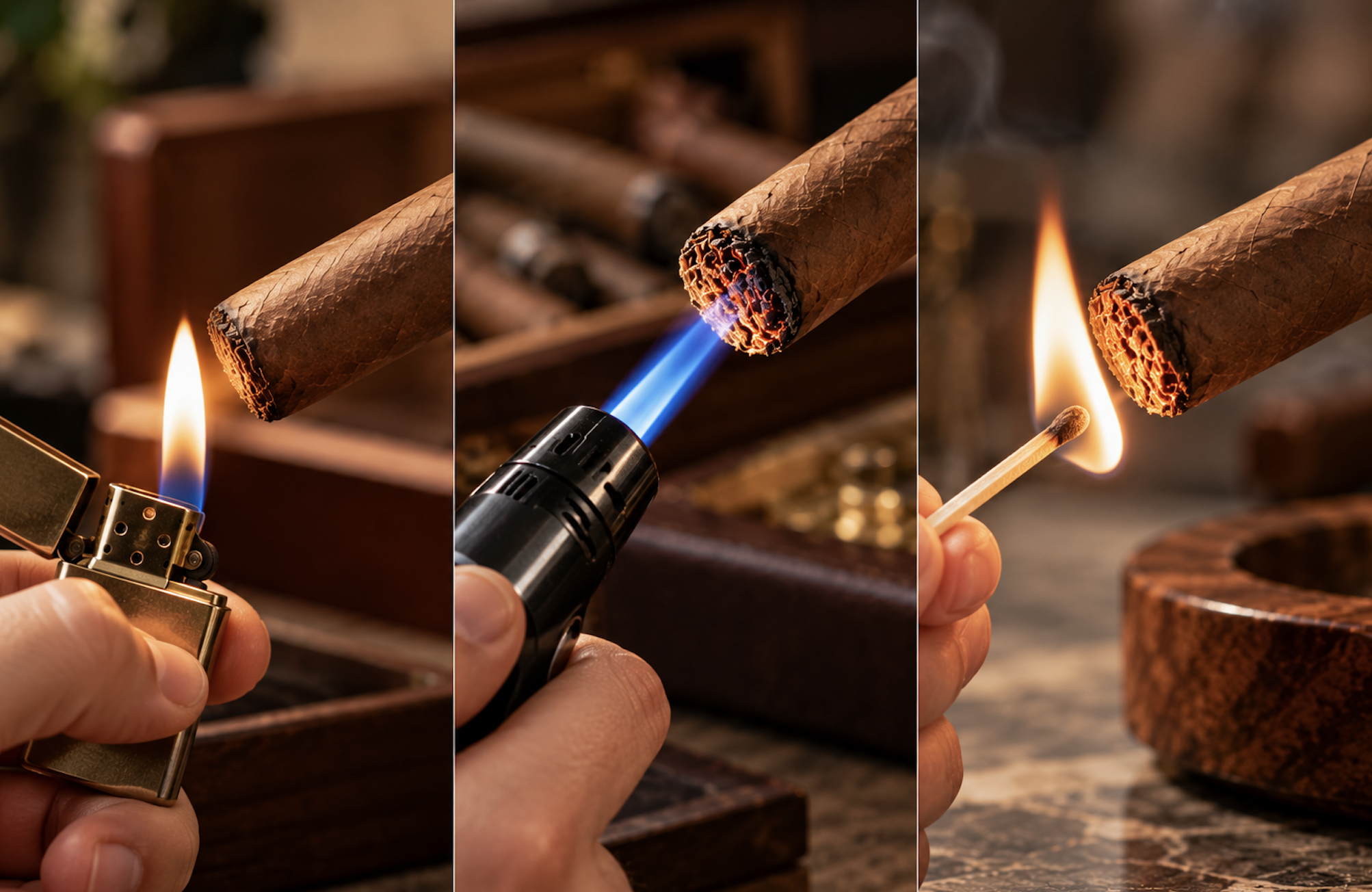
Torches are the most popular device for lighting up because traditional lighters and matches sometimes lack the power to light quickly. That makes a torch the gold standard. Butane lighters and torches shouldn't leave any aftertaste. But if you use a lighter as opposed to a torch, it will take longer to light and you may overburn the tobacco. That's not a butane issue; it's an issue with the type of lighter you're using. If you opt for a match, make sure it has a long stem and is designed specifically for cigars. If not, you may burn through it unevenly. That means wasted tobacco, wasted fuel, and wasted time.
So opt for a torch. It gives the main course the heat it deserves without any of the guesswork with matches and lighters.
Toasting the Foot
Now that you know how to size up the flavor and choose between a lighter and a torch, it's time for the actual lighting. Start by toasting the foot, the open end of the cigar, which means warming it so the heat spreads evenly across the tobacco. Hold the cigar at roughly a 45-degree angle and keep the flame about an inch away so it never touches the foot. Rotate slowly for 10 to 20 seconds, watching for the edge to darken and begin to glow. Give extra attention to any spots that aren't catching before you take your first draw.
Time to Light Up
Once the foot is toasted, put your lips on the cut end and draw gently while holding the flame near the foot. Keep puffing and slowly rotating the cigar to get that coveted even burn. You're looking for an evenly glowing ember. Gently puff on it to get a good jumping-off point for your session.
Take a puff roughly every 30 to 60 seconds to keep the stogie going. Cigars go out sometimes, and that's fine, but relighting too often can muddy the flavor, so aim for only a few relights per session. If you do relight, first blow gently through the cigar to clear out stale smoke, then toast the foot again to prep for an even light. Be patient, because a cigar is meant to be enjoyed, not rushed through.
Common Lighting Mistakes to Avoid
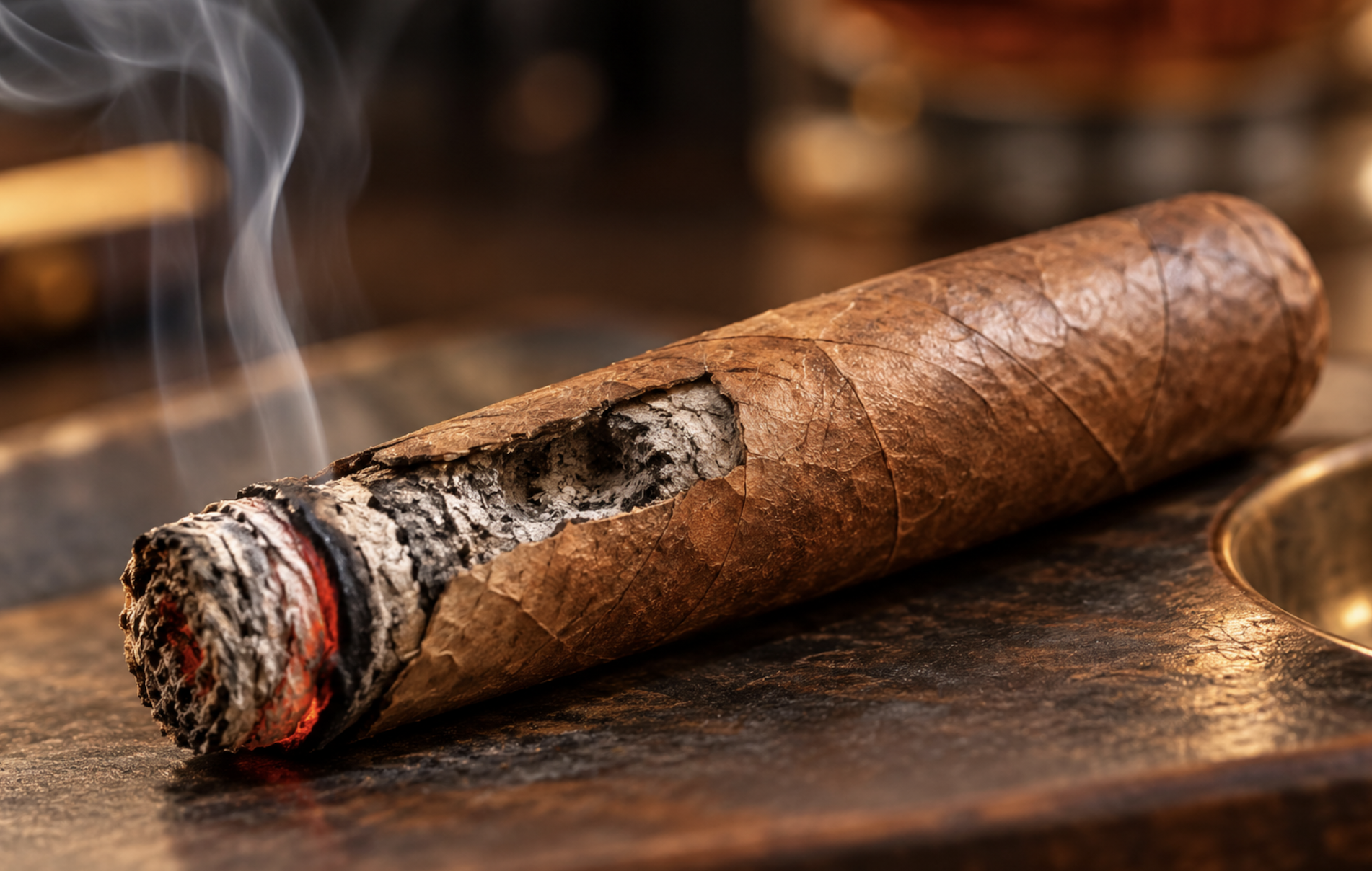
It's common to start with an even burn and watch the burn line drift off kilter the longer you smoke. When one side burns faster than the other, you get canoeing. Just touch up the lagging side with your torch or lighter and you should be back on track.
If you're new to cigars, you'll quickly learn that making mistakes is an integral part of the learning process. To avoid the easiest pitfalls, know that holding the flame too close is a recipe for disaster. The flame should warm the cigar, not engulf it.
Another common mistake is lighting too fast. Rush it and you may not get the even burn you're after. Instead, the flame might just scorch the outside without properly toasting the whole foot. Take your time. If that's the one lesson you remember from this blog, make it that one. Cigar enjoyment is a slow-paced hobby, so chill out, enjoy your smoke, and let the good times roll.
The last two big culprits are using a sulfur-heavy match and puffing too hard on the first light. The match issue is easy: switch to cigar matches, a cedar spill, or a butane lighter. The puffing issue is just as easy: take gentle pulls. Remember, you're not trying to inhale the smoke into your lungs. You hold it in your mouth and let the nicotine absorb through the mucous membranes.
When to Put It to Bed
Knowing when to put the cigar to bed is an essential part of the smoking experience. Most people don't smoke their cigars all the way down to the nub. Instead, they smoke until about two-thirds of the way down and retire them. When the flavor turns bitter and oily, you'll know it's time to stop. Personally, I use the cigar band as a barometer.
Some people take off the band and keep it as a souvenir or toss it. I use it as a signal to stop. It sits near the head of the cigar, and in my experience, if I smoke past the band, the burn gets too hot for my palate and the flavors intensify into a burnt taste I don't enjoy. But everyone's different, and if you like smoking down to a nub, that's your prerogative.
This is where you get to develop your own smoking style, palate, and ritual.
Last Call
Great lighting comes down to a few simple habits: take a cold draw, choose the right flame, toast the foot, and light with slow, gentle pulls. Get those right and you'll enjoy an even burn and all the flavor your cigar has to offer. Take your time, touch up any uneven spots, and put it down when the taste turns. Then pour something good to go with it. Our pairing guide will help you find the best match for your smoke.
Frequently Asked Questions About Lighting a Cigar
Can you use a regular lighter to light a cigar?
Yes. A regular butane lighter can light a cigar, although a torch lighter usually provides more control and an even burn. Avoid gasoline-based lighters, which can affect the cigar's flavor.
How long should I toast the foot of a cigar?
Toast the foot for roughly 10 to 20 seconds, rotating the cigar slowly until the edges begin to glow evenly. The goal is to warm the tobacco without letting the flame directly scorch it.
Why does my cigar keep going out?
A cigar may keep going out because it is being smoked too slowly, is packed too tightly, has excess moisture, or was not lit evenly. Try gently relighting it and rotating the cigar to restore an even burn.
Can you relight a cigar the next day?
You can relight a cigar the next day, but the flavor may be noticeably harsher or more stale. For the best experience, cigars are generally better finished during the same smoking session.
0 Comment
Latest


