WARNING: This product contains nicotine. Nicotine is an addictive chemical.


NEWSLETTER
Get special offers and find out what's new in the store. Sign up for the EV newsletter.WARNING: This product contains nicotine. Nicotine is an addictive chemical.
NEWSLETTER
Get special offers and find out what's new in the store. Sign up for the EV newsletter.At some point in your cigar journey, you're going to have to cut one. It's an unavoidable part of the hobby, but it doesn't have to be intimidating. A little technique goes a long way, and this guide will give you the toolbox to cut with confidence on your next smoke.
We'll also cover something most guides skip: how each cut changes the airflow of your cigar.
The best way to learn how to cut a cigar is to start with the three most popular cuts: the guillotine, the V-cut, and the punch. Each brings its own character to the smoke.
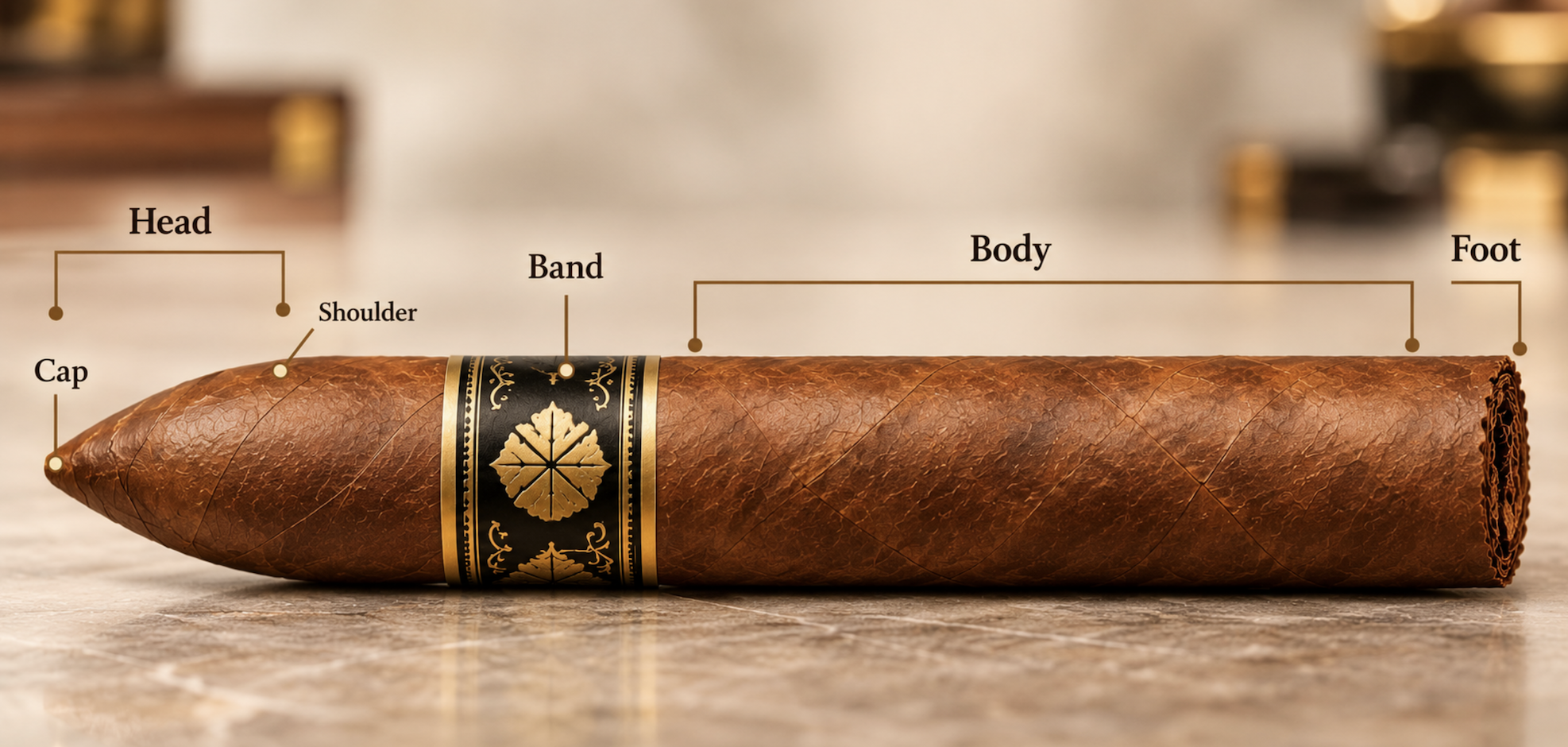
Before you make any attempt at cutting your cigar, remember that the cap is the closed end that you'll be cutting. The part you cut is what goes in your mouth. The usually open end is the foot, which is where you light the cigar.
You'll recognize the cap by its round, closed appearance. There should be faint rings or a seam marking where the wrapper has been sealed, and that seam is the cap line. You'll always cut above the cap line, never past it.
Some cigars have a closed foot, but that just means you'll have to pay special attention to where the seam lines are so you can distinguish the cap from the foot. You won't ever cut the foot. If it's a closed foot, you'll light it as usual, and many smokers find it gives a slightly tighter draw with plenty of flavor from the extended wrapper leaf.
The cigar itself consists of the head, which is where the cap is (the part you cut), and the foot, the end you light. The ring gauge is the diameter of the cigar, measured in 64ths of an inch. The body is made up of tobacco leaves: the filler, held together by the binder, and all of it covered by the wrapper. The shoulder is where the head begins to taper toward the cap. The shape of the cigar varies by vitola (the cigar's shape and size), but the general makeup is fairly consistent throughout the different vitolas.
The guillotine cutter is a miniature version of the medieval beheading device. Instead of human heads, we're taking the heads off cigars. Much sleeker, and a lot less creepy.
Guillotine cutters come in two styles: single-blade and double-blade. Single-blade cutters are simple and affordable, but a dull blade can tear the wrapper. Double-blade cutters close from both sides, which usually gives a cleaner, more consistent cut.
Popular guillotine cutters include the Blink Rubberized Cigar Cutter and the Lotus Meteor Cigar Cutter.
How to use it:
Many smokers find that the guillotine takes off the rounded cap and creates an open airway, so each pull is smooth.
The guillotine cutter is popular because of its simplicity and versatility, and it gives you an open, airy draw on every puff. But some cigar aficionados prefer other cuts, like the V-cut. Some argue that the V-cut provides a more controlled draw and protects the integrity of the cigar's composition.
So is the V-cut better than the guillotine? The answer is both yes and no. It's simply a different method of cutting, and either cutter will get you similar results in the end, so it's more of a preference.
The V-cut is characterized by cutting a wedge into the head, like cutting a small piece out of a pie. It is composed of a single wedge-shaped blade. It's versatile, but not nearly as much as the guillotine cutter when it comes to cigar sizes.
The V-cut excels on slimmer cigars where the ring gauge is minimal. The larger the cigar, the more difficult it is to get proper airflow and ventilation with a V-cut because of its narrow opening. On slimmer cigars it works perfectly because there's less space the cut needs to cover.
Using a V-cutter is similar to using the guillotine cutter, with a couple of nuances:
Many smokers praise V-cuts for concentrated flavor, as well as warmth and intensity. The shape of the cut acts as a funnel, and the tight airway can mean clearer flavors and more heat on every pull.
Some popular V-cutters on the market include the Vector V-Cut 250 Cigar Cutter and the Colibri V-Cut Cigar Cutter.
It's not uncommon to switch cutters depending on the type of cigar you're going to enjoy. For slimmer to medium-gauge cigars, a V-cut or a guillotine will work great. But for bigger cigars like Churchills and the like, you'll want a guillotine, since both the V-cut and the punch can restrict the draw on a large gauge.
A cigar punch is one of the few cutter styles that has been popularized as a keychain accessory. They're fairly tiny and can easily be looped onto a lanyard, which makes the punch the most portable of the bunch.
Cigar punches work by producing a tiny hole in the cap of your cigar. Many punches have a retractable circular blade that you pop out and dig into the cap when it's time to smoke. It may not be the most sophisticated method, but it has its perks. Since it's a tiny hole, there's less of a possibility for loose tobacco to fall out during your session. It works on most cigars with flat or rounded heads, though not on pointed heads like torpedoes, and it's a very beginner-friendly tool. That said, any of these cutters is beginner-friendly as long as you don't cut too deep.
Rather than buying a separate punch and V-cutter, you can try both cuts with a single tool. Vector Vcube Cigar Cutter combines a punch and a V-cut, which makes it an easy way to compare how each one changes the draw on the same cigar.
Using a cigar punch is simple:
There's debate about whether the mini hole collects tar, and like with anything, everyone has different experiences. But the punch is most known for its portability, and it's an easy, convenient tool to have ready on deck.
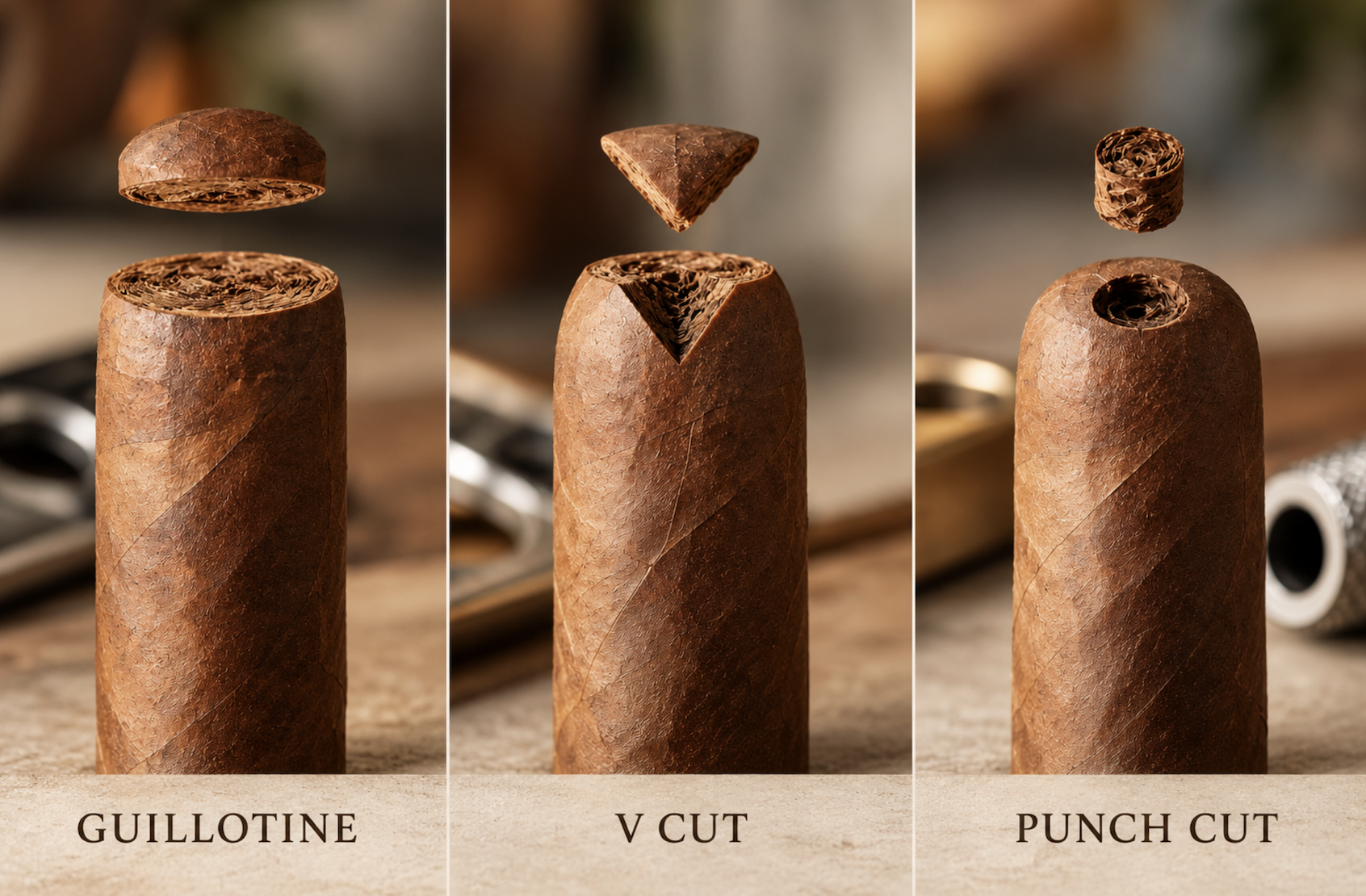
You'll know you've produced a good cut if, from a distance, the cigar looks unchanged. If the cap looks mangled and obviously snipped, you're more likely to get an uneven draw or an unraveling wrapper. The cuts should be minimal and superficial. The deeper and more severe the cut, the more it affects the appearance of the cigar. A good cut means minimal damage and an intact wrapper that remains tightly wound around the binder and filler.
While you can get a good cut from any cutter, if you're a beginner I would lean toward a double-blade guillotine. A single blade is more likely to crush the cap, since it presses the cigar against a fixed edge, which defeats the whole premise of minimal damage. A double blade closes from both sides and tends to be more consistent.
The most complicated cigar to cut is arguably the torpedo. It features a pointed head and a fairly thick build, which is where the anatomy of the cigar comes into play. You'll want to pay close attention to the shoulder on a torpedo, because it acts as a guide for where you should stop. The cut should open the tip but not migrate into the shoulder. This cigar is special in that it doesn't respond well to punches, and a V-cut can be tricky too, since the opening can be too small for a full draw. A guillotine, cut carefully just back from the tip, is the safest bet. Torpedoes are tricky cigars, but they're so satisfying to smoke, so proper technique is needed.
In addition to torpedoes, belicosos and perfectos are also special because of their tapered shapes, and perfectos usually have a closed foot. Many smokers prefer a V-cut on these cigars, since it gives a centralized air pathway that is more pronounced with these shapes.
And if you're smoking a cigar with a pigtail cap, simply twist it off with your fingers before going in with your cutter. If it's super finicky, you can use your guillotine cutter to snip it.
Hopefully you feel a lot less nervous about cutting a cigar. It's honestly really simple, and as long as you're not going full-on Edward Scissorhands on the poor cigar, you should be fine. If you're going to take away anything from this blog, just remember: the cap has seam lines, which is how you identify it. Make a shallow cut just above the seam line and put the cut end in your mouth, with the foot being lit on the other end. If you're unsure whether a cigar will work with a V-cut or punch, just opt for a guillotine, because it's a versatile all-around cutter.
And to really get a sense of how each one works, try it out. You'll never know which cut you prefer until you try it. Will it be the airy, light draw that the guillotine creates, or the tighter draw that the V-cut and punch produce?
Puff, puff, and let us know in the comments which one is your favorite.
The best cigar cutter depends on the cigar and the draw you prefer. Straight-cut guillotine cutters are the most versatile and create a wide opening, while V-cutters remove a wedge from the cap for a more concentrated draw. Punch cutters create a smaller opening and work especially well on many rounded cigar caps.
You only need to remove a small portion of the cigar's cap. Cutting too far below the cap line or shoulder can loosen the wrapper and cause the cigar to unravel. A clean, shallow cut is usually better than removing too much tobacco.
A punch cutter is a good choice when you want a smaller opening and more controlled draw. It works best on cigars with broad, rounded caps. Punch cutters are usually less suitable for pointed cigar shapes such as torpedoes and other figurados.
It is possible, but a sharp cigar cutter generally produces a cleaner and more predictable cut. Improvised methods can crush the cap, tear the wrapper, or leave loose tobacco behind. A properly maintained guillotine, V-cutter, or punch is usually the safest option for protecting the cigar's construction.
A cigar often unravels because the cut was made too far below the cap, the cutter was dull, or the blades crushed the tobacco instead of slicing cleanly through it. Keeping the cut above the shoulder and using a sharp cutter can help preserve the wrapper.
There is no universal replacement schedule. A cigar cutter should be cleaned regularly and replaced or serviced when the blades begin pinching, tearing, or crushing cigar caps. A sharp blade is one of the most important factors in getting a clean cigar cut.
0 Comment
Latest


