If you're new to the vaping world, it can feel overwhelming with all the informal terminology surrounding the products and gear in the industry. You might think vaping is simply inhaling and exhaling clouds; not quite. There's actually a lot more to it. It starts with knowing your hardware, your e-liquid, your technique, and the culture around it all. This glossary will give every new vaper a solid rundown of the terms you need to stay on top of the trends, understand the community, and level up your vape game.
First things first: the hardware.
Physical Equipment
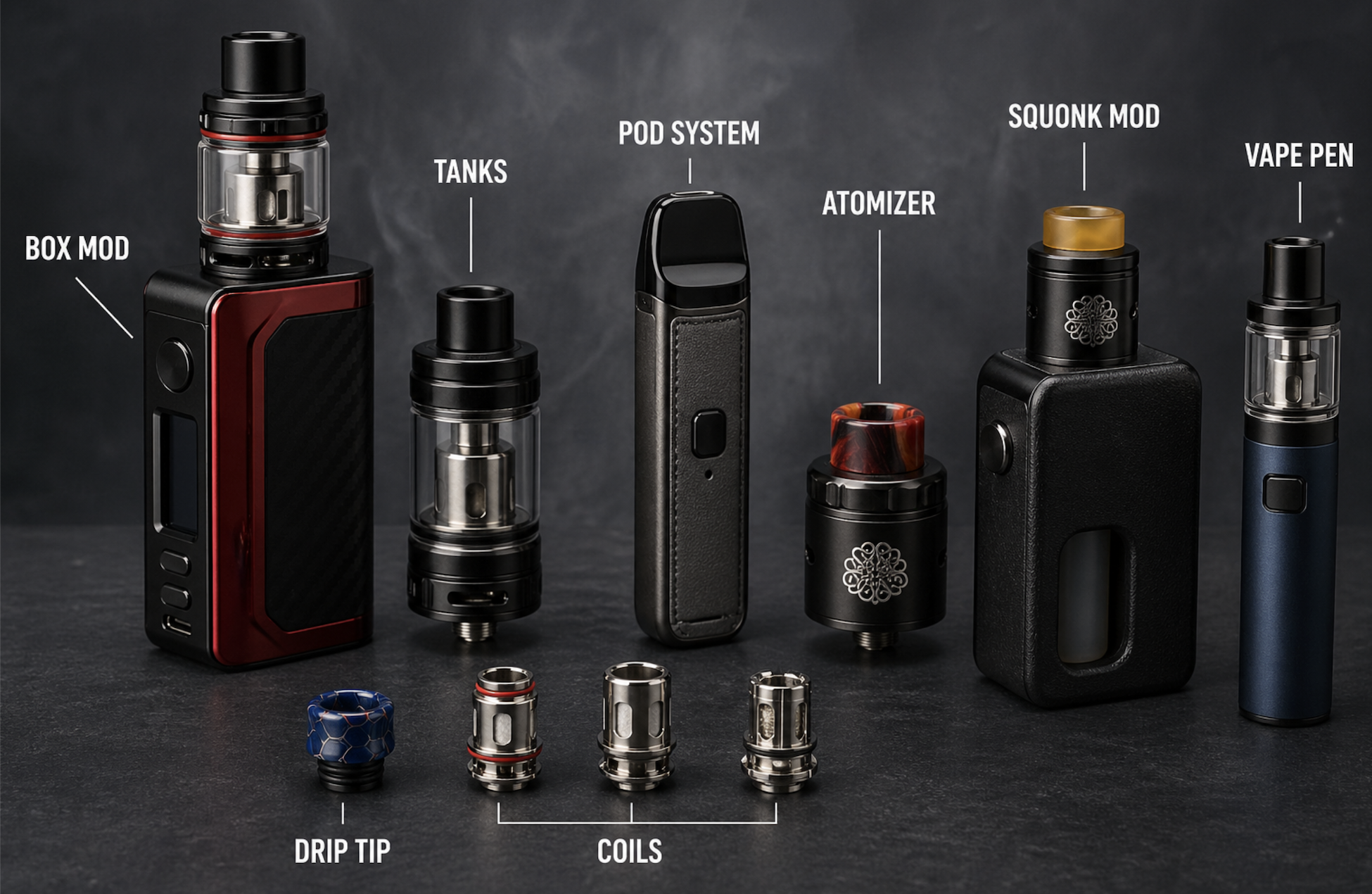
Box Mod: Box mods are named for their boxy rectangular shape and typically feature replaceable batteries along with customizable settings for wattage and temperature control. They are compatible with a wide range of tanks, atomizers, and rebuildables.
Tanks: A tank stores e-liquid and houses the atomizer, typically sitting on top of a vape mod. The three main types are sub-ohm, MTL, and rebuildable (RTA/RDA).
Sub-Ohm Tanks: Sub-ohm tanks use coils with a resistance below 1.0 ohm, allowing more power to pass through and producing large amounts of vapor. They are commonly used for direct-to-lung (DTL) inhaling.
MTL Tanks: MTL (mouth-to-lung) tanks use coils with resistance above 1.0 ohm and deliver a tighter, more restricted draw that more closely mimics the experience of smoking a traditional cigarette.
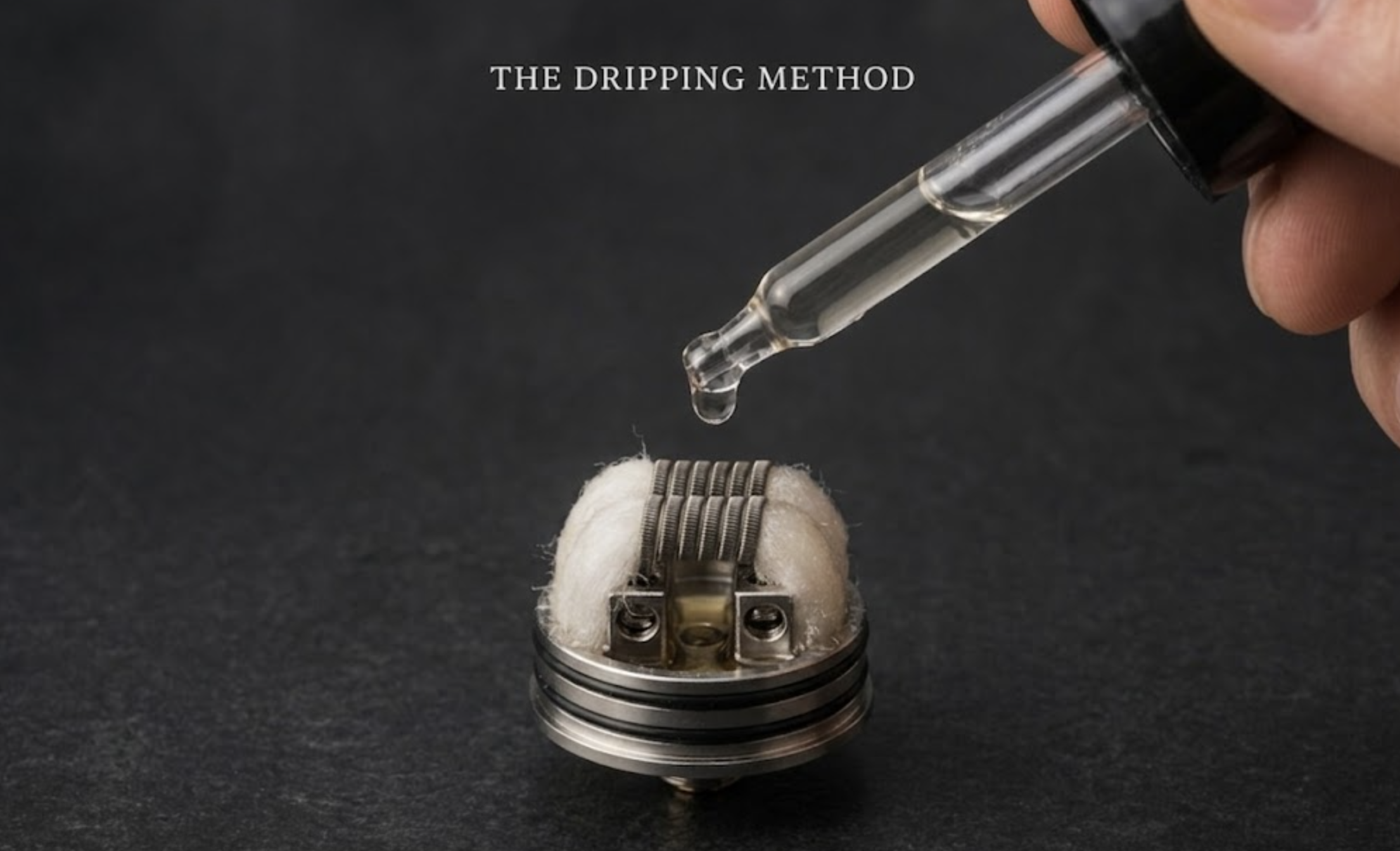
RTA/RDA: Both RTAs and RDAs are rebuildable atomizers that allow users to install their own coils and wicking material. RTAs include a tank to hold e-liquid, while RDAs require the user to manually drip e-liquid directly onto the coils.
Pod System: Pod systems are compact, beginner-friendly devices featuring a rechargeable battery and either a refillable or replaceable pod. They are popular for their simplicity and ease of use.
Pod Tank: A pod tank is a hybrid device that bridges the gap between a traditional tank and a standard pod system. It combines the compact, snap-in convenience of a pod with the larger e-liquid capacity and coil versatility of a full tank. Most pod tanks use 510 thread connections, are refillable with the e-liquid of your choice, and are compatible with a wider range of coils than a typical pod system, making them a popular choice for vapers who want portability without sacrificing performance.
Vape Pen: Vape pens are slim, portable, and usually rechargeable devices used to heat either nicotine e-liquid or cannabis concentrate into vapor.
Disposable Vape: A disposable vape is a single-use device pre-filled with e-liquid and discarded after the battery or e-liquid runs out. Typically constructed with a battery, a heating coil, and either a nicotine-saturated wick or pre-filled pod, they are popular for their convenience.
E-Nail (Electronic Nail): A device designed to pair with a traditional glass rig, offering precise, electronically controlled heating and eliminating the need for a blowtorch.
Desktop Vaporizer: A desktop vaporizer is a plug-in device intended for stationary use, typically compatible with dry herbs and sometimes concentrates. It is well-suited for longer, extended sessions and often delivers more consistent heat than portable alternatives.
510 Thread Battery: This is the typical connected battery that is used in many pens and vaporizers in both the nicotine and cannabis world. 510 connection is the most widely used fitting in the vaping market, meaning it's likely to be compatible with equipment from different manufacturers.
Coils: A coil is made up of a metal heating element, either wire or mesh, surrounding a wicking material, typically organic cotton. And coils need to be replaced over time as they burn out.
Atomizer: The atomizer is the component that houses the coil and wick and is responsible for converting e-liquid into vapor when heated.
Build Deck: The build deck is the platform inside a rebuildable atomizer where coils are installed and secured, typically using posts and screws. It is the central component for users who customize their own coil builds.
Drip Tip: This refers to the mouthpiece of the device; relevant especially for RDA users.
Squonk Mod: A box mod with a built-in e-liquid bottle that feeds the RDA from below; popular among rebuildable users. The squeezable bottle pushes e-liquid up through the mod and into the atomizer, keeping the coils saturated without manual dripping.
Clearomizer: A common beginner-friendly tank with a clear body and replaceable coil head.
Mechanical Mod (Mech Mod): An unregulated device with no electronic safety features. Due to the lack of protections, they are recommended only for experienced users who understand battery safety.
Now that you've got the equipment basics down, you can hold your own in any conversation with fellow vapers, whether it's talking about your setup, comparing box mods, or getting into the finer details of your coil builds and build decks. Next up: E-Liquid basics. We won't get into the endless world of flavors, but we'll break down flavor profiles and the key difference between nicotine salt and freebase nicotine.
E-Liquid
Nicotine Salt (Nic Salt):Nicotine salt, commonly called nic salt, is a form of nicotine processed with benzoic acid to create a smoother throat hit at higher nicotine concentrations. It is designed for low-wattage devices and typically comes in strengths of 20mg, 35mg, and 50mg.
Freebase Nicotine: Freebase nicotine is the purest form of nicotine and delivers a stronger, harsher throat hit compared to nic salts. It is compatible with higher-wattage devices and typically comes in lower concentrations like 0mg, 3mg, and 6mg, making it a common choice for sub-ohm vapers.
Nixodine: A relatively new and less regulated category, and is defined as a synthetic nicotine alternative that combines 6-methylnicotine (a nicotine analog) and nicotinamide (a form of vitamin B3). It is intended for use with refillable e-liquids and disposables, producing a buzz similar to traditional nicotine.
Metatine: Metatine is a synthetic nicotine analogue based on the compound 6-methylnicotine, used in e-liquids as an alternative to traditional tobacco-derived nicotine. Like other synthetic nicotine alternatives, it is designed to replicate the sensation of nicotine without being sourced from tobacco, which has implications for how it is regulated and marketed. It is generally marketed as producing a smoother experience compared to freebasenicotine, though it is still a relatively emerging ingredient in the vaping space.
Nicotine: A stimulant naturally found in tobacco that triggers dopamine release, producing a sensation of relaxation or pleasure.
VG and PG: These are the two base ingredients found in most e-liquids, and their ratio directly shapes your vaping experience. VG is a thick, naturally sweet compound responsible for producing dense vapor clouds, making it the preferred choice for cloud chasers who opt for higher VG blends. PG is a much thinner, nearly tasteless liquid that carries flavor more effectively and produces the throat hit you feel when you inhale. The balance between the two is expressed as a ratio, such as 70VG/30PG, and is one of the first things worth paying attention to when choosing an e-liquid.
E-Liquid Flavor Profiles: Flavor profiles are the broad categories used to classify e-liquid flavors, such as fruit, menthol, tobacco, dessert, and candy. They help vapers navigate the wide variety of options available.
E-liquid is essentially what you're filling your device with; the flavored, nicotine-containing (or nicotine-free) liquid that gets vaporized for your enjoyment. It's highly customizable, and over time you'll develop a palate for what works best for you. Just be mindful of whether you're using freebase nicotine or nic salt, as each produces a different throat hit experience. The actual vaporization happens at the coil level, but how you vape is just as important as what you vape with. That brings us to components and consumables.
Components & Consumables
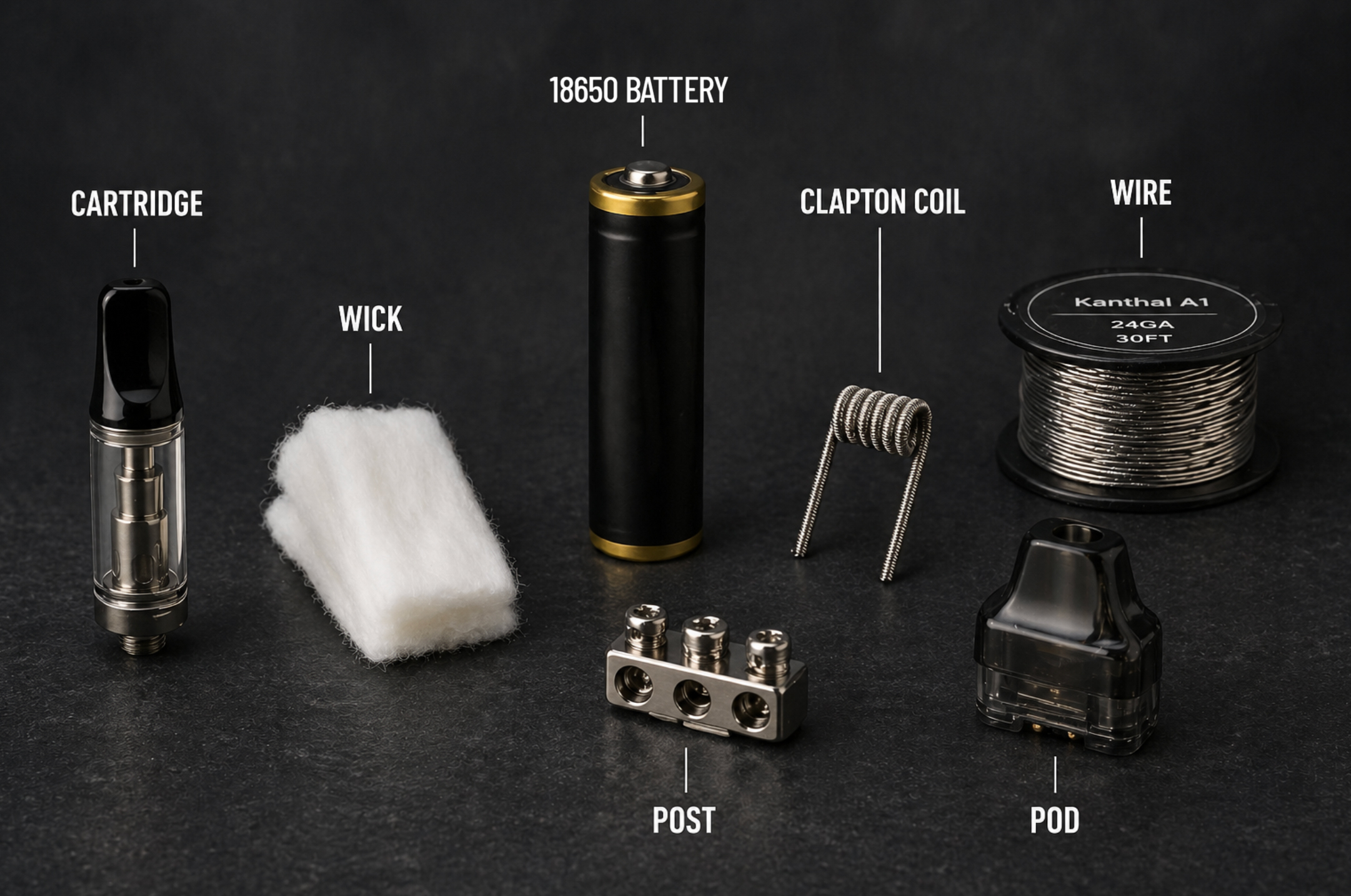
Pod: Pods come in two types: closed and open. A closed pod is pre-filled and non-refillable, and once empty it's discarded. An open pod can be filled with the e-liquid of your choice. Pods are typically brand-specific and snap directly into compatible devices.
Cartridge: A cartridge screws into a device rather than snapping in, and is commonly used with 510-thread batteries. It functions similarly to a pod but is more universally compatible across brands.
Post: Posts are the small screw-like terminals on a build deck that secure the ends of coil wire in place. They are a key part of any rebuildable atomizer setup.
Mesh Sheet Coils: Mesh sheet coils are made from a flat, perforated sheet of metal rolled into a cylinder, as opposed to traditional coils which use wire wrapped around a core. The wide surface area of the mesh distributes heat more evenly across the wick, resulting in faster heat-up times, more consistent flavor, and a longer coil lifespan compared to standard wire coils. Their versatility makes them a popular choice across both sub-ohm and MTL setups.
AFC (Airflow Control): AFC, or Airflow Control, is the mechanism on a vaping device that regulates how much air passes over the coil during an inhale. It typically appears as a rotating ring or adjustable dial on the device and directly influences vapor temperature, flavor intensity, and draw resistance. Opening the AFC up creates a looser, airier draw suited for DTL vaping, while closing it down produces the tighter, more restricted pull associated with MTL.
Clapton Coil: A Clapton coil consists of a thinner resistance wire wrapped tightly around a thicker core wire, similar in appearance to a guitar string. This design increases surface area, resulting in enhanced flavor and vapor production.
Mesh: Mesh refers to a flat, perforated metal sheet used as the heating element in many modern coils. Its wide surface area distributes heat more evenly than traditional wire coils, producing consistent flavor and vapor with each hit.
Wick: Typically made from organic cotton, the wick absorbs e-liquid from the tank and delivers it to the coil to be vaporized. A dry or improperly saturated wick leads to burnt hits.
Wire: The three most common resistance wires used in coil building are Kanthal, Nichrome, and Stainless Steel. Kanthal is beginner-friendly and widely used for wattage mode vaping. Nichrome heats up faster and is popular for flavor-focused builds. Stainless Steel is the most versatile, compatible with both wattage and temperature control modes.
18650 Battery: This is the most common type of removable battery seen in box mods.
Now that you can name every part of your setup, it's time to understand how to actually configure it. And honestly, this is where a lot of new vapers get tripped up. You've got your device, you've got your coils installed, but then you're staring at a screen full of numbers and modes wondering where to even start. However, once you understand what each setting actually does to your vape experience, it all clicks into place pretty quickly.
Settings and Specs
Wattage: Wattage is how power is measured on a regulated mod controlling heat delivery to the coil.
Airflow: Airflow refers to the adjustable ventilation built into tanks and atomizers that controls how much air mixes with vapor during your inhale. More airflow produces larger, airier clouds suited for DTL vaping, while restricted airflow creates the tighter draw associated with MTL.
Temperature Control (TC): Temperature control is a firing mode available on advanced regulated mods that monitors and limits the coil's temperature rather than simply delivering a set wattage. It prevents dry hits and burnt coils by cutting power when the coil reaches a set threshold.
Ohm: Ohm is the unit used to measure electrical resistance in a coil. Lower ohm ratings allow more power through and typically produce larger clouds and a warmer vape, while higher ohm ratings produce a cooler, tighter draw. Resistance directly influences whether your setup is better suited for DTL, MTL, or RDL vaping.
mAh: Battery capacity in vaping devices is measured in milliamp hours (mAh). The higher the mAh rating, the longer the battery will last between charges. It does not affect power output, only how long the device runs.
DNA Chipset: A proprietary chipset developed by a company called Evolv, the DNA chipset powers some of the most advanced regulated mods on the market. It is known for its exceptional accuracy in temperature control and wattage delivery, offering vapers a highly precise and customizable vaping experience. Devices running a DNA chipset are generally considered high-end and are popular among experienced vapers.
You've got your device built, your coils installed, and now you've got a handle on the numbers behind how it all works. But you can have the most dialed-in setup in the room and still have a bad vape experience if your technique is off. Priming your coils wrong, inhaling incorrectly for your device type, or not understanding the difference between a DTL and MTL draw can make even the most expensive setup feel underwhelming. Technique is the bridge between knowing your gear and actually enjoying it.
Technique
Analog: A slang term used by vapers to refer to a traditional tobacco cigarette. The term plays on the idea that cigarettes are the "analog" counterpart to digital/electronic vaping devices.
Priming: Priming is the process of manually saturating a new coil's wick with e-liquid before firing the device. Skipping this step is one of the most common reasons new vapers get a harsh, burnt taste on their first hit.
Dry Hit: When you fire a coil with an unsaturated wick and it burns through the cotton resulting in a burnt taste every time you take a hit.
Dripping: Dripping is the practice of manually applying e-liquid drops directly onto an RDA's exposed coils and wick rather than using a tank. It delivers intense, fresh flavor with every hit but requires frequent re-application.
Squonking: Squonking is a style of rebuildable vaping where a squeeze bottle built into the mod feeds e-liquid up through the device and into the RDA automatically when pressed. It combines the flavor benefits of dripping with the convenience of a tank.
You know what your device is made of, how to configure it, and how to use it properly. Now let’s talk about the experience itself, and the community built around it. Because vaping isn't just a habit, it's a whole subculture with its own competitions, meetups, slang, and unspoken rules. Whether you're chasing clouds, hunting for the perfect throat hit, or just trying to understand what everyone at the vape shop is talking about, this section is where the hobby really comes to life.
Output and Culture
Cloud Chasing: Cloud chasing refers to the pursuit of producing the largest vapor clouds possible. Cloud chasers typically use sub-ohm devices, high-VG e-liquids, and freebase nicotine to achieve maximum vapor output.
Vapor Production: Vapor production refers to the volume of vapor a device generates per hit. It is influenced by wattage, coil resistance, airflow, and the VG ratio of the e-liquid; higher VG and lower ohm coils generally produce denser, thicker clouds.
Throat Hit: Throat hit is the sensation felt at the back of the throat when inhaling vapor. It varies based on nicotine strength, PG ratio, and coil resistance, whereas freebase nicotine and higher PG ratios tend to produce a stronger, more noticeable hit.
Passthrough: Passthrough refers to a device feature that allows you to continue vaping while the device is charging. Not all devices support this, and some manufacturers advise against it for battery safety reasons.
Direct to Lung (DTL): Direct to lung (DTL) is an inhale style where vapor is drawn straight into the lungs in one fluid motion, bypassing the mouth. It requires minimal airflow restriction and is the preferred technique for cloud chasers using sub-ohm setups.
Mouth to Lung (MTL): Mouth to lung (MTL) is an inhale style where vapor is first drawn into the mouth and then inhaled into the lungs which closely mimicking the draw of a traditional cigarette. It involves more restricted airflow and is the most popular choice for ex-smokers transitioning to vaping.
Restricted Direct to Lung (RDL): Restricted direct to lung (RDL) is the middle ground between MTL and DTL. It offers slightly more airflow restriction than DTL while still allowing vapor to travel directly to the lungs, striking a balance between flavor clarity and vapor production.
Vape Meets: Vape meets are community gatherings where vapers come together to share gear, sample e-liquids, discuss builds, and sometimes compete in cloud competitions. They range from small local meetups to large organized events.
Stealth Vaping: Stealth vaping is the practice of vaping discreetly in public by minimizing visible vapor output. This is usually achieved by using a low-powered device, exhaling slowly, or holding vapor longer before exhaling.
Vape Trick: This is where your gifts as a vaper really get to shine, and you can learn how to do fun party tricks with your device whether it be blowing O’s or Jellyfish for everyone to see.
Nic Sick: Nic sick is slang for nicotine overconsumption. It occurs when you vape too much or too quickly, resulting in symptoms like dizziness, nausea, headaches, and a general feeling of being unwell. It's a common beginner mistake, especially with high-strength nic salts.
Hit: A hit is simply a single puff or inhale from your vaping device.The term has plenty of synonyms in vaping culture — pull, drag, draw, and rip are all used interchangeably depending on who you're talking to.
Now that you're fully immersed in the world of vaping, there's one more thing every vaper needs in their back pocket before they can truly call themselves informed. When you're dealing with batteries, electrical resistance, and devices that generate heat, knowing what can go wrong and how to prevent it is essential.
Safety Terms
Short Circuit: A short circuit occurs when electrical current bypasses the intended path through the coil, causing the device to malfunction. Regulated mods have built-in protections that shut the device down automatically, but mechanical mods do not, making short circuits a serious safety risk for inexperienced users.
Venting: Venting occurs when a damaged, overcharged, or improperly used battery releases hot, toxic gas. It can lead to fire or explosion in severe cases. Always use the correct battery for your device, avoid overcharging, and never use a damaged battery.
Knowing the Basics
That wraps up your crash course in vaping terminology. Entering a new culture with its own language can feel isolating at first, especially since nobody wants to say the wrong thing or feel out of the loop. But hopefully this guide gave you the foundation you need to start navigating the vape world with a little more confidence, whether that means making smarter purchasing decisions, holding your own in a conversation at the vape shop, or just knowing what someone means when they talk about their build deck.
At the end of the day, vaping can be as simple or as complex as you want it to be. Not every vaper needs to build their own coils or chase competition-level clouds. Some people just want a smooth nic salt and a good flavor profile, and that's why vaping is a spectrum. The terms in this glossary are your starting point, not your finish line. Keep exploring, keep asking questions, and keep expanding your knowledge.
And if all else fails, just learn a fun vape trick and the rest will fall into place.