WARNING: This product contains nicotine. Nicotine is an addictive chemical.


NEWSLETTER
Get special offers and find out what's new in the store. Sign up for the EV newsletter.WARNING: This product contains nicotine. Nicotine is an addictive chemical.
NEWSLETTER
Get special offers and find out what's new in the store. Sign up for the EV newsletter.You light up a fresh cigar and the first third is smooth, creamy, and maybe a little sweet. You settle into your chair, the evening is quiet, and life feels pretty good. Then somewhere around the halfway mark, the flavor takes a turn. It’s harsh, sharp, and bitter, and you’re left wondering what went wrong.
First, take a breath, you’re not alone. Almost every cigar smoker, from first-timers to people with a walk-in humidor, has been there. The good news is that in most cases the cause is something you can understand and fix. Let’s walk through the most common reason your cigar goes bitter and what you can do about each one.
This is the number one culprit, and it’s an easy habit to fall into, especially if you’re used to cigarettes or vapes. A cigar isn’t meant to be chugged. It’s meant to be sipped, like a good whiskey.
When you draw every 15 to 20 seconds, the cherry (the burning tip) runs hotter than it should. Heat is the enemy of good flavor. Hot smoke brings out harsh, acrid, almost scorched notes and flattens the subtle flavors you tasted in the first third.
Try this: Aim for one puff every 45 to 60 seconds. Let the cigar rest between draws, and don’t worry if it feels slow. If the ember is glowing bright orange and the smoke feels hot on your tongue, that’s your cue to ease off. A cigar that’s allowed to smolder gently stays cooler and tastes better.
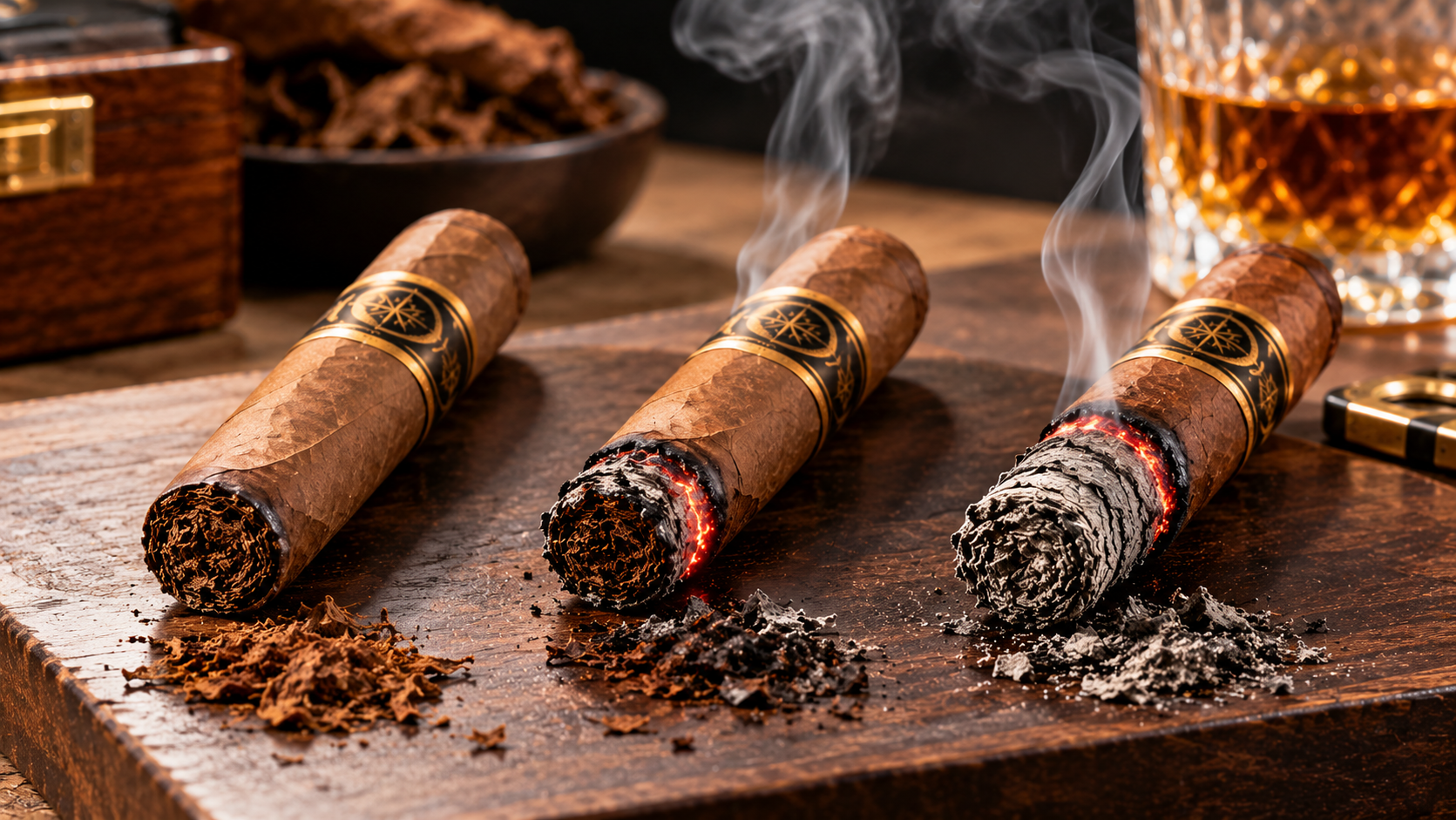
Here’s the science-y part, explained simply. As a cigar burns, the smoke you draw passes through the unburned tobacco ahead of the cherry. Along the way, some of that smoke cools, leaving moisture and other compounds behind. As the cherry catches up, that material heats up again. Some evaporates back into the smoke, while some breaks down or burns along with the tobacco.
The deeper you get into the cigar, the less tobacco there is between the cherry and your mouth to cool and filter the smoke. These changes help explain why the final third often tastes stronger than the first, and sometimes a little heavy, bitter, or sour. A well-made cigar can handle that progression gracefully, but a fast pace adds more heat to the mix and can make those rough edges much more noticeable.
Sometimes the cigar isn’t misbehaving at all. It’s doing exactly what it was built to do.
Many cigars are blended to evolve. A cigar is made of three parts: the filler (the tobacco in the center), the binder (the leaf holding the filler together), and the wrapper (the outer leaf you see). Blenders choose and arrange these leaves carefully, and it’s some blends will put milder tobacco toward the foot and fuller-bodied leaves, such as ligero from the top of the plant, deeper in the cigar. As you burn into those stronger leaves, the intensity ramps up.
If what you’re tasting is more strength than harshness, think peppery, bold, and robust rather than burnt or sour, that’s probably the blend. Plenty of smokers love that crescendo. Others prefer cigars that stay mellow and consistent from start to finish. If you fall into that second camp, look for cigars labeled mild to medium, and don’t be shy about asking a shop for something that stays smooth throughout.
Here are some full-bodied cigar to browse through:
Oliva Serie O Maduro Double Toro Cigars
My Father Don Pepin Garcia Original Series Imperiales Cigars
E.P. Carrillo INCH Maduro No. 70 Cigars
Rocky Patel Disciple Bala Cigars
Macanudo Inspirado Black Robusto Cigars
Storage matters more than most new smokers realize. A cigar that’s too dry burns hot and fast, and it tastes harsh almost no matter how carefully you smoke it. On the flip side, an over-humidified cigar can taste sour or flat, and it won’t burn evenly. Most cigars are happiest at roughly 65 to 72 percent relative humidity.
If your cigars have been sitting in a desk drawer, a car, or a loose bag for a few weeks, they may have dried out. A dry cigar can burn faster and hotter, turning flavors that should be rich and balanced into something harsh and bitter. Sometimes, the problem starts with how the cigar was stored, long before you ever light it.
Try this: If you smoke regularly, a humidor with a reliable hygrometer is one of the best investments you can make. Even a small desktop humidor with a humidification device will keep your cigars in good shape. And if you’ve just bought cigars, give them a little time to settle in your humidor before lighting up.
A canoeing burn, where one side of the cigar burns faster than the other and leaves a burned "scar" down the middle, makes the cigar run hot on one side. That uneven heat creates off flavors and can turn a pleasant smoke bitter in a hurry. Tunneling is like canoeing, just without an exposed burned section.
Relighting is another sneaky cause. If you set the cigar down to take a call or chat with a friend and it goes out, stale smoke and cold tar settle inside. Relight it without clearing that out, and the first few puffs can taste awful.
Try this: To fix an uneven burn, gently rotate the cigar as your puff, or lightly touch your flame to the slow-burning side to even things out. If your cigar has gone out for a while, knock off the burnt ash, then gently blow through the cigar from the foot to push out stale smoke before relighting. Your next puff will taste much cleaner. Find the torch right for you with our Finding Your Flame: A Love Story in Four Different Torch Lighters blog.
The draw is how easily air moves through the cigar. If it’s too tight, you’ll pull harder, which means more heat, more tar, and more bitterness. If it’s too loose, the cigar burns hot and fast, and the flavors feel thin and harsh.
A clean cut matters more than you think. A dull cutter or a ragged cut can crush the cap and wreck the draw before you’ve even lit up.
Try this: Use a sharp cutter and snip just enough of the cap to open the cigar without unraveling the wrapper. As a rule of thumb, cutting a bit above the shoulder of the cap (where it curves) is a safe bet. If the draw feels too tight after lighting, you can carefully clear the plug with a thin draw tool, but go gently.
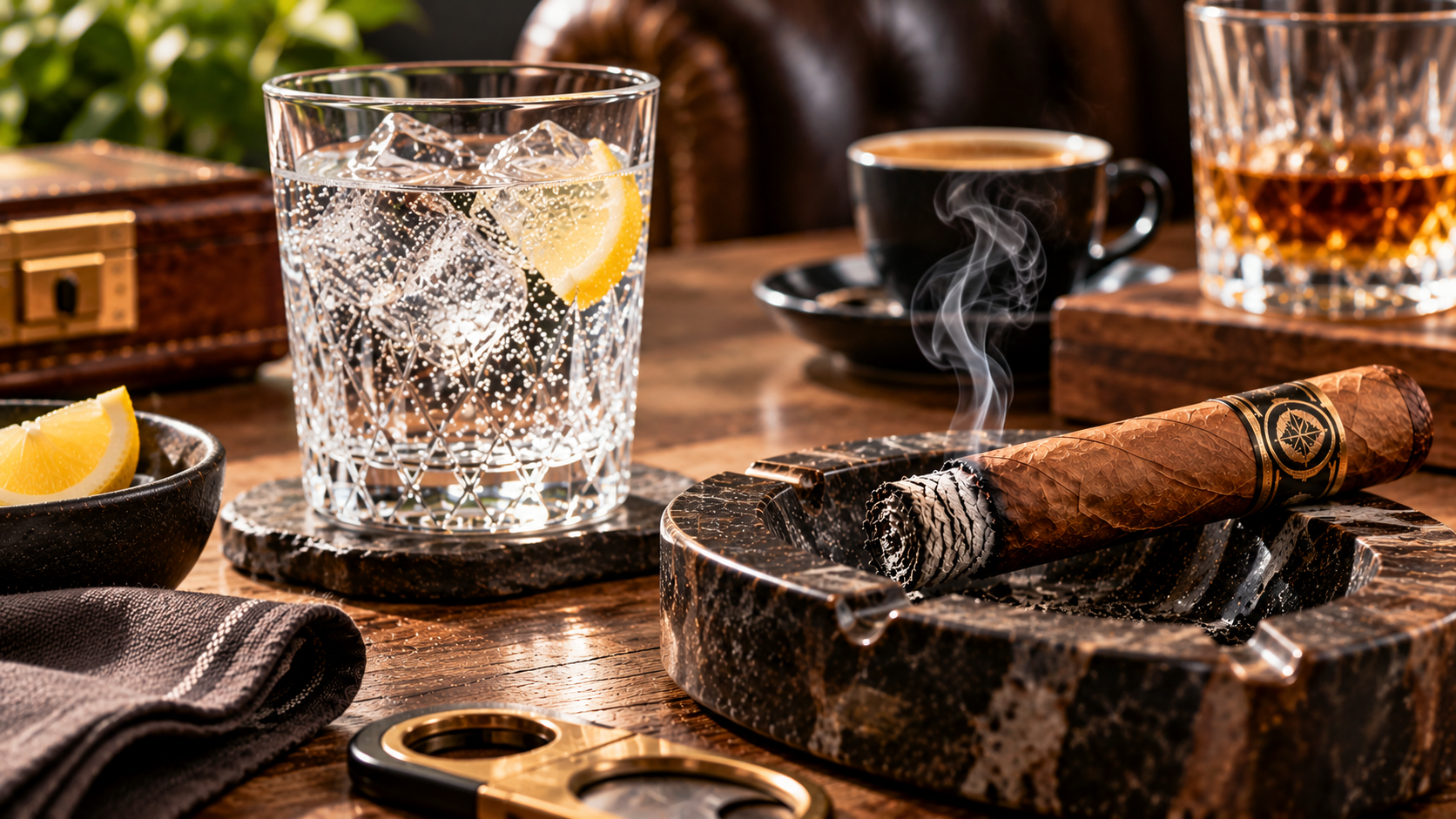
Sometimes it’s not the cigar. It’s you and that’s okay. After 30 to 40 minutes of rich, concentrated tobacco flavor, your taste buds can get fatigued. What tasted nuanced and complex early on can start to seem bitter or one-note, especially if you’re also sipping something strong.
Try this: Cleanse your palate with a little water between puffs. And be mindful of your pairing. Coffee, bourbon, rum, and dark beverages are classic matches, but a drink that’s overly sweet or very bitter can clash with a cigar as its flavors develop. Sometimes a simple sparkling water is all it takes to reset. Check out our What to Drink with a Cigar: The Ultimate Pairing Guide blog.
Here’s one that doesn’t get talked about enough: some cigars are just bold, and you might not be ready for them. Size and shape play a role, too. A thick cigar (a high ring gauge) tends to burn cooler and slower, while a thin one burns hotter and concentrates flavor faster. If you’ve been reaching for skinny, full-bodied cigars and finding them bitter, try something with a bit more girth and a milder profile.
Your palate also grows with experience. Bitterness is a flavor, too. Think dark chocolate or espresso. In the right balance, that bitter edge can be part of what the blender intended. Many smokers find that flavors they once called bitter turn into notes they crave. Give yourself room to explore.
If your cigar turns bitter mid-smoke, run through this checklist:
Slow down. Fewer puffs, more rest in between.
Let the ash build. Tapping too often exposes the cherry and heats things up. A long ash helps the cigar burn cooler.
Check your storage. Is your humidity in the right range? Dry cigars burn faster and hotter.
Cut cleanly. A sharp cutter makes a big difference.
Purge the cigar. Gently blow through the cigar from the head to clear out stale smoke and built-up gases.
Skip the retrohale for now. Exhaling smoke through your nose is a fun way to explore flavor, but it can emphasize bitterness and harshness when a cigar is running hot.
Know when to stop. There’s no rule that says you must finish every cigar. Once it turns harsh and unpleasant, it’s perfectly fine to set it down. The last third is often where the bitterness peaks anyway.
Halfway-point bitterness usually comes down to a handful of things: heat from smoking too fast, tar buildup, a blend that ramps up on purpose, or storage and cutting issues. The great part is that most of these are easy to adjust. A slower pace, a sharp cut, and a little attention to humidity can turn a bitter second half into one of the best parts of the whole experience.
Every cigar is a little different, and so is every smoker, so don’t be afraid to experiment. Keep notes on what you liked and what you didn’t, ask questions at your favorite shop, and enjoy the learning curve. The more you understand your preferences, the more rewarding every smoke becomes.
Now that you know how to mitigate the bitterness, browse through our cigar collection at Element Vape.
0 Comment
Sam is a music lover, snack enthusiast, and self-appointed arugula ambassador who somehow turned all of that into a whole career in writing. Fueled by all the comforts in life and an inexplicable obsession with the spiciest leaf in the salad game, she brings the same chaotic passion to every article that she brings to her own life.
Latest


