WARNING: This product contains nicotine. Nicotine is an addictive chemical.


NEWSLETTER
Get special offers and find out what's new in the store. Sign up for the EV newsletter.WARNING: This product contains nicotine. Nicotine is an addictive chemical.
NEWSLETTER
Get special offers and find out what's new in the store. Sign up for the EV newsletter.You pick up the cigar, slide off the cellophane, and notice what looks like another layer of leaf under the pretty outer one. Did the maker double up? Is it a premium feature? Is something wrong with your cigar?
Relax. In most cases, nothing is wrong, and there’s a good chance you’re looking at something completely normal. Depending on the cigar, that “second wrapper” could be one of several things, from the structural to the purely protective to the rare, deliberate blending choice. Let’s walk through each one so you know exactly what you’re holding.
This is the most common explanation by far, and it all comes down to how a cigar is built. Every traditional cigar has three main components:
If you’ve ever had a cigar start to unravel, or you’ve peeled back the wrapper out of curiosity, the leaf underneath is the binder. It’s usually thicker, a bit rougher, and not nearly as glamorous. That’s because it was never meant to be seen. Binder leaves are chosen for strength, durability, and good burning properties rather than good looks.
Don’t write the binder off as a mere workhorse, though. It contributes to flavor, too, and many blenders think carefully about which binder to pair with a given wrapper. The wrapper is the polished finish, the binder is the support system, and together they shape how your cigar looks, burns, and tastes.
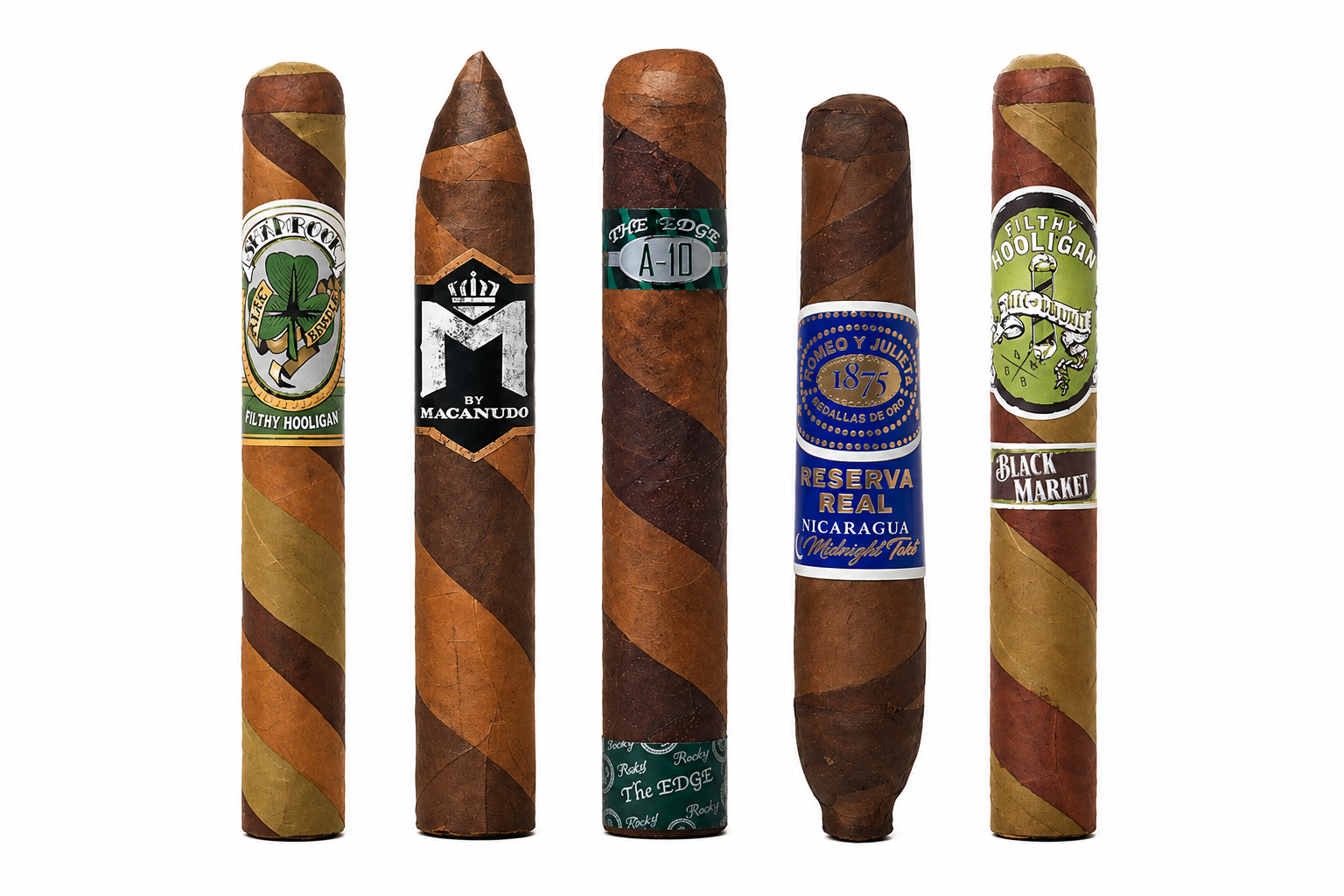
Here’s the one that most literally answers our title. A barber pole cigar, sometimes called a twisted, spiral, or candy cane cigar, is made with two (and occasionally three) different wrapper leaves wound around the body in a spiral. The result looks just like the red-and-white striped pole outside a traditional barbershop, usually with a light leaf, like Connecticut shade, twisting around a dark one, like maduro.
It isn’t just a gimmick, either. Combining wrappers lets a blender play with flavor in a way a single leaf can’t:
They’re also tricky to make. The roller has to cut the leaves into thin, even strips and wind them at a consistent angle, with tidy overlaps and no gaps or wrinkles, all while keeping the cigar firm and well-constructed. A sloppy spiral can mean an uneven burn, so a good barber pole is a real sign of craftsmanship.
If you want to try one, they come in a range of strengths and flavor profiles, so it’s worth reading the description to see which wrappers were used. And if you’ve been wondering why some cigars seem to have two wrappers, chances are good this is what you saw.
And here are some “barber pole” cigars that we offer:
Alec Bradley Filthy Hooligan Shamrock Cigars
M by Macanudo Espresso Belicoso Cigars
Romeo y Julieta Reserva Real Nicaragua Midnight Twist Twisted Love Story Cigars
Rocky Patel The Edge A -10 Sixty Cigars
Alec Bradley Black Market Filthy Hooligan Cigars
Since we’re on the subject, it’s worth appreciating why the outer leaf gets so much love. Wrapper leaves are typically grown with extra care, often under cloth tents in the case of shade-grown varieties, so the leaf stays thin, silky, and unblemished. Manufacturers may even reject otherwise usable leaves for wrapper duty because of uneven coloring, mottling, or minor spotting. They’re picked, cured, and sorted by color and quality, and they come in a wide range of shades:
Candela: a greenish hue, light and mild.
Connecticut Shade: Golden tan, usually smooth and creamy.
Natural/Habano/Corojo: medium browns, with more spice and richness.
Maduro: dark brown, often with notes of sweetness and cocoa.
Oscuro: nearly black, bold and deep.
Because your lips and palate make direct contact with the wrapper, it has an outsized effect on your first impressions. So when you spot a smooth, even, slightly oily leaf, you’re looking at the cigar’s best foot forward.
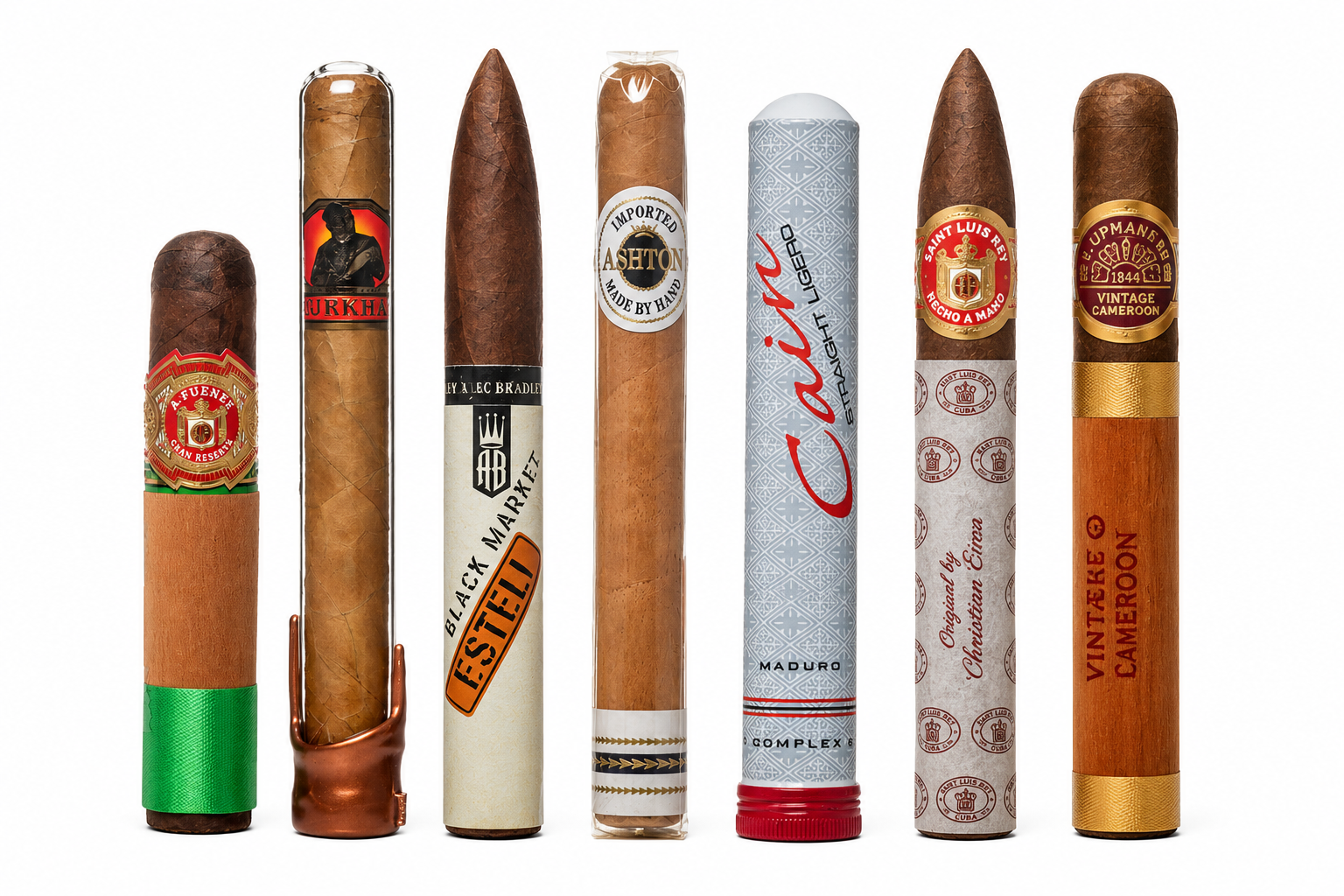
Sometimes the “second wrapper” isn’t tobacco at all. Plenty of cigars show up wearing an extra layer designed to protect them:
Cellophane: a clear sleeve that guards against bumps, scuffs, and sudden humidity changes. It’s especially handy for shipping and for cigars sitting on a retail shelf.
Spanish cedar sleeves: thin sheets of cedar that wrap around the cigar. They add a bit of aroma, help regulate moisture, and make the cigar feel a little more special.
Tubes and foil: aluminum or glass tubes protect cigars on the go, and they’re especially popular for travel.
Whether to leave the cellophane on is one of the great friendly debates in cigar circles. Some folks leave it on while storing cigars in a humidor, since it provides an extra buffer against sudden changes in moisture. Others remove it right away so the cigar can “breathe” and absorb the humidor’s humidity more evenly. Neither approach is wrong. It’s about your climate, your storage setup, and what you prefer.
Try some cigars in a sleeve or tube:
H. Upmann Vintage Cameroon Toro Cigars
Saint Luis Rey Eiroa 30th Anniversary Torpedo Cigars
Cain Maduro 550 Tubo Cigars
Ashton Classic Double Magnum Cigars
Alec Bradley Black Market Esteli Punk Cigars
Gurkha Grand Reserve Churchill Natural Cigars
Arturo Fuente Chateau Fuente Maduro Cigars
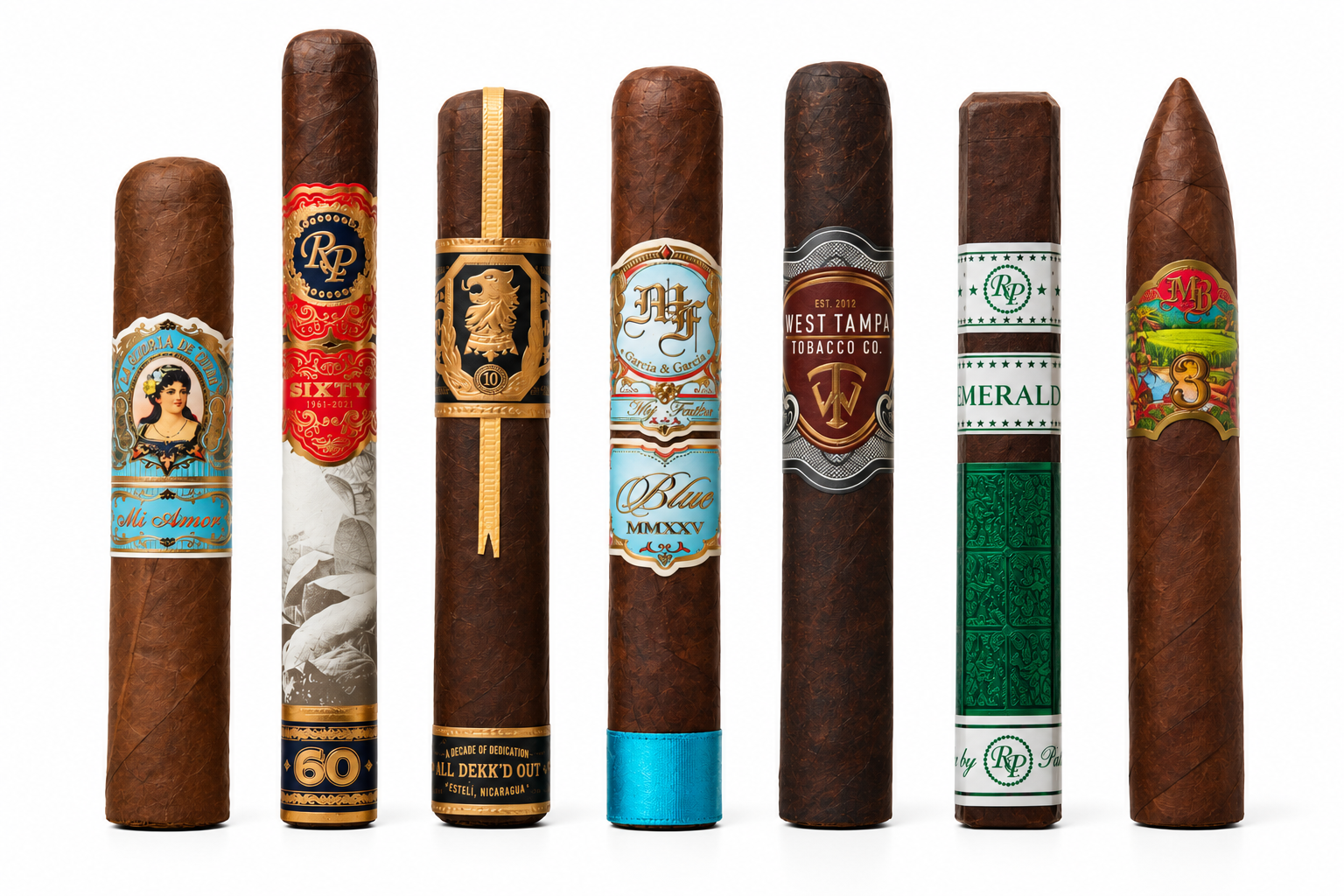
Another thing that can look like an extra layer is the cigar band, that decorative paper ring around the body. Bands show the brand, sometimes the line or blend, and, for many cigar lovers, they’re collectible mini works of art.
Some smokers take the band off before lighting up, while others leave it on. If you want to remove it, go slowly and gently peel it away to avoid tearing the wrapper. When in doubt, it’s perfectly fine to leave it on.
Personally, I leave the band on and smoke down to about an inch away from it. By then, the smoke and residual heat have warmed the cigar from the inside out, often loosening the adhesive enough for me to gently peel the band away. This trick only works for bands closer to the head of the cigar; bands near the foot need to come off before lighting.
Some cigars that have beautiful bands:
La Aroma de Cuba Mi Amor Duque Cigars
Rocky Patel Sixty 1961-2021 Toro Cigars
Drew Estate Undercrown Maduro Robusto Cigars
My Father Blue Robusto Cigars
West Tampa Tobacco Co. Red Toro Cigars
Rocky Patel Emerald Robusto Cigars
Oliva Master Blends 3 Torpedo Cigars
Take a look at the head of the cigar, the end you’ll put in your mouth. It’s finished with a small, round piece of wrapper leaf called the cap. It’s usually attached with a natural, flavorless vegetable-based adhesive, and it keeps the wrapper from unraveling when you cut the cigar.
Because the cap is a separate piece of leaf layered on top, it can look like a second wrapper. Some cigars feature a triple cap, a common Cuban finishing technique, while others have a pigtail, a small twist of leaf at the head. A neat, tight, well-seated cap is generally a sign of careful craftsmanship.
Not every cigar uses whole-leaf tobacco for every layer. Some, especially more affordable or machine-made cigars, use reconstituted tobacco sheets (sometimes called homogenized tobacco leaf). These are made from tobacco fibers and scraps, pressed into a uniform sheet. They can be used as binders or even as wrappers, and they tend to have a very even color and texture. If you notice a cigar with two layers that look almost identical or oddly uniform, there’s a decent chance one of them is a reconstituted sheet doing its job.
Beyond barber poles, some blenders deliberately use a double binder or a layered outer leaf to fine-tune the cigar. They might do this to:
Add complexity or a particular flavor note.
Adjust the color or the look of the finished cigar.
Improve how the cigar burns or holds its structure.
It takes real skill from the roller to pull off, and it’s far less common than the explanations above, which is part of why people talk about it. If you suspect a cigar is built this way, the best way to find out is to check the maker’s description. Manufacturers who go to this length often like to share the details.
Because understanding what’s under (and on) that wrapper makes you a more informed and happier cigar enthusiast. A few takeaways:
Flavor is a team effort. The wrapper, binder, and filler each contribute. Don’t give all the credit to the outer leaf.
Two wrappers can mean two personalities. Barber pole cigars let you taste contrasting leaves in a single smoke.
Storage matters. If a cigar dries out, the wrapper can crack and the layers start to separate. Keeping your humidor steady (around 65-70% relative humidity is a commonly recommended range) protects the construction.
Quality shows. A smooth, snug wrapper, a clean cap, and firm construction usually point to a carefully made cigar. If a layer is peeling or lumpy, it may have dried out or been rolled poorly.
Unraveling isn’t always the end. A little lifting at the wrapper can sometimes be fixed with a tiny dab of clear, flavorless adhesive, or you can smoke it carefully as is.
So the next time you notice what looks like two wrappers on a cigar, you’ll know to look closer. It might be the binder peeking through, a cedar sleeve, a band, the cap, or, if you’re lucky, a barber pole with two leaves twisting down the length of it. Cigars are one of those hobbies where the more you notice, the more there is to enjoy. Every layer has a purpose, and learning to spot them makes each cigar a little more satisfying.
Check out our collection of cigars and see if you can spot those double wrappers!
0 Comment
Sam is a music lover, snack enthusiast, and self-appointed arugula ambassador who somehow turned all of that into a whole career in writing. Fueled by all the comforts in life and an inexplicable obsession with the spiciest leaf in the salad game, she brings the same chaotic passion to every article that she brings to her own life.
Latest


