WARNING: This product contains nicotine. Nicotine is an addictive chemical.
WARNING: This product contains nicotine. Nicotine is an addictive chemical.
NEWSLETTER
Get special offers and find out what's new in the store. Sign up for the EV newsletter.Trinidad cigars don't have one origin story. They have at least two, and neither side fully agrees with the other.
Habanos S.A., the state-backed Cuban tobacco corporation, dates the brand's creation to 1969. Fidel Castro, Cuba's leader at the time, was an avid cigar smoker, but his cigar of choice for diplomatic gifts was actually the Cohiba, not the Trinidad. Trinidad was the more secretive sibling brand, produced in extremely limited quantities at the famed El Laguito factory.
Some factory insiders claimed Castro personally controlled its distribution, gifting it to high-ranking officials and dignitaries. Castro himself later disputed this, telling Cigar Aficionado he only ever gave Cohibas as gifts and claimed to know very little about the Trinidad brand.
Either way, the cigars weren't mass-produced. Instead, they were hidden away and kept for special occasions, so secret that even people inside Cuba's own cigar industry didn't know they existed until the early 1990s.
It wasn't until 1994 that the first Trinidad cigars were sold publicly, auctioned off for as much as $700 apiece at Marvin Shanken's "Dinner of the Century," a charity event in Paris. Three years later, in 1997, a box of 25 sold at Christie's in Geneva for the equivalent of $456 per cigar, the first time Trinidads had ever hit a commercial auction block. It would be another year after that, in 1998, before Trinidad launched as a proper, publicly available brand, starting with a single size: the Fundador.
The Trinidad family offers a conflicting origin story, claiming their cigar lineage dates back to 1905 under the name Trinidad y Hermanos, founded by Diego Trinidad. When the Cuban Revolution forced them to flee the island, they eventually landed in the U.S. and set their sights on the American market. Their first move came in 1968, when they teamed up with the Fuente family to produce a Tampa-rolled, non-Cuban Trinidad. That partnership dissolved roughly a decade later after Fuente relocated its manufacturing abroad.
A second collaboration emerged in 1997, during a surge in cigar popularity, to create a Dominican-made version, but that reunion was just as fleeting. Undeterred, the Trinidads took legal action against Cuba in U.S. courts over the American trademark rights and secured a victory in 2001. They wasted no time capitalizing on that win, selling the brand and its U.S. rights to Altadis U.S.A. in 2002, the same company that continues to roll non-Cuban Trinidads today.
Some sources say the Trinidad family had a completely separate entity and business; others say it's the very brand we all know and love today. Neither camp has produced anything that settles it for good.
Nobody's settled the disputed origins, and collectors still chase down vintage Trinidads decades later anyway. Its inaugural line was the Fundador, a lancero: long and lean, tasting of vanilla and honey. This cigar is still in production today and remains a commercial success, often associated with class and elegance as the original cigar tied to the Castro-era gifting mystique.
Very little has changed in the cultivation of these cigars, and it shows in the unique shape and blend of Vuelta Abajo tobaccos, which favor flavor and body over sheer intensity.
Since it's been around for decades, cigar enthusiasts have created complementary pairings with the Fundador, like a fresh café con leche or a glass of champagne. Smoke it black, or pair it with something light, and you'll pick up cream notes hiding beneath its subtle nutty sweetness.
Trinidad's collaborations took a modern turn with the Tommy Bahama Island Collection. The Island Collection was announced in July 2025 and officially hit stores that October. Handcrafted by blenders Rafael Nodal and A.J. Fernandez, this line is a departure from Trinidad's Cuban roots: a Nicaraguan puro made entirely from tobacco grown on Fernandez's own farms, a world away from the Fundador's Vuelta Abajo pedigree.
The Tommy Bahama Island Collection features vitolas with nautical names, Marlin, Breeze, and Harbor, along with a Harbor Sampler. The collection includes exclusive Nicaraguan tobaccos designed to excite the taste buds, with a flavor profile that leans on vanilla and cedar, with a kick of spice on the back end. As a medium-bodied smoke, it delivers consistency and intensity across all the vitolas.
This collab trades the business-suit stogie image for something you'd smoke barefoot. This version of cigar living blends island life with an understated elegance.
In addition to the Tommy Bahama collaboration, Trinidad Cigars has also created the Espiritu line.
Trinidad's leadership made a significant move away from the historic Cohiba factory, El Laguito, relocating production to Pinar del Río.
One distinctive feature that stood as a hallmark for decades was the pigtail cap, later dropped for the brand's 50th anniversary release.
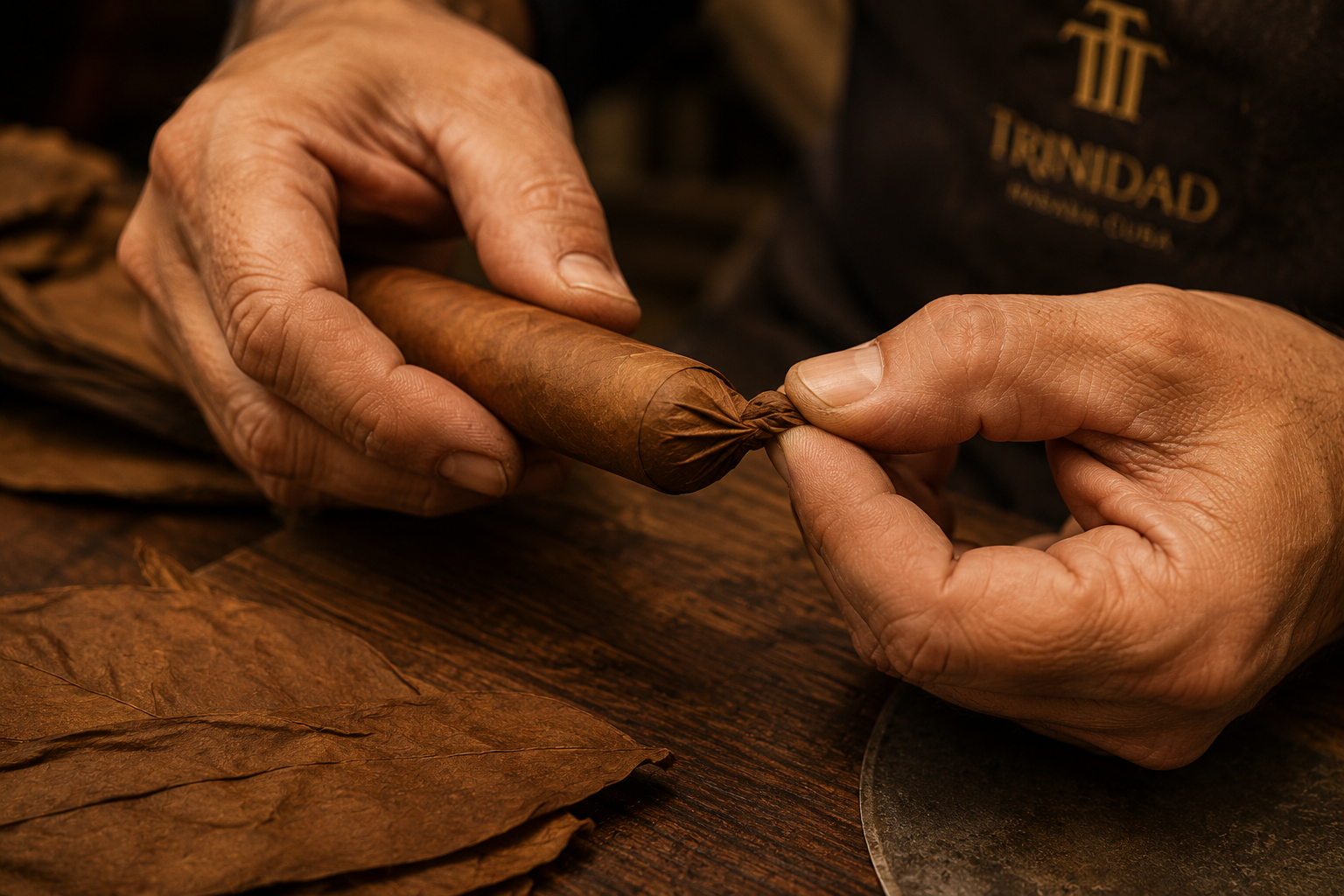
The packaging tells its own story. When Trinidads were first sold commercially, they came in plain cedar boxes, clean and sleek for the time, but also a reflection of the fact that the brand had spent so long operating in secret. When it finally reached the market, the packaging was incredibly plain and rudimentary, echoing the social and economic landscape of the era. Today, Trinidad's packaging is iconic: bold and glossy.
There are a plethora of beautiful cigar lines produced under the Trinidad name, but not all of them have the complexity and wherewithal to compete with the Espiritu series. It's a three-part series, with each release offered in five vitolas: robusto, toro, belicoso, magnum, and fundador.
Espiritu was created to pay tribute to the golden age of cigars, celebrating the unique flavor of Caribbean tobaccos from the late 60s. When Espiritu No. 1 was released in 2019, there was a definitive excitement among fans who had long awaited a cigar that could channel that old-school Caribbean spirit through modern Nicaraguan craftsmanship. The first entry in the series is an all-Nicaraguan puro, but it wears that golden-age Caribbean influence on its sleeve with enticingly sweet flavors and aromatics vivid in vanilla and pepper. The aesthetic and taste of Trinidad Espiritu No. 1 was reminiscent of early Caribbean cigars.
The mass popularity of Espiritu No. 1 set the stage for the creation of Espiritu No. 2, which came out in 2021. Unlike its predecessor, Espiritu No. 2 was Brazilian-inspired and leaned into spicier flavor profiles that were largely absent in No. 1. The wrapper leaf played a huge role in this shift, featuring a Brazilian Arapiraca wrapper accompanied by a Nicaraguan binder and a filler blend of Nicaraguan and Brazilian tobacco.
The last part of the series is the much-anticipated Espiritu No. 3. This version serves as a tribute to Mexico. Released on Día de los Muertos in 2023, this cigar leans all the way into that tribute. It features an extra-fermented Mexican San Andrés Maduro wrapper leaf housing a Nicaraguan binder and filler. The oily wrapper is full of natural oils developed during the curing process, and upon first light, the flavors culminate into a meaty blend of spice and coffee, with cocoa creeping in underneath. It lends itself to a cedar and earthy profile, especially when the foot is initially lit.
The whole series, from 1 to 3, is unique and a beautiful way to celebrate Latin American heritage and the delectableness of the region's cigars. The distinctness and flavor profile of each part of the series really does take you on a journey unlike any other, which is exactly why I had to highlight it.
Trinidad cigars are premium Cuban cigars known for their refined construction, elegant presentation, and balanced flavor profiles. The brand has long been associated with exclusivity and traditional Cuban cigar craftsmanship.
Cuban Trinidad cigars are handmade in Cuba using Cuban-grown tobacco. Like other Habanos brands, they are produced according to traditional Cuban cigar-making methods.
Trinidad cigars are valued for their history, limited production, distinctive sizes, and refined smoking experience. They were originally produced in very limited quantities before becoming commercially available to cigar smokers worldwide.
Flavor varies by vitola, but Trinidad cigars are often associated with smooth, medium-bodied profiles featuring notes of cedar, cream, earth, spice, coffee, and natural tobacco sweetness.
Most Trinidad cigars are generally considered medium in strength, although the intensity can vary depending on the specific cigar, its age, and how it is smoked.
Well-known Trinidad cigars include the Fundadores, Vigia, Media Luna, Coloniales, and Topes. Each vitola offers a different smoking time, ring gauge, and overall flavor experience.
Trinidad cigars should be stored in a properly maintained humidor with stable humidity and temperature. Proper storage helps protect the wrapper, preserve the tobacco, and support consistent aging.
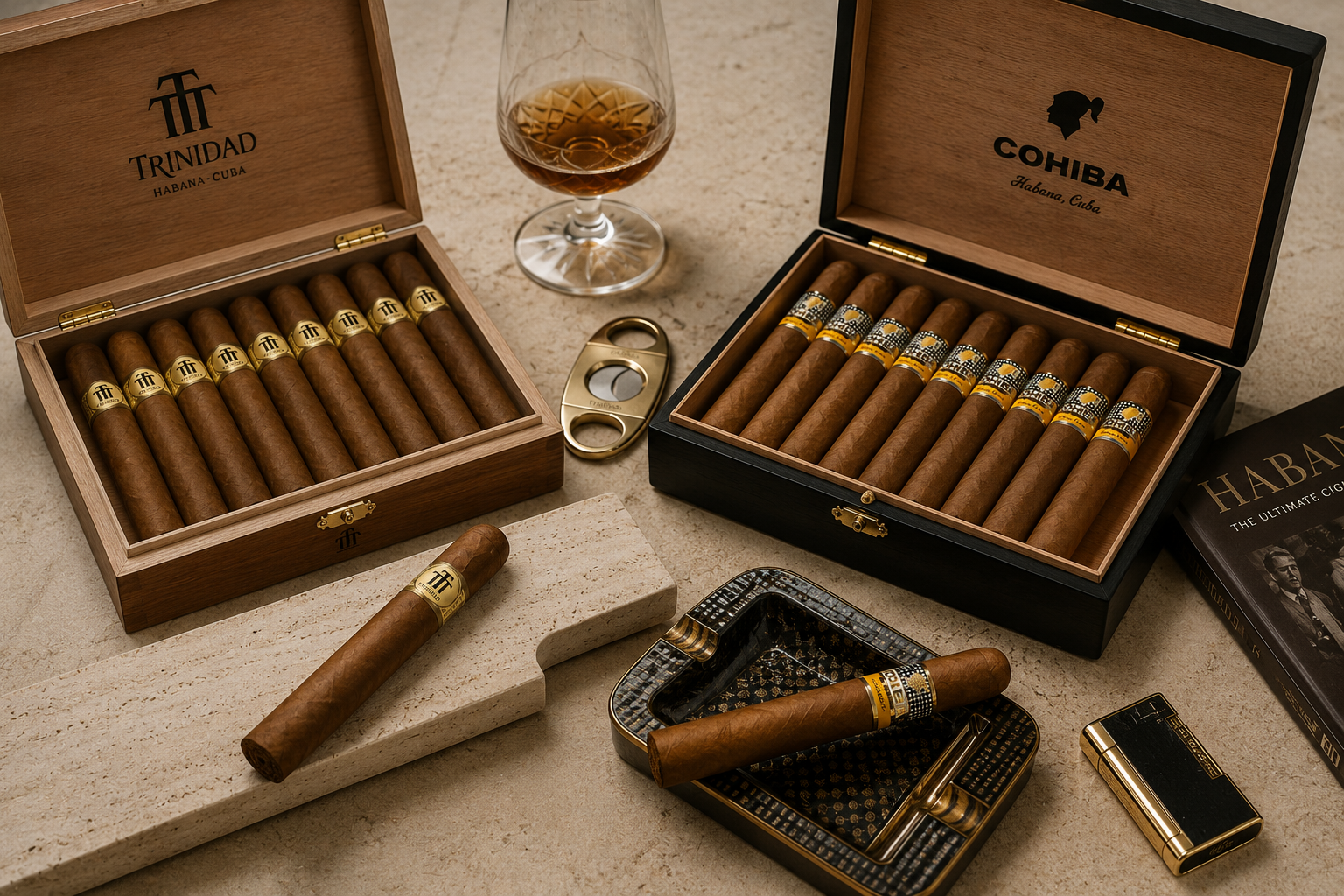
Trinidad and Cohiba are both prestigious Cuban cigar brands, but they offer different flavor profiles and histories. Cohiba is often known for a richer and more assertive profile, while Trinidad is frequently appreciated for its smoother, more elegant character.
Trinidad's history is murky enough that even the people involved can't agree on how it started, and honestly, that's part of what makes it worth paying attention to. This is a brand that spent its first 25 years hidden from the public, only to auction off its earliest cigars for $700 apiece once the secret got out. You can still taste that history today, from the Fundador's honeyed profile all the way to Espiritu's tour through three different tobacco traditions in one series. Grab a Fundador if you want a taste of where it all began, or reach for an Espiritu No. 3 if you're after something bolder. Either way, you're smoking a piece of a story nobody's fully pieced together yet.
0 Comment
Latest