WARNING: This product contains nicotine. Nicotine is an addictive chemical.
WARNING: This product contains nicotine. Nicotine is an addictive chemical.
NEWSLETTER
Get special offers and find out what's new in the store. Sign up for the EV newsletter.Cigar smoking is an enjoyable pastime for some of us. For a true cigar aficionado, however, it's a ritual. Every nuance, from cutting and taking a cold draw to finally lighting, helps shape your overall smoking experience. One aspect that is commonly overlooked is knowing how and when to ash your cigar. This detail may seem insignificant, but it can easily become significant in impacting how your cigar burns, tastes, looks, and smokes. Because cigar smoking is such a mindful experience, paying attention to these small details can enhance your smoking enjoyment but also deepens your understanding of what you are smoking.
Upon lighting your cigar, you'll notice the tobacco doesn't simply burn away into nothingness, rather the cigar leaves behind a column of soft ash that is made from the filler, binder, and wrapper. Beyond being an aesthetic flex (if the ash isn't 4+ inches, I am not impressed) this ash reveals intimate secrets about the cigar's construction and quality of leaves inside.
Most premium cigars are made from long-filler tobacco, using leaves that run the entire length of the cigar. These sticks can easily hold an inch-long ash, and well-constructed ones may stretch past two inches without special care, thanks to that long, continuous filler. In contrast, short-filler cigars (think chopped tobacco) tend to shed their ash more easily. While most aren't worth smoking to me, there are some like the Liga Privada Papas/Nasty Fritas that can be quality smokes, even though they use a blend of short and long filler tobaccos. Reading the ash can tell you about the rolling style and materials used when rolling.
Ash also serves a functional purpose: it acts as an insulator. An exposed cherry is more sensitive to airflow, similar to blowing on coals to revive a fire. This in turn can cause the cigar to burn hotter and distort its flavor. Without that protective layer of ash, a cigar is also more prone to uneven burning, leading to “canoeing,” where one side burns faster than the other.
Ashing should be simple and easy, not something you overthink while smoking. Cigar smoking is about mindful enjoyment, and others will appreciate seeing you savor it calmly instead of fussing over every little detail. But keep in mind when a cigar is ashed too early, the ember is now exposed to the elements and airflows, potentially leading to a hotter or uneven burn. This happened to me just last week with a Tatuaje Havana VI. I initially blamed the cigar's construction, but the real culprit was my own impatience, allowing the exposed ember to "canoe" down one side, spurred on by a gentle breeze. That particular cigar could have used the insulating effects of the ash, lessening the effects of the wind that day, and keeping my burn line steady.
On the other hand, waiting too long to ash, and gravity will remind you who's boss, leaving you a powdery gray streak across on your shirt, pants, or the floor of the cigar lounge, much to the dismay of the proprietor or cleaning staff.
Ashing your cigar is simple, the key is finding that sweet spot where the ash is long enough to stabilize the burn, but loose enough to be easily fall away with a gentle tap.
There are no hard rules for when to ash, but a good rule of thumb is when the ash reaches about one to one and a half inches in length, its time to think about ashing your cigar. Start by gently checking to see if the ash is loose or wobbly. If it is, that ash is ready to fall. If it still feels firm and strong, just leave it be. Forcing it off prematurely can disrupt your burn line.
Always pay attention to your cigar's burn behavior. If it starts burning unevenly or forming a coned shape, a light ashing can help reset the burn. But if the ash is holding tight and the burn is even, resist the urge to tap it off. Let the cigar tell you when it’s ready.
There is no universal hard rule to knowing when to ash. To me, it's simply a matter of feel. When I give my cigar a light tap, the ash should naturally fall under its own weight. If it doesn't, I make like the Beatles and let it be and keep smoking until that same gentle tap produces a different response. Patience is key; forcing it can do more harm than good.
Some smokers prefer to gently roll or lightly tap their cigar on the ashtray, another valid way to remove the ash, but I tend to avoid it. The edges of some ashtrays are angularly sharp and may accidentally split or crack the wrapper, especially after a few drinks when coordination isn't at its finest or when excitement rules the room. You might be sure that tapping the ashtray won't crack your wrapper, but one absent-minded tap is all it takes to regret that confidence.
When it comes to ashing, finesse beats force every time. Let gravity, not impatience, do the work for you.
Ashing your cigar doesn't seem so trivial now, does it? Something as innocuous as ashing your cigar is no longer a mindless afterthought, but even seasoned smokers can slip up from time to time. Heres some common ashing mistakes to avoid:
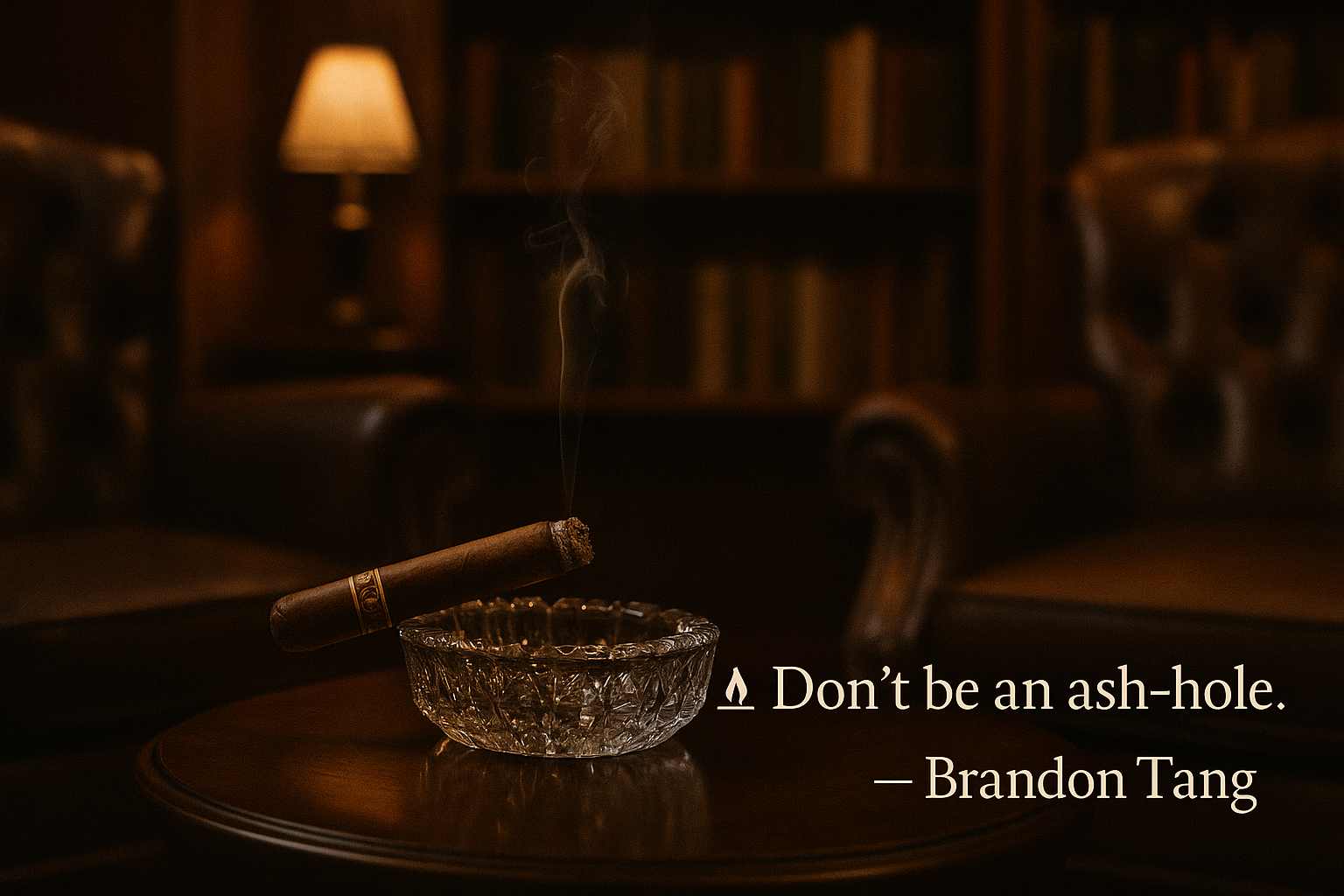
If you're smoking in a cigar lounge, a little etiquette goes a long way. Always use a proper ashtray, preferably one designed for cigars, with wide rests and deep wells. Avoid flicking or shaking your cigar over someone's drink or the floor. Be respectful of the proprietor's lounge and the space they've created for everyone to enjoy. Don't be an ash-hole.
When you're finished, let your cigar extinguish itself in the tray. Do not grind it out like a cigarette, simply set it down and let it fade gracefully.
(Anecdotally, I'll admit: I sometimes stub mine out when I am at home like a Neanderthal, safely protected from society's judgy eyes. But in a lounge? Manners matter, I'm not an animal.)
Knowing when to ash isn't about rules or tradition. It's about awareness. It's a small act of respect for the craftsmanship that goes into creating every cigar. Proper timing preserves flavor, ensures an even burn, and allows you savor the smoke as it was meant to be enjoyed.
So the next time you light up (don't forget the cold draw), pay attention to the ash. It's not just what is left behind, its a reflection of your experience, patience, and appreicate for the art of the cigar...and the ash itself.
0 Comment
Brandon is an eclectic creative into modified cars, cigars, and sneakers, with a background in cannabis culture as a strain reviewer. Off the clock, he’s usually at a hole-in-the-wall spot you haven’t discovered yet, ordering more than he should.
Latest