WARNING: This product contains nicotine. Nicotine is an addictive chemical.


NEWSLETTER
Get special offers and find out what's new in the store. Sign up for the EV newsletter.WARNING: This product contains nicotine. Nicotine is an addictive chemical.
NEWSLETTER
Get special offers and find out what's new in the store. Sign up for the EV newsletter.Posted: November 03, 2026

I've taken a rip off a bong and was met with a harsh burn in the back of my throat. Later to find out that I was smoking from a bong without a percolator. They're increasingly rare in modern bong design, but the moment you hit one that doesn't have it, you notice. You might not even know what one is, despite how much it shapes your experience every time you smoke.
A percolator is defined as a filtration system that diffuses smoke into tiny bubbles as it passes through water, instead of one large pocket of air. You'll find percolators in both bongs and dab rigs, since the filtration principle works the same whether you're smoking flower or concentrate. More bubbles means more surface area, which means more contact with the water. That's what cools and smooths the smoke by the time it reaches your mouth.
But not all percolators do this the same way. Design changes how the bubbles form, how much resistance you feel on the inhale, and how much filtration is actually happening. Here's a breakdown of the most common percolator types you'll find on the market.
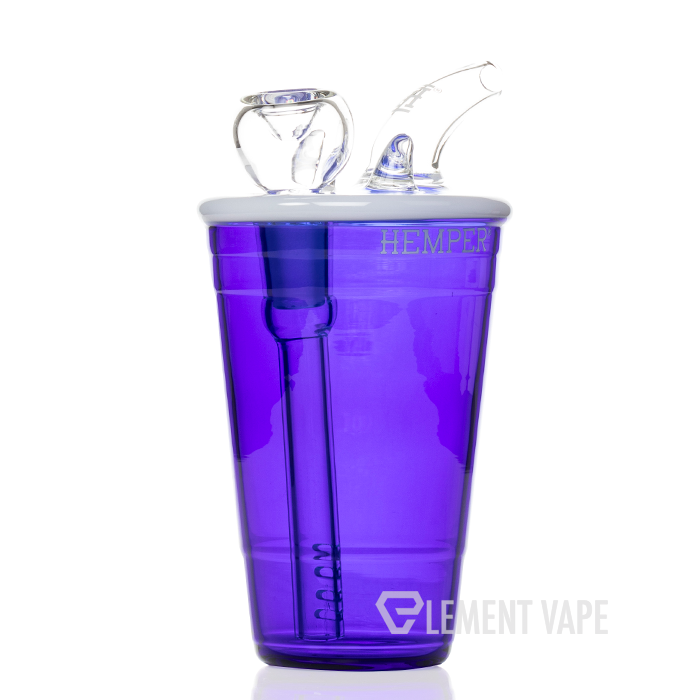
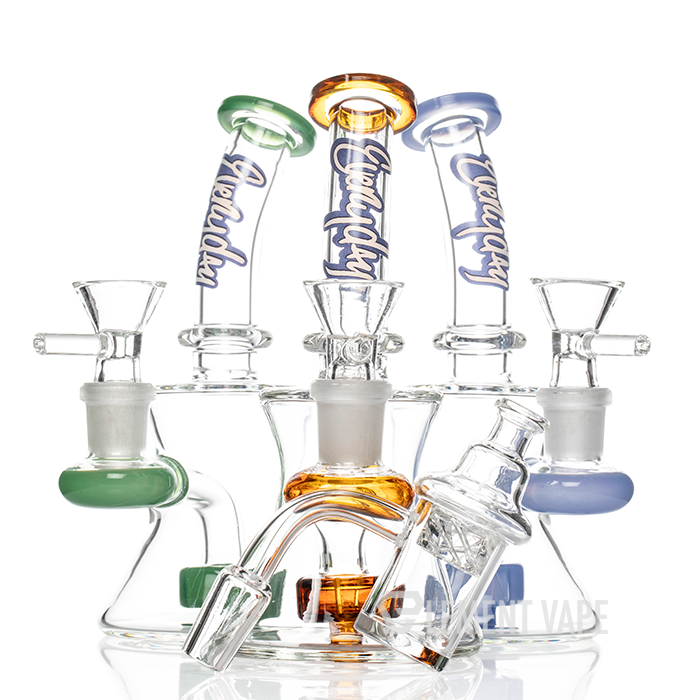
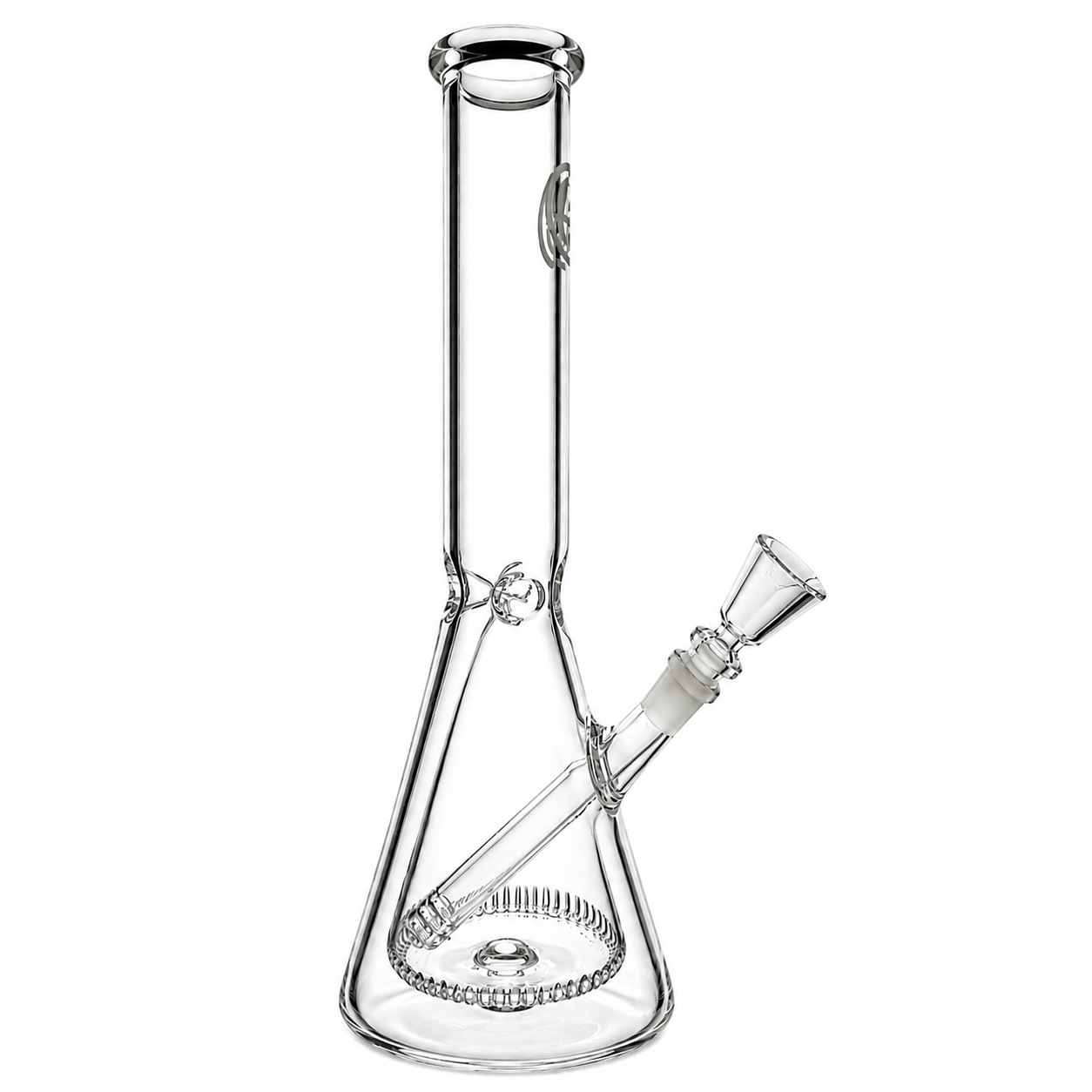
A diffused downstem is the most basic type of percolation you'll find. Here, the percolator is the downstem itself, and you can spot one by the small notches near the base of the tube, usually arranged in rings. Air hitting that slitted bottom breaks apart into tiny bubbles, distributing heat evenly and filtering out impurities on every pull.
It's probably the main reason people don't realize their bong has a percolator at all. The piece is easy to miss unless you know what to look for. Unlike most other percolators, which sit as their own separate piece of hardware in the middle of the chamber, a downstem is already a core part of the bong. Nothing about it signals "percolator" except those slits at the bottom.
You'll find diffused downstems on nearly any type of bong: beaker, straight tube, novelty, you name it. If it's a starter bong, it almost certainly has one. It's the simplest percolator out there, but a step up in complexity gets you to the barrel percolator.
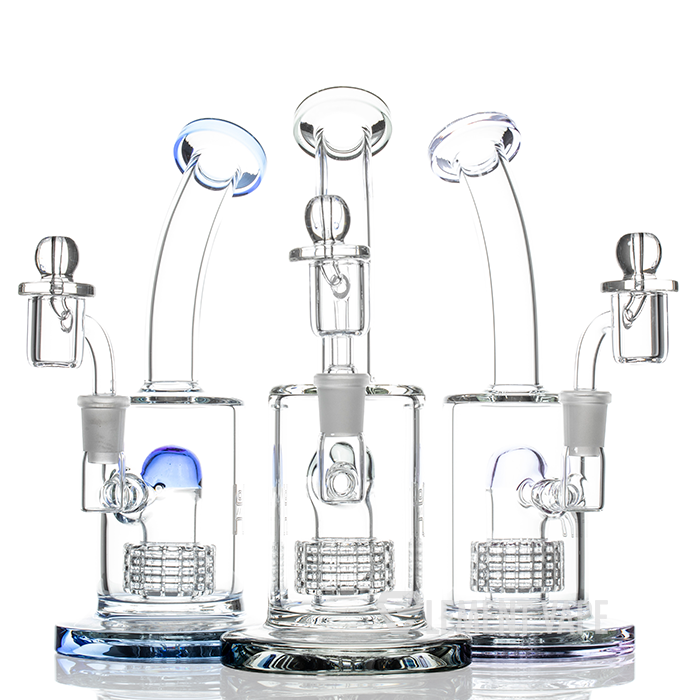
True to its name, this percolator is shaped like a barrel, with gridded notches running around the cylinder that break smoke apart as it passes through. The mechanism is the same as a diffused downstem's, just scaled up with more bubbles, more surface area, better filtration.
What sets the barrel apart is that it isn't locked into one spot in the chamber the way a downstem is. On some specialty rigs you'll find one mounted horizontally instead of upright, which is part of why it's a popular pick for sideways rigs, beaker bongs, straight tubes, and multi-chamber setups.
Simple design, does its job well. Next up is a percolator that looks a lot like its namesake: the donut.
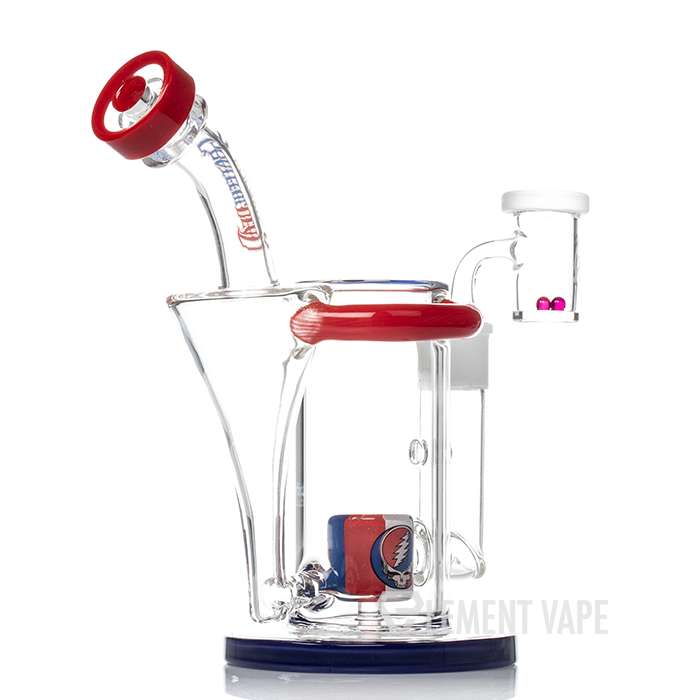
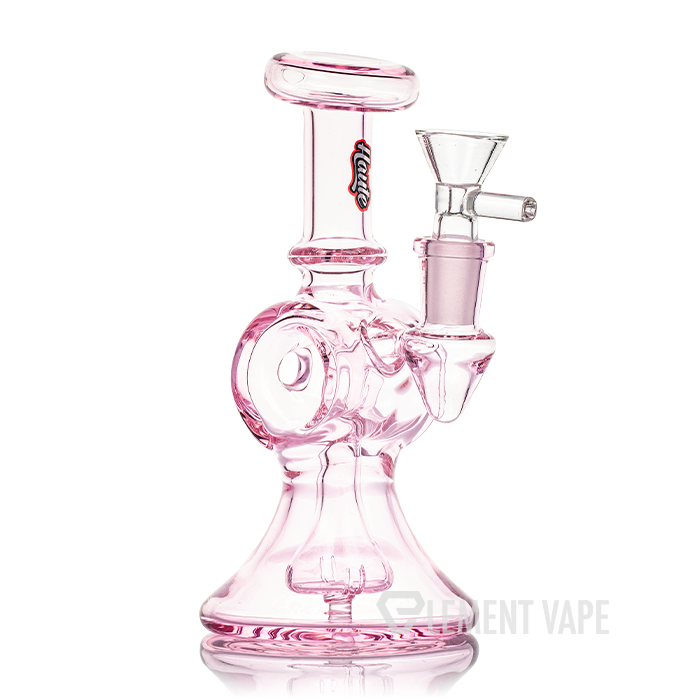
The donut percolator is a solid option, often found in recycler-style rigs. Smoke has to split its path around the ring shape, which slows it down and buys it extra time to cool before you inhale.
Visually, it's a statement piece, featuring a bold circle of glass sitting front and center, usually positioned in the middle of the bong. You'll see it most on artistic and novelty builds, especially two-chamber or recycler setups, where watching the smoke wrap around the ring is half the appeal.
The donut and the circ percolator share that circular shape, which makes them easy to lump together at a glance. Past the basics like bubbles, even heat, and filtration, the two work quite differently.
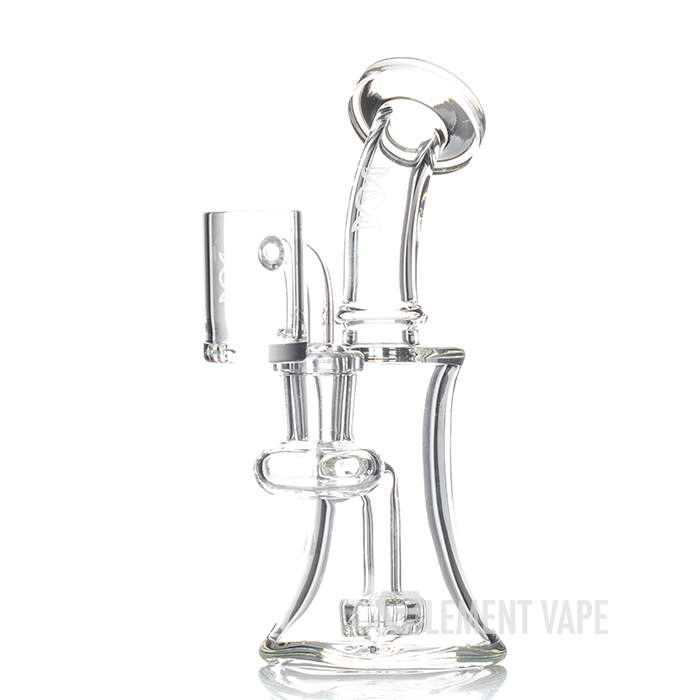
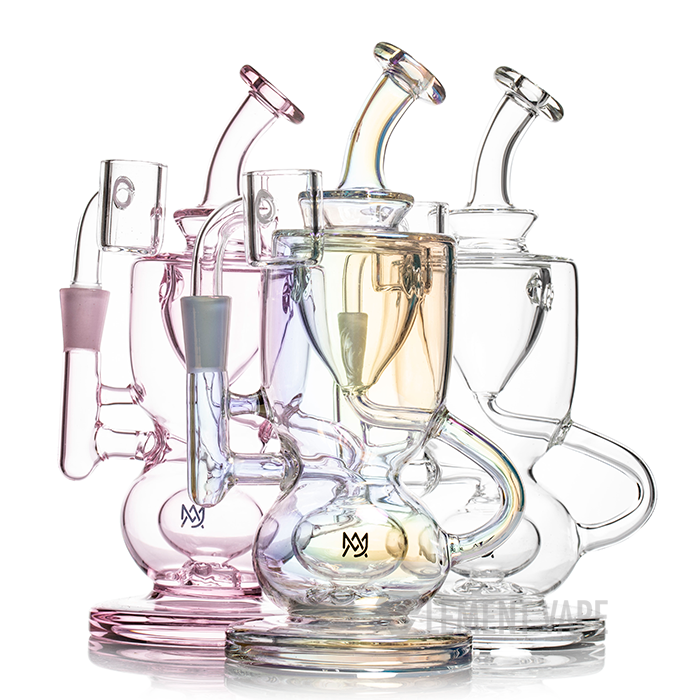
The circ percolator, short for "circular percolator," is one of the most recognizable designs in the smoking world. It looks deceptively simple: a flat glass disc suspended horizontally near the bottom of the main chamber. Don't let that fool you, as a precise ring of carefully spaced slits runs along its outer edge, and those slits do all the work.
Some pieces fuse the circ perc directly into the downstem for a seamless path from bowl to chamber; in others it stands alone, positioned just above the waterline as the primary diffusion point. Either way, it takes the harsh smoke coming down from the bowl and forces it through that ring of slits, tearing it into fine bubbles from every direction at once which is what smokers call 360-degree diffusion. Watch closely and you'll see the smoke swirl and churn through the water like a tiny glass whirlpool. The payoff is a hit that's exceptionally smooth and cool, filtering out more tar and particulate than most simpler percs manage.
That level of filtration isn't free, though. The same narrow slits that break up the smoke so well are also where sticky resin likes to collect, so regular cleaning isn't optional if you want to keep the performance intact.
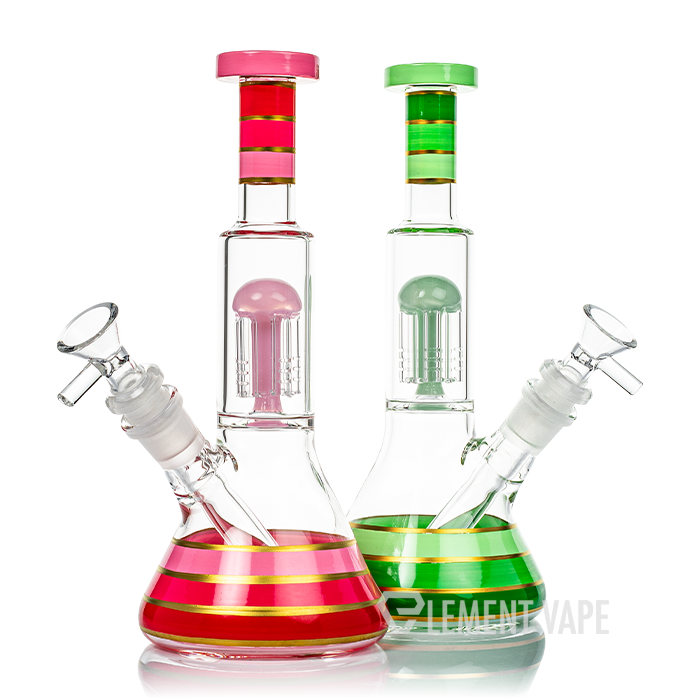
The tree percolator stands upright with branching arms spreading outward from a central stem, like the limbs of a glass tree. Honestly, when I look at one, it kind of resembles a cartoon bacteria particle with a round central body with little arms reaching in every direction. What makes tree percolation good is sheer coverage: filtration is happening across so many points at once.
Depending on the design, a tree perc can have anywhere from four to twelve arms, each hollow and lined with its own slits or tiny holes. Smoke isn't filtered at a single point but pushed outward from the central chamber into every arm, where it gets forced through the slits and broken into bubbles. It's an impressive amount of diffusion packed into one self-contained piece with enough moxy to rival more complex multi-perc setups. Just make sure there's room for it as this perc needs a medium-to-large bong so the arms can fully engage with the water.
Exactly what it sounds like, the double ball perc has two spherical glass chambers stacked vertically, each with its own ring of precisely drilled slits. Smoke enters the lower chamber first, gets forced through the holes into fine bubbles, and rises into the upper ball for a second pass through a separate set of slits before it ever reaches your lungs.
The slits here tend to run small, which makes for more refined, nuanced bubbles than you'd get from a coarser perc. It is perfect for a smoother and cooler hit for those late-night sessions when your throat's already asking for mercy. The catch is space because two chambers need room to work without choking airflow, so double ball percs are mostly limited to larger straight tubes and rigs.
The fritted disc and the honeycomb perc chase the same goal of maximizing diffusion through a flat, disc-shaped surface often by very different means.
The fritted disc is made by fusing crushed glass particles into a flat disc, leaving a surface full of irregular pores and microscopic gaps. That randomness produces an enormous number of tiny bubbles and some of the most intense filtration you'll find in a bong or rig. The smoke gets torn apart so thoroughly that the hit comes out fluffy and remarkably smooth.
The honeycomb, by contrast, is more precise with rows of uniform drilled holes instead of random pores. It still produces excellent diffusion and a satisfying run of micro bubbles, just slightly less aggressively than the fritted disc; which in practice means a smoother, more consistent draw that a lot of smokers prefer over long sessions.
The real difference between the two comes down to upkeep. Fritted discs are resin magnets, thanks to all those uneven little pores. Whereas, honeycombs, with their uniform holes, clean up easily with a good soak and a shake.
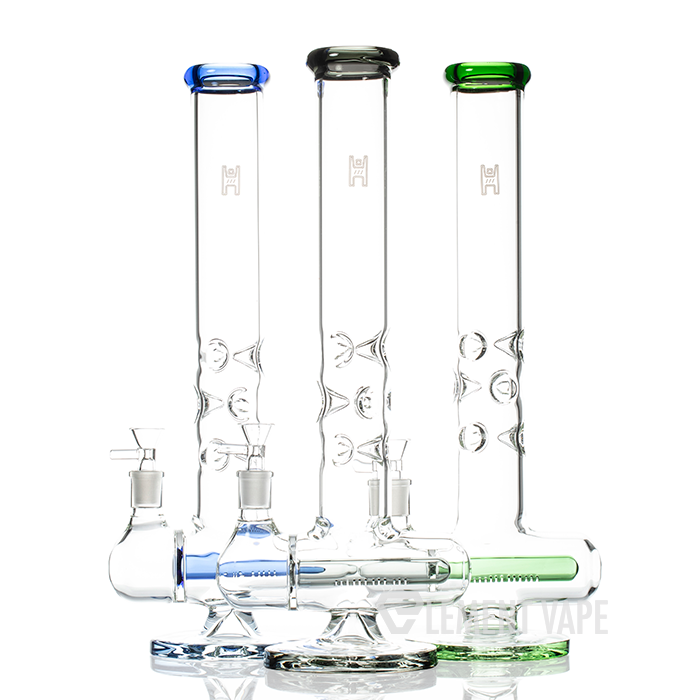
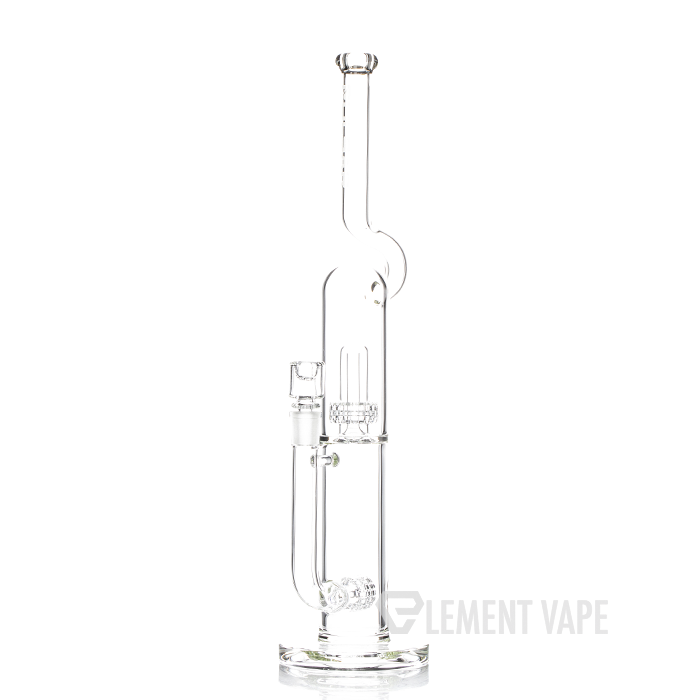
The inline percolator breaks the mold as it doesn't stand vertically like most percs. Instead it lies flat across the bottom of the chamber, a horizontal glass tube running from one side of the piece to the other, with a row of upward-facing slits cut along its length.
Take a pull and the smoke travels down from the bowl into that horizontal tube, then gets forced upward through the slits into a curtain of bubbles that spreads evenly across the full width of the chamber. The slits run the entire length of the tube, so no single spot bears the brunt of filtration. As a result, each hit feels wide open and airy, with very little resistance on the draw.
It holds up fine as a standalone perc, but I've also seen it paired with fritted discs, circ percs, and honeycombs in bigger rigs, which create a multi-stage system for exceptionally smooth hits.
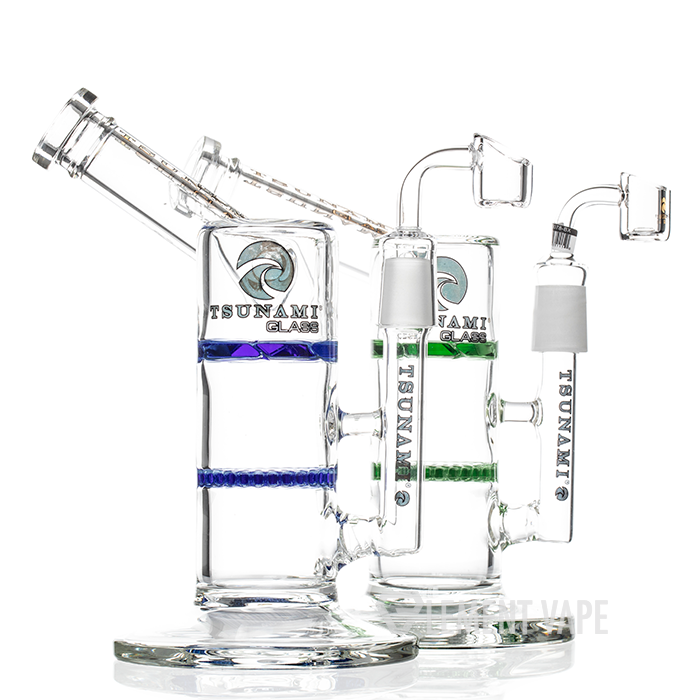
The matrix percolator is one of the most recognizable designs out there, and it's easy to see why. At a glance it looks like a chunky, diamond-studded bracelet suspended inside the chamber. Look closer and you'll notice its real structure features stacked rings, each cut with a grid of slits in a tight crisscross pattern, almost gingham-like.
As smoke rises through the stacked rings, it's forced through those countless slits and broken apart in every direction at once with true 360-degree filtration. It has the same principle as the circ perc, just multiplied across several rings. If you want velvety, smooth hits without the throat burn, this is the perc for it.
I like to take a slow, steady drag on a matrix perc, letting the smoke work its way through each ring before the filtration really kicks in.
As for the name, it likely comes from that crisscross pattern itself which resembles a mathematical matrix of intersecting lines. Whatever the origin, it's a design that adds a lot of personality to any bong or rig.
A showerhead percolator works the same way a circ perc does, but it's fixed to the bottom of the chamber instead of floating as its own piece, usually right where the downstem connects. It's a dome or skirt flaring out from a central stem, slits cut around the lower edge, and when smoke passes through, it fans out into a wide ring of bubbles rising all at once.
There's less glasswork here than a tree or matrix perc, so it holds up better and cleans easier. That's probably why it's everywhere: beaker bongs, straight tubes, even ash catchers. Good diffusion without the drag.
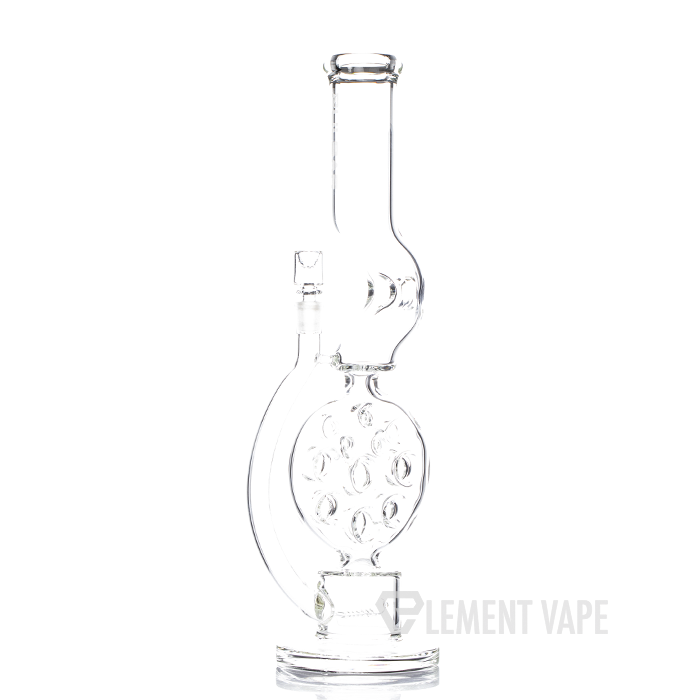
A swiss percolator looks like a block of swiss cheese, a rounded oval or disc covered in a mismatched scatter of big and small holes. Smoke doesn't rise straight through evenly spaced slits the way it would with a honeycomb. Instead it zigzags, weaving between the mismatched holes, which buys it more contact time with the water and is what gives the swiss perc its smooth, low-drag pull.
It's mostly found in hybrid pipes or dedicated swiss tube bongs, though it also gets paired with a second perc, like a honeycomb or inline, in multi-chamber rigs, since its wide-open holes don't add much resistance even when smoke has to clear two filtration stages. It's a good-looking piece, too, which is part of the appeal.
The Collins perc is shaped like a pyramid or cone sitting inside the base of the bong, slits drilled around its perimeter where it meets the chamber. It doesn't need a separate downstem. Most bongs pair a downstem or diffused downstem with a percolator, but the Collins handles both at once, working like a base within the base.
Smoke drops straight from the bowl into the cone, then gets forced out sideways through the slits ringing its bottom edge, sometimes routing through two chambers before it ever reaches the mouthpiece. The name likely traces back to the Collins glass, the tall tumbler used for a Tom Collins, echoing the same logic behind calling a wide-bottomed bong a "beaker."
Collins Percolator
Shaped like a flying saucer, the UFO perc sits inside its own sealed chamber with a separate water reservoir, usually positioned above the bong's main water level. Slits cut into the dome break up the smoke as it rises through.
That separate chamber is the whole trick. Smoke gets diffused once through the downstem into the lower chamber, then travels up a single tube into the UFO dome for a second full pass through its own water and slits. Two diffusion stages in one piece, which is a lot more glasswork than most percs need, and probably why it's rarer to see on entry-level bongs.
This wasn't a fully exhaustive list, just a rundown of the more popular percs you'll actually run into. Things get wild once you start stacking double and triple chambers, since that opens up a huge number of percolator combinations. But hopefully you've got a better sense now of which one fits your setup, and why they matter as much as they do.
Without a percolator, every hit is raw and harsh on the throat. A good perc does the work for you, cooling and softening the smoke before it ever reaches your lungs. It's a small piece of glass that can completely change a session.
So next time you're cleaning your setup, give your perc a little extra attention. It's doing more work than any other part of the piece.
Go explore the world of percs; the glasswork alone is worth admiring, and watching how differently smoke moves through each design never really gets old. Smoke up, perc up, get elevated.
0 Comment
Latest