WARNING: This product contains nicotine. Nicotine is an addictive chemical.


NEWSLETTER
Get special offers and find out what's new in the store. Sign up for the EV newsletter.WARNING: This product contains nicotine. Nicotine is an addictive chemical.
NEWSLETTER
Get special offers and find out what's new in the store. Sign up for the EV newsletter.Butane lighters have become the cornerstone of the tobacco world, from lighting up a perfectly aged stogie to coaxing a soft flame onto a tobacco pipe bowl. It's a necessary accessory for anyone serious about their smoking experience.
Since they're so integral to the smoking experience, you've probably found yourself asking the age-old question: "Why won't my butane stay lit?" I've been through this frustration more times than I can count, and after enough trial and error, I've learned it's usually one of a handful of culprits. The good news is that most of them are easy to fix.
To determine if a leaky gasket is causing your butane issues, listen for a hissing sound coming from your device when it's not in use. That hiss means gas is escaping somewhere it shouldn't. Once you've confirmed the leak, you can get to disassembling your torch.
Before you start, work in a well-ventilated area because you're about to release flammable gas.
When you take apart your butane torch, you'll find two valves. Locate the refill valve and twist it counterclockwise with a small wrench to open it, then vent the remaining gas completely. You'll hear a hiss as the gas escapes, and it's important to make sure it has fully stopped before moving forward. Once it has, refill with a fresh batch of butane.
Screw the valve back into place, then take a look at the seals on your torch. If they look stiff or cracked, it's time to replace them. If they still have the same rubbery texture they had when you bought the torch, they should be fine. Just make sure that when you twist the valve back into place, you’re not overtightening it, as that can crush the seal and cause bigger problems down the road.
A leaky gasket tends to be the most common butane torch killer.
Low fuel pressure is another common reason your butane won't stay lit. As the fuel level drops, so does the flow quality inside the device. The gas becomes choppy, and you'll start seeing the flickering flame that so many smokers complain about.
The fix is to not let your tank run dry. Once you're down to about half a tank, top it off with butane to keep your torch running smoothly. Before refilling, make sure any built-up air has been released from the tank first, as this keeps the fuel flow clean and consistent.
This is probably the easiest fix for a sputtering torch, but sometimes it takes more than a simple refill. I'll admit this one used to trip me up the most, since a flickering flame doesn’t automatically register to me as a fuel and pressure issue.
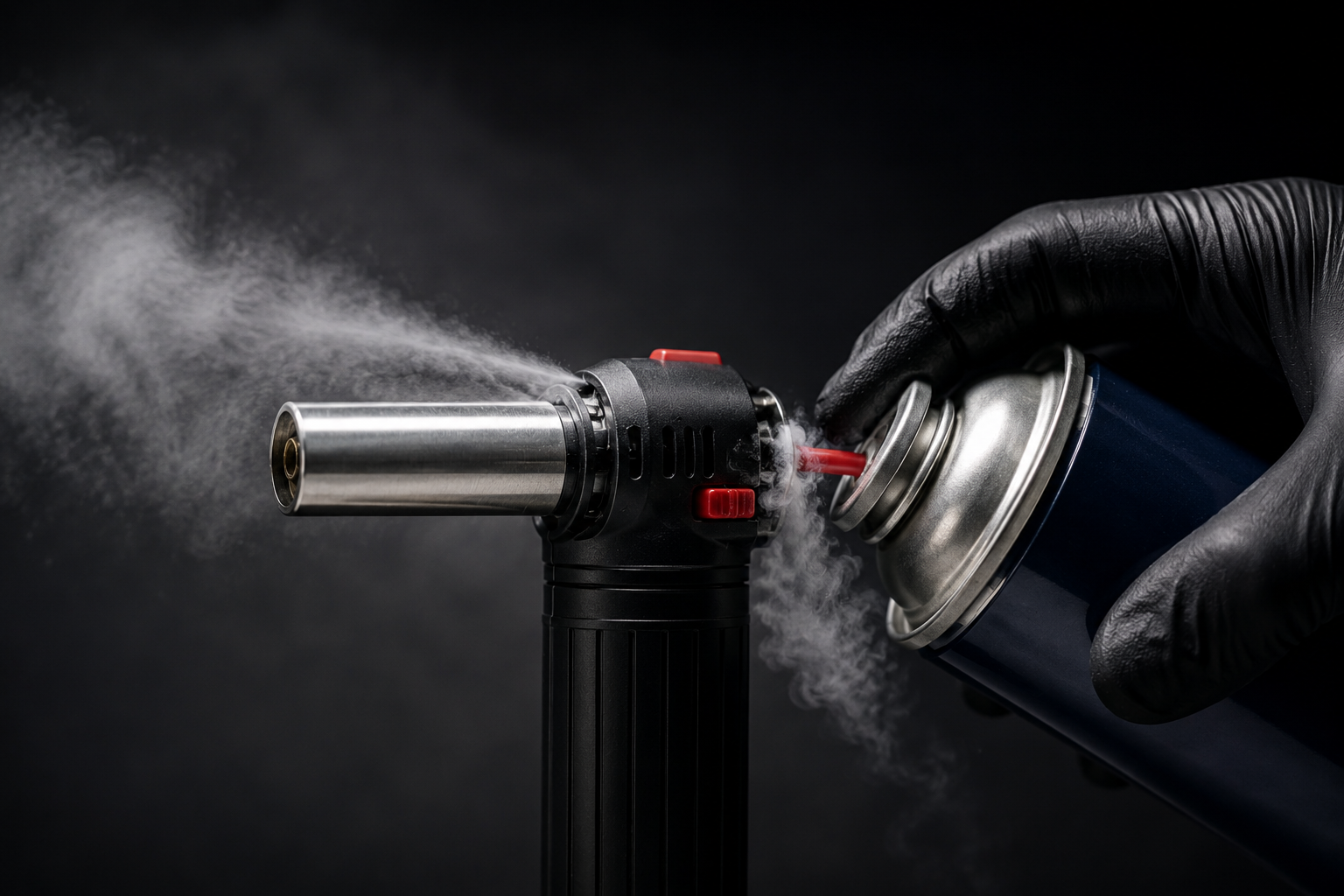
If air bubbles are your issue, you'll need to bleed your torch. Hold the device upside down and tap the button valve to release the excess air that's built up over time. You'll hear a long hiss that fades out, and that's your signal the device is fully emptied of stale air.
As with any refill, do this in a well-ventilated space away from flames.
Once bled, attach your butane canister's nozzle to the refill valve and trickle the gas back in, pressing down in short bursts rather than one long fill. This gives the gas time to settle into the chamber properly.
Air bubbles are a genuine inconvenience, and if you're dealing with them, you're in good company because even the most seasoned smokers run into this. Regular maintenance on your torch goes a long way toward keeping them from building up in the first place.
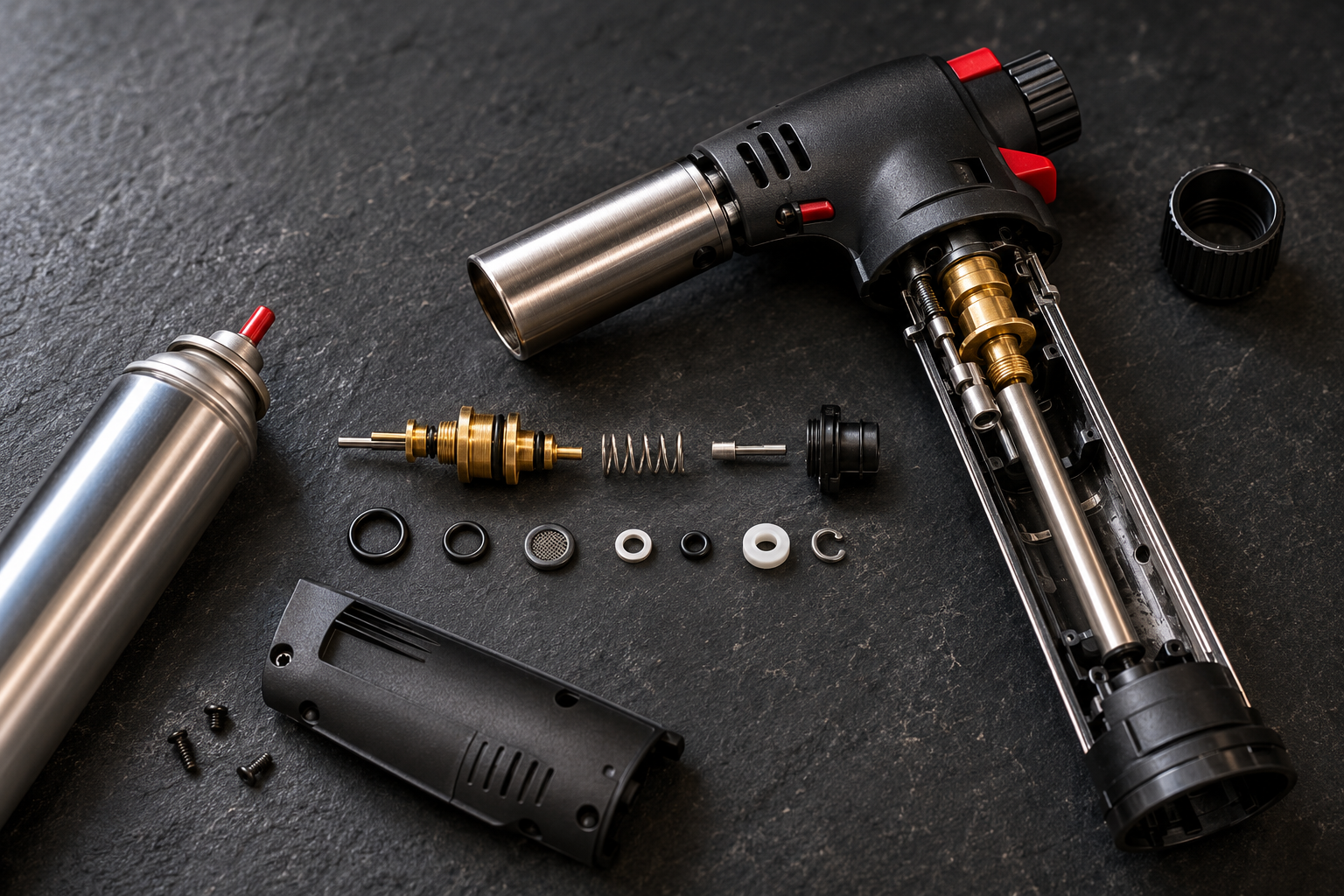
Safety locks are included on certain butane torches. Since the flame gets so hot, companies want to make sure it won't go off in your pocket or at the hands of curious fingers. To troubleshoot this, you may need to refer to the user manual for your device. Each one is different, but this is one of those issues you'll feel so silly about once you realize it's the culprit.
I can speak from personal experience that this is a common problem. You may be thinking to yourself, "I know this doesn't have a safety lock, I've used it before." Trust me, just double check, because you may have activated it by accident.
The arc of the striker sounds more technical than it actually is. In its essence, the electrical spark can sometimes jump instead of igniting the fuel, so the striker just ends up pushing electricity into the air. The biggest perpetrator of this is misaligned wiring and circuiting that doesn't fully connect. Disassemble your torch and find the wiring that attaches the gas stream to the spark. This is where you'll want to make sure it's bent correctly.
You can shape the tip of the wire manually, but if you need to reposition it more precisely, you'll need a nonconductive tool. The wire should point straight into the gas stream, running directly from the lead wire to the burner. Test it out, see if the wires are aligned, and adjust as necessary.
So if you have dirty jets, it's not a big deal and can be fixed almost immediately. Just remember that every time you refill your butane, you should be cleaning out your jet too. If not, this issue will keep occurring. The easiest way to go about this is to use the butane bottle you already have on hand, press the nozzle over the clogged jet, and it should disperse the sediment away.
This is low hanging fruit that you can do pretty much anytime you need to refill. It's super easy to forget to clean up upon every refill, but it's one of those things that's necessary to do. I keep a can of butane sitting right next to my humidor at this point, specifically so I have zero excuse to skip this step.
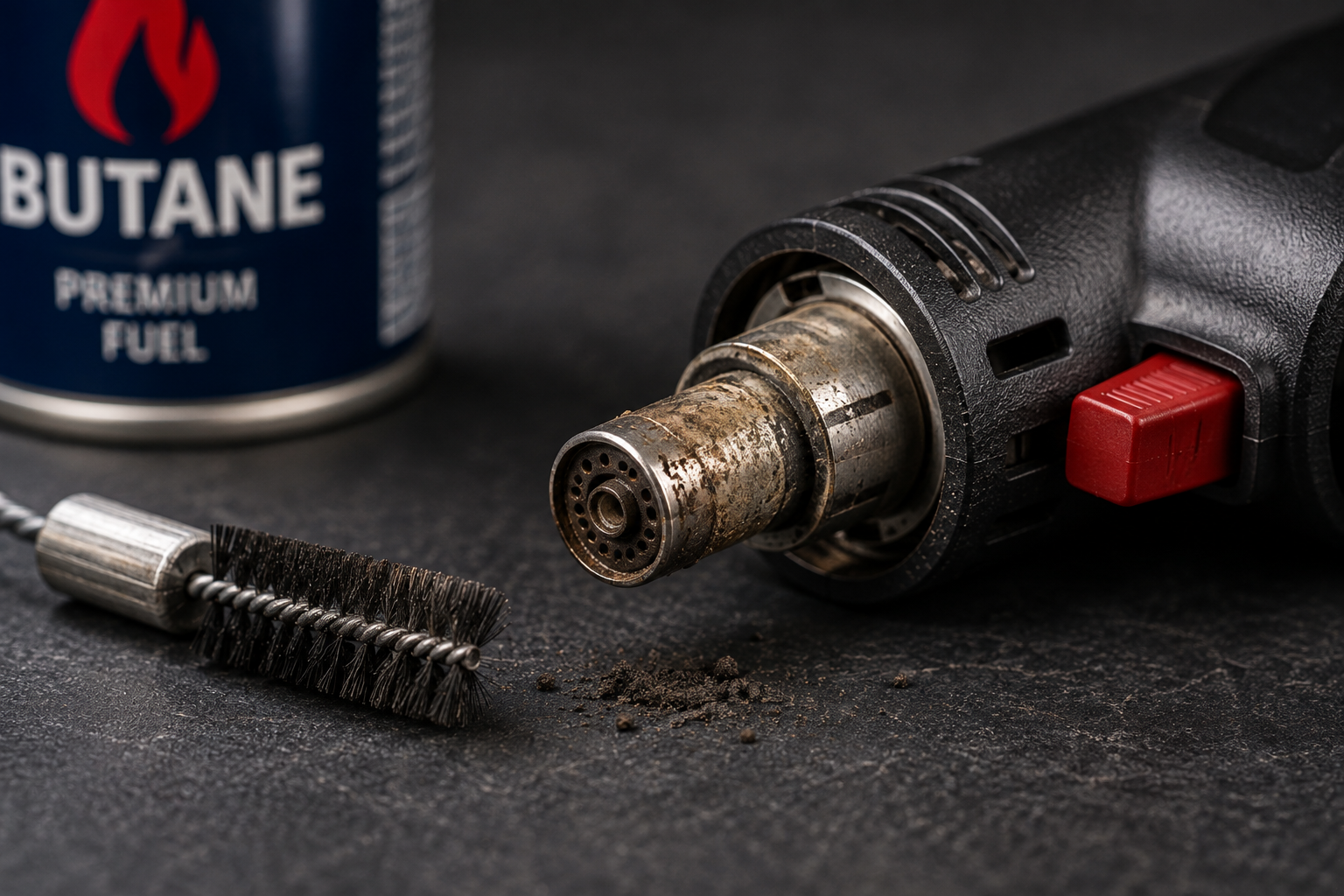
Butane is a finicky creature, and if it's not good quality, it probably won't work. If the butane is unrefined, it will leave behind some heavy duty oils that will keep producing that clogged jet phenomenon from Culprit 6. You want top grade butane if you want it to consistently work time in and time again. If the butane mixture isn't pure butane, that amalgamation of different properties will throw off the flow and clog your system even further.
The only way to solve this issue is to invest in some good quality butane. Do your research, and go check the Reddit forums to see what fellow users are raving about.
Cold weather plays a huge role in butane not staying lit because there is a lack of pressure. In extreme cold, the liquid butane can't fully turn into gas, and you may end up with raw butane spitting out instead of a proper flame. It's an odd phenomenon that happens in the colder months. Higher altitude messes with the system too, since the thinner air up there just doesn't give your torch the same mix it needs to light easily. You'll need to warm up your lighter or just wait to get to a lower altitude. Sorry my mountaineer friends! Think about investing in a propane torch for your next high altitude adventure.
Diagnosing a worn flint or a faulty piezo igniter is fairly simple. For piezo lighters, you should hear a clicking sound when you press down on the ignition. Use a separate lighter to see if the gas will light, because if the gas flow works, then it's an igniter problem, not a fuel problem. On flint torches, you'll need to replace the flint. For piezo torches, you'll need to adjust the spark wire. Personally, I've had better luck long-term with piezo torches that are made by cigar companies like the La Gloria Cubana Triple Torch Lighter. But old school flint torches work just as well too.
This one is pretty self explanatory, but overfilling the tank on your butane torch is a recipe for disaster. Butane expands in the tank, and if you overfill it, you're setting yourself up for a fire hazard. Butane will leak if there isn't enough room for it in the tank. So you'll have to empty it out if you overfill it. Release the gas in short little bursts until it's down to a manageable level. Your parents told you not to play with fire for a reason, so just be very careful when handling an overfilled tank. Like in most cases, you should be in a well ventilated area to mitigate the risk of anything catching fire.
Keeping your butane torch lit is an ongoing struggle that most smokers can attest to. As nice as butane torches are, they take a lot more upkeep than a Bic lighter you toss in the trash once it's dead. More flame just means more maintenance, so you'll have to put in a little extra upkeep time now and then. However, once you know what you're dealing with, it's really just a checklist you’ll need to mentally run through in order to fix your torch. Once you get everything running properly again feel free to sit back and relish all the hard work that went into simply lighting your cigar.
Stay on top of it, and your torch will stay lit when you actually need it to.
0 Comment
Latest


