WARNING: This product contains nicotine. Nicotine is an addictive chemical.
WARNING: This product contains nicotine. Nicotine is an addictive chemical.
NEWSLETTER
Get special offers and find out what's new in the store. Sign up for the EV newsletter.Dry herb consumption has come a long way. What once started as a simple bong setup has evolved into a diverse market packed with innovative devices, from hand pipes to dry herb vaporizers to the increasingly popular ball vape vaporizer. In this article, we are going to take a deep dive into ball vape vaporizers, breaking down what they are, how they work, and why so many dry herb users are making the switch.
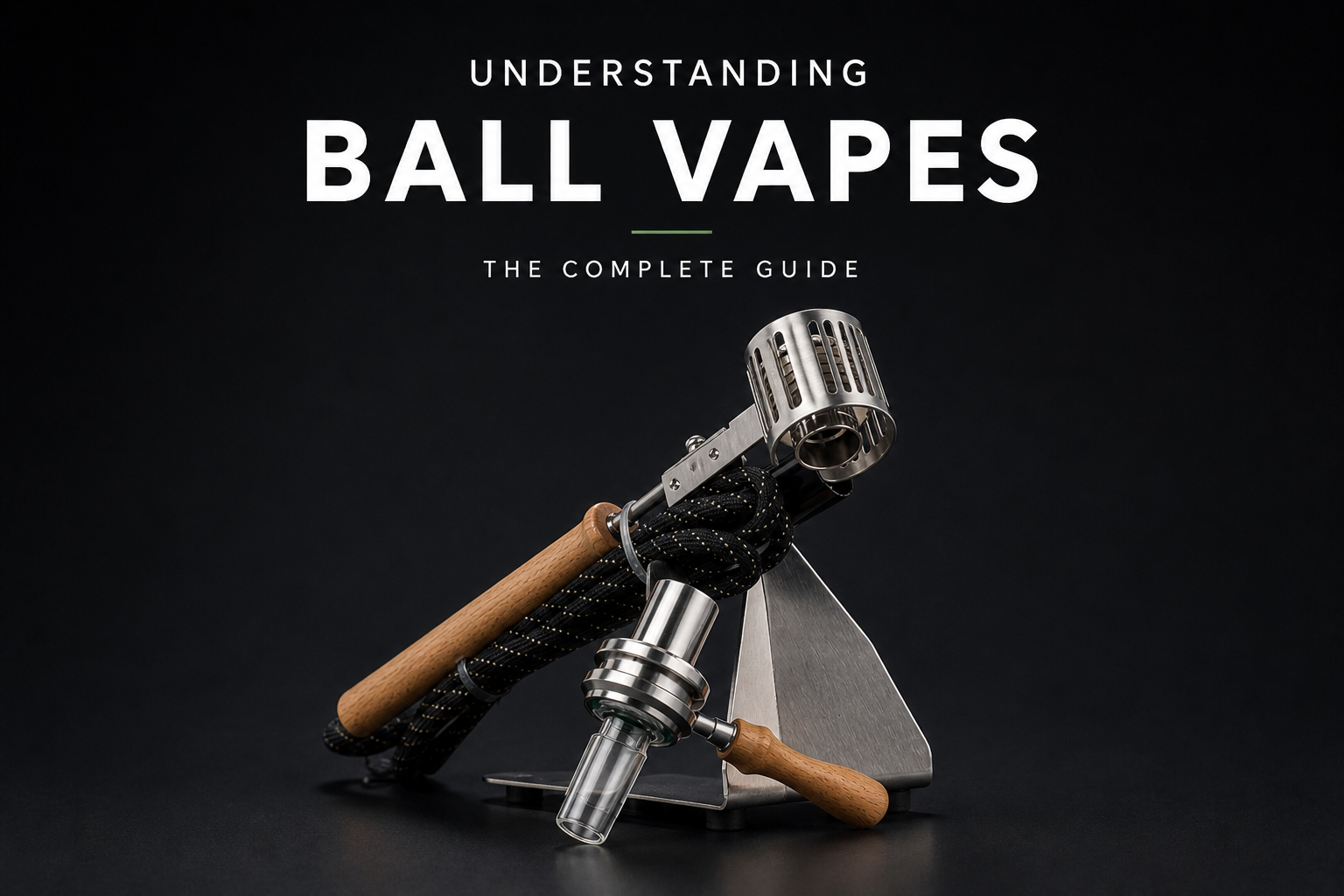
Lauded for their strong convection power, nuanced flavor production, and large chamber capacities, ball vapes have flooded the market of desktop dry herb vaporizers with their unique design and capabilities.
True to their desktop vaporizer classification, ball vapes are powered directly through a wall outlet, drawing on AC electricity to drive a resistive heating coil wrapped around a dish filled with small, dense balls. Unlike portable vaporizers that rely on battery power and compromise on heat consistency, the constant electrical connection allows ball vapes to maintain precise, stable temperatures that battery-powered devices simply can't match.
The balls themselves are the heart of the system, and their material is no small detail. Typically crafted from ruby, sapphire, quartz, or stainless steel, each material brings its own thermal properties to the table like high heat retention, slow heat loss, and flavor neutrality that a standard screen or mesh element can't come close to replicating. The dense, smooth surface area of the balls also allows air to flow around them efficiently, picking up heat evenly rather than creating hot spots that can scorch your herb.
The vaporization mechanism itself is pure convection. As you draw air through the device, it passes through and around the superheated balls, rapidly climbing in temperature before flowing through the flower in the chamber. Rather than burning the herb through direct contact like combustion, the hot air extracts the active compounds as vapor which preserves the flavor profile and delivers a cleaner, more terpene-forward hit. The result is a device with serious power behind it, capable of producing thick, flavorful draws that hit harder and more efficiently than a traditional bong or hand pipe ever could.
Now that the mechanics are clear, it helps to understand the physical components that make that process possible, and how they all connect.
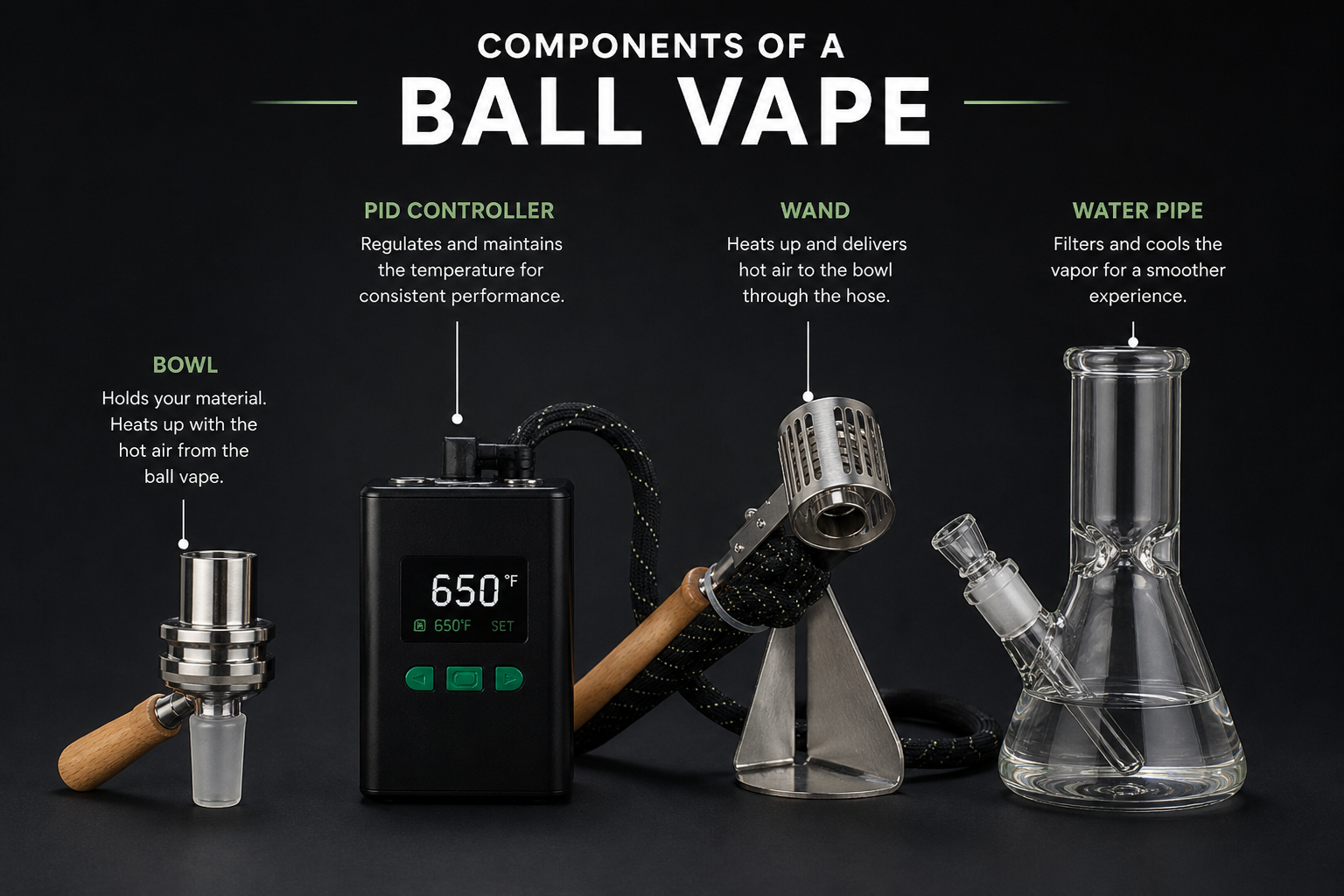
Understanding how a ball vape works is only half the picture, and knowing what it's made of helps you get the most out of your device. At its core, a ball vape is composed of four key components: the wand, the bowl, the PID controller, and a water pipe.
The wand is the heart of the device. It houses the resistive heating coil and the heat-retaining balls, creating the convection chamber where all the thermal magic happens. The coil heats the balls to your target temperature, and the wand's design ensures that airflow passes through them efficiently before ever reaching your herb.
The bowl sits beneath the wand and serves as the chamber where your dry herb rests during a session. Acting as a pass-through, it allows the superheated air from the wand to flow through the flower, extracting vapor without combustion.
The PID controller is considered the brain of the operation. Short for Proportional-Integral-Derivative, it functions as a precision temperature regulator, and is constantly reading the heating element's output and making real-time adjustments to hold your target temperature with accuracy that a simple dial or analog controller couldn't achieve. This level of control is a big part of what separates ball vapes from less sophisticated desktop units.
Finally, a water pipe, either a bong or a rig with a 14mm joint completes the setup. The ball vape's bowl attaches directly to the joint, and the water pipe serves as a filtration and cooling chamber, smoothing out the already clean vapor before it reaches you.
That said, if you're new to dry herb consumption, starting with a bong is the smarter entry point. Ball vapes are considered hard hitters, and they produce a significantly more intense experience than traditional smoking methods. That intensity is also what places them at the higher end of the dry herb spectrum, and understanding where they sit relative to other devices is key to knowing whether one is right for you.
A ball vape is not an impulse purchase, and the price reflects that commitment. Entry-level models start around $100, while advanced units with premium materials and precision engineering can push well past $500. Beyond cost, portability is a genuine limitation. As a desktop vaporizer, a ball vape requires a constant power connection, which means no precharging, no outdoor sessions, and no taking it to a friend's house without planning ahead.
The barrier to entry doesn't stop at price and portability. As covered earlier, a ball vape requires a water pipe to function, either a bong or a rig with a 14mm joint. That said, most people seriously considering a ball vape already have a glass piece in their setup and are looking to elevate their experience rather than build from scratch.
Where the desktop format becomes an advantage is in consistency and efficiency. With a stable power supply and precise temperature control, ball vapes extract more from less, meaning smaller amounts of herb produce hits that are noticeably more potent and flavorful than what you'd get from a pipe, bong, or even most portable vaporizers.
Flavor is one of the most compelling reasons people make the switch, especially those that seek out artisanal, small-batch flower. Because ball vapes rely on convection heating, the herb is never in direct contact with a heating element. Hot air does the work instead, gently extracting the natural terpenes and aromatics the grower specifically cultivated, that combustion would otherwise destroy. The result is a cleaner, more nuanced flavor profile that traditional smoking methods simply can't replicate.
Ball vapes also occupy an interesting middle ground on the consumption spectrum. They deliver an experience that is more intense and refined than traditional dry herb smoking, without crossing into the concentrated psychoactive territory that dabbing produces. For the dry herb purist who wants more power, more flavor, and more control without abandoning their preferred material, a ball vape is a natural evolution rather than a departure.
Finally, customization is an underrated aspect of the ball vape experience. From the material of your balls, whether ruby, sapphire, or quartz, to the aesthetic of your bowl, there is a wide range of options available to build a setup that performs exactly how you want it to while matching your style.
Knowing what to look for before spending your money is the difference between a setup that performs for years and one that disappoints from the first session.
The most important place to start is material quality, because in a device that operates at temperatures upward of 500 degrees, the wrong materials don't just underperform, they become a health risk. The heater housing should be constructed from stainless steel or high-grade titanium, both of which can withstand sustained high heat without degrading. Avoid any device with plastic or polymer components in the heat path entirely. These materials will eventually melt or off-gas under high temperatures, introducing carcinogens directly into your vapor.
The balls themselves deserve equal scrutiny. Ruby, sapphire, quartz, and stainless steel are the accepted standards because they offer the thermal mass and heat retention that convection vaporization requires, while remaining flavor-neutral at high temperatures. Some ball vapes may offer drilled balls. These balls feature a drilled hollow section, allowing for less restrictive airflow at the cost of heat retention. Although it makes drawing much easier, balls with a hollow core will lose heat quicker, so if you plan on taking longer or bigger rips, the drilled nature can result in less vapor production towards the end of your hit.
Beyond the balls, pay attention to the coil and bowl construction. The coil should be enclosed or shielded within the wand rather than exposed, which protects both the user and the component itself from direct contact and debris. For the bowl, borosilicate glass and titanium are the two materials worth considering, as both handle thermal stress reliably without affecting flavor. Before purchasing, confirm that the bowl uses a 14mm joint, as this is the standard size for most bongs and rigs and will determine whether your ball vape is compatible with your existing glass.
Finally, invest in a stable stand for your setup. A device running at 500 degrees that tips or sits unsteadily is a fire hazard, and a quality stand keeps the heater elevated and secure between draws, letting you run your session without having to babysit the device.
At $169.99, the Crossing Ruby Twist Pro Ball Vape Kit sits at the accessible end of the ball vape market, making it a natural starting point for anyone looking to enter the category without overcommitting financially. To understand what that price point actually buys you, it helps to benchmark it against two of the most recognized names in desktop dry herb vaporization: the Storz and Bickel Volcano Classic and the Arizer V-Tower.
Neither the Volcano nor the V-Tower are ball vapes, and that distinction matters. Both are highly regarded desktop vaporizers with proven track records in the dry herb space, but they operate on fundamentally different heating principles. Comparing them to the Crossing Ruby Twist Pro isn't about declaring a winner so much as illustrating what sets ball vape technology apart from the desktop vaporizers that came before it.
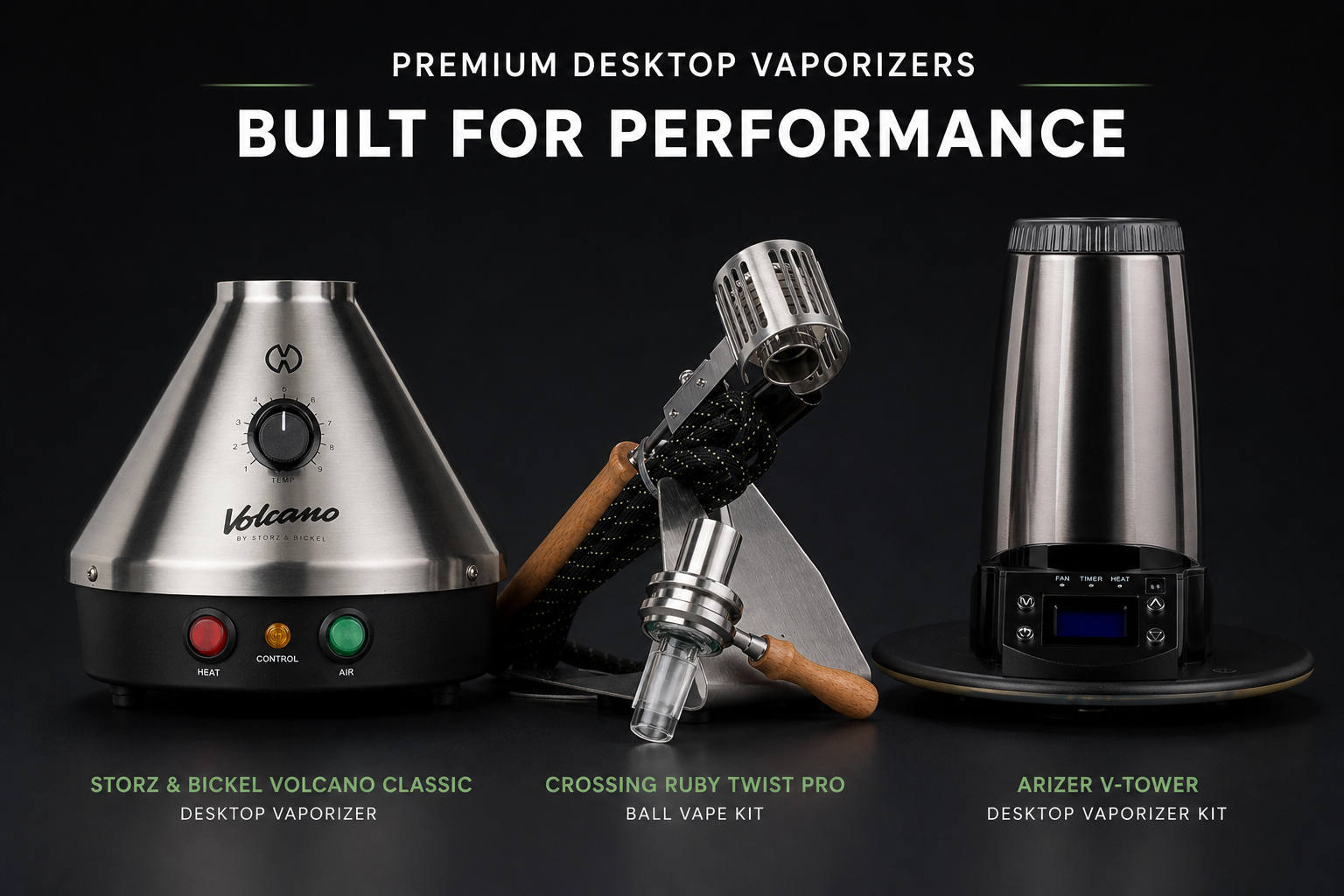
Crossing Ruby Twist Pro Ball Vape Kit
Storz and Bickel Volcano Classic
For a dry herb purist who wants ball vape power and performance without the Volcano's price tag or balloon system, the Ruby Twist Pro makes a compelling case for itself
Crossing Ruby Twist Pro
Arizer V-Tower
If you want a relaxed, approachable entry into desktop vaping with a proven pedigree, the V-Tower earns its reputation. If you want the intensity, precision, and thermal power of ball vape technology at an accessible price, the Ruby Twist Pro is in a different category entirely.
Isopropyl alcohol is the foundation of any good ball vape cleaning routine. Start by dumping out any remaining herb from your bowl and brushing loose debris off the screen. From there, dab a cotton swab in isopropyl alcohol and wipe down the inside of the bowl thoroughly before disassembling your full setup.
Once disassembled, soak all metal and glass components in isopropyl alcohol to break down any built-up residue. The one hard rule is to keep alcohol away from anything electrical like your PID controller and coil should only receive a dry wipe-down, never a soak. For glass and metal components that need a deeper clean, dedicated cleaners like Formula 420 A3 Daily Cleaner and Randy's Black Label are worth keeping on hand. If your bowls are awkward to clean by hand, a bowl stand like the Human Grade Bowl Stand lets you hang and dry them without handling hot or fragile pieces directly.
After soaking, rinse all components thoroughly with water and pat dry. To clear out any remaining alcohol residue before your next session, power the device on at a high temperature for a couple of minutes and let it burn off completely.
As for frequency, cleaning after every single session isn't realistic for most people, but wiping down after every few uses makes a meaningful difference. Consistent maintenance improves airflow, prevents clogs, and keeps the flavor profile of your herb clean and accurate from the first draw to the last. Think of it less as a chore and more as part of the ritual.
Skipped straight to the bottom? No judgment. Here's what you missed:
Ball vapes are a serious upgrade over your traditional bong or rig setup. Those tiny heat-retaining balls aren't just for looks. They supercharge convection heating to produce hits that are stronger, smoother, and significantly more flavorful than anything combustion can offer. Plug it in, dial in your temperature, and let the 500-plus degree convection heat do the heavy lifting.
Whatever ball vape you land on, make sure the balls are ruby, sapphire, quartz, or stainless steel. Anything less and you're compromising the very thing that makes these devices worth owning.
The dry herb community has been sleeping on ball vapes for too long, and frankly, that ends here. They're powerful, they're precise, and once you try one, going back to a standard bong is going to feel like a downgrade. Spread the word, or as we prefer to say, spread the vapor.
0 Comment
Latest