WARNING: This product contains nicotine. Nicotine is an addictive chemical.


NEWSLETTER
Get special offers and find out what's new in the store. Sign up for the EV newsletter.WARNING: This product contains nicotine. Nicotine is an addictive chemical.
NEWSLETTER
Get special offers and find out what's new in the store. Sign up for the EV newsletter.The story of H. Upmann Cigars is one of intrigue, adventure, and espionage. The scene was set in 1843, when Hermann Dietrich Upmann, a young German banker from Bielefeld, arrived in Havana on business for an import-export firm. Captivated by the city's tobacco trade, he bought a local cigar factory and registered the H. Upmann brand in 1844, soon bringing his brother August over to join him.
Upmann also built a banking business catering to tobacco growers and dealers, and is often credited with a clever piece of marketing: gifting clients cedar boxes of cigars, packaging that helped preserve aroma and became an industry standard. The brand's fame grew quickly, but its most dramatic chapter was still decades away, when the company's later owners found themselves at the center of an actual international espionage scandal during World War I.
A quick history refresh on World War I, so you can really sink your teeth into the story: it was a four-year conflict (1914–1918) between the Allied Powers: Great Britain, France, Russia, Italy, and eventually the United States (from 1917), and the Central Powers: Germany, Austria-Hungary, the Ottoman Empire, and Bulgaria. It grew out of decades of arms-racing and imperial rivalry between the major European powers (an oversimplification, but that's the gist).
By the time war broke out, the Upmann business was in the hands of the founder's grand-nephews, Herman and Albert Upmann. The pair allegedly hosted German intelligence agents passing through Havana en route to Europe, using the bank's international network as cover. Some accounts go further, claiming Upmann-linked agents helped stoke unrest in Haiti and the Dominican Republic, though that specific claim is thinly sourced and worth treating as lore rather than fact. What's better documented is that in 1917, the U.S. placed H. Upmann & Co. on its first-ever Enemy Trading List, cutting the firm off from American banks and businesses almost overnight, and Cuba shut the Upmann bank down entirely for over two years.
This hurt the Upmann business significantly. Without the support of America and other Allied Powers, the Upmanns were running out of resources to keep the business afloat. Things came to a head in 1918, when the brothers were both put under house arrest. They were released in 1920, but the business was already on shaky ground. However, the worst was yet to come. In 1922, the brothers were arrested again, this time on bank fraud charges, accused of funneling around $2 million in depositor funds into risky foreign investments. Bail was set at roughly $1 million, and the company declared bankruptcy shortly after.
But this would not be the end of H. Upmann Cigars. Instead, this was the catalyst for their rebirth, and evolution into what they are now. There was a change of owners after the bankruptcy, where J. Frankau & Co. bought the brand and factory at auction and made a run at the Upmann crown.
A few years later, ownership passed to Menéndez, García y Cía, who kept the H. Upmann brand alive until 1960, a year after Fidel Castro's government nationalized Cuba's cigar industry.
Facing nationalization at home, Menéndez and García relocated production first to the Canary Islands, then to the Dominican Republic, where the non-Cuban version of H. Upmann is still made today under Altadis.
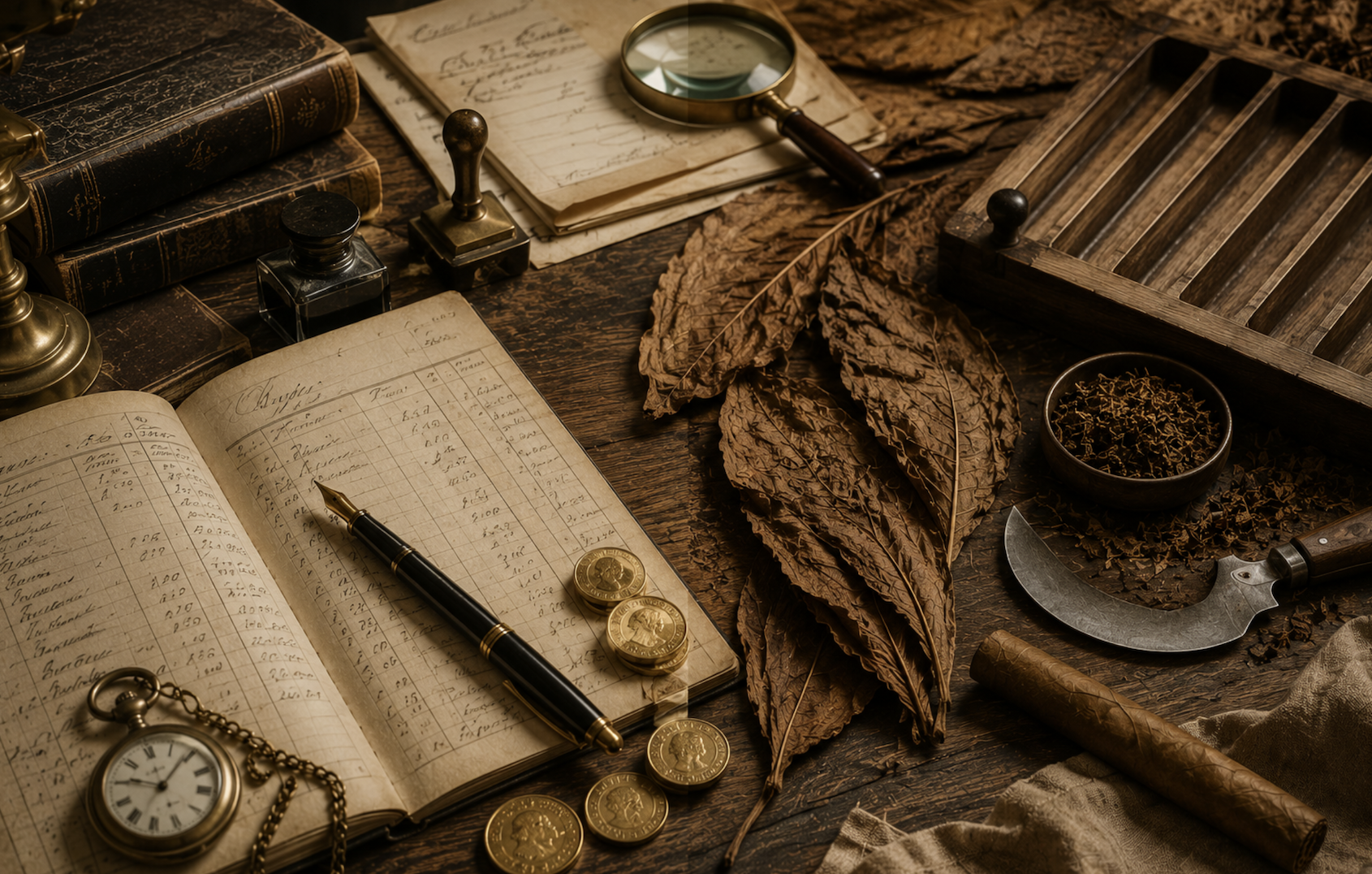
Staying true to their roots, H. Upmann has two series dedicated to their time as a bank: The Banker Daytrader and The Banker by H. Upmann.
The Banker Daytrader: Whether you work in a bank or just want to roleplay being a daytrader with a cigar in your mouth yelling out numbers and stats, this is the cigar for you.
The Banker by H. Upmann is the perfect blend if you want a true taste of history. H. Upmann is nearly 180 years old, and this blend goes back to the beginning of the business, when Hermann and August locked away special cigars for their most important banking clients. Resurrected for the modern line, it's now a popular seller in the H. Upmann collection.
AJ Fernandez is one of the most renowned master blenders in the cigar space, having collaborated with brands from around the world, and now H. Upmann. Altadis wanted a richer, Nicaraguan-forward blend to appeal to a new generation of cigar enthusiasts, and the H. Upmann Nicaragua AJ Fernandez Heritage line was the result: flavor-forward, with notes of coffee and espresso in every draw.
The H. Upmann brand is so multifaceted that it goes beyond new collaborations and novelty banker cigars, as seen in its ability to deliver traditional, classic blends like the Vintage Cameroon line.
Not every H. Upmann story is about reinvention, sometimes it's about getting the original right again. That's the Vintage Cameroon line in a nutshell. Back in the 1970s, H. Upmann's signature cigars relied on genuine African Cameroon wrapper leaf. But by 1995, at the height of the cigar boom, Cameroon leaf became too scarce and expensive to source, forcing Altadis to switch to an Indonesian wrapper instead. In 2003, using high-grade Cameroon tobacco they'd been quietly stockpiling and aging for years, H. Upmann brought the original leaf back with the Vintage Cameroon line, a callback to the blend longtime smokers remembered.
Each cigar ships in a cedar sleeve, a nod to H. Upmann's original cedar-box days. Expect notes of roasted nuts, cocoa, cedar, and pepper in a smooth, medium-bodied smoke that's meant to taste like the H. Upmann of decades past.
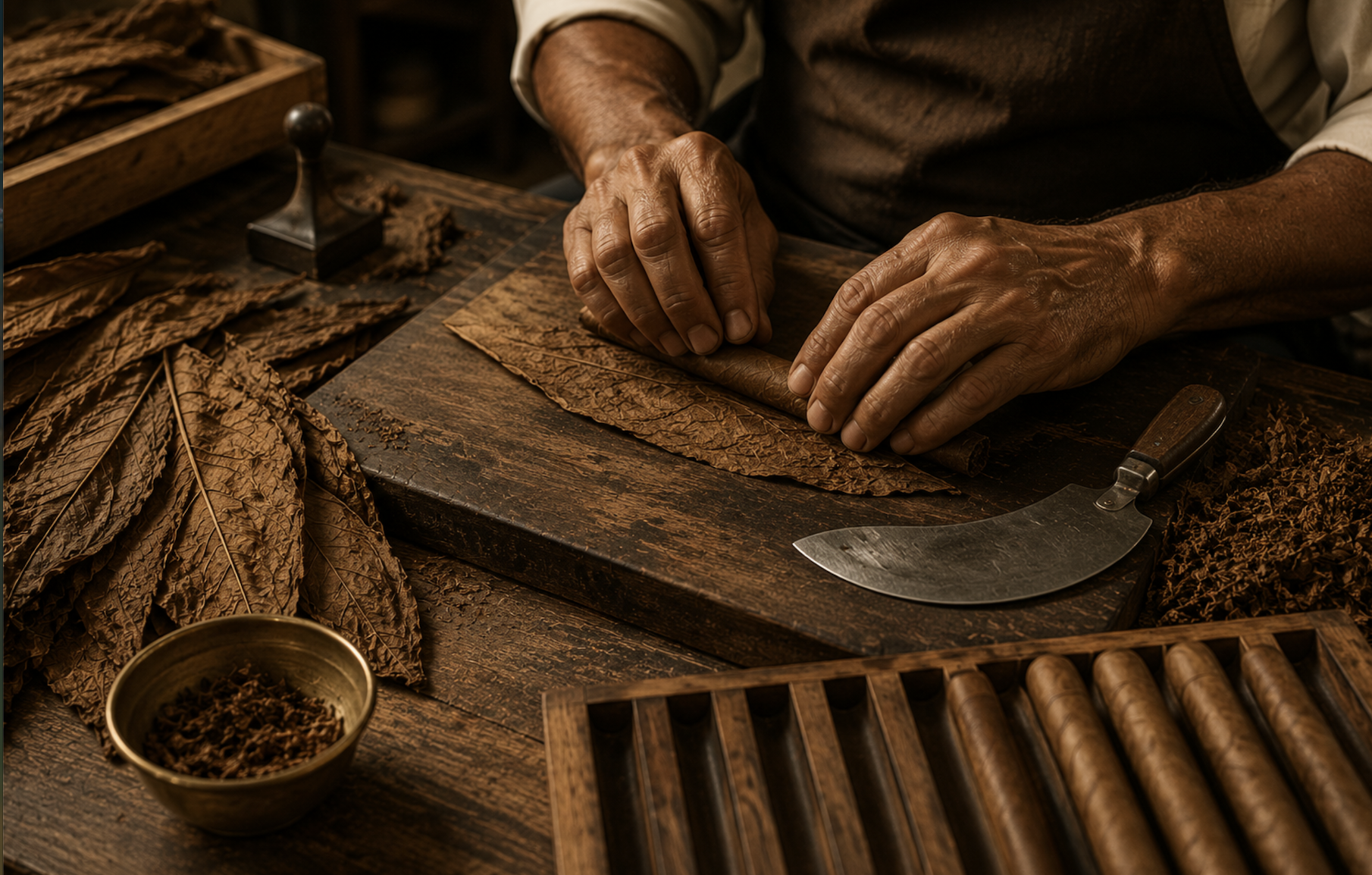
Here's where things can get confusing if you're new to H. Upmann: there are actually two separate cigars carrying the name today, and they haven't been the same company since the 1960s.
The Cuban H. Upmann is still made in Havana, produced by Habanos S.A., Cuba's state-owned tobacco company, a direct descendant of the original brand Hermann Upmann founded in 1844. The non-Cuban H. Upmann, the one behind every cigar covered in this guide so far, is owned by Altadis U.S.A. and made in the Dominican Republic, Honduras, and Nicaragua.
The split goes back to the same nationalization story from earlier in this guide: when Castro's government seized Cuba's cigar industry in 1960, Menéndez, García y Cía took the H. Upmann name abroad, eventually settling production in the Dominican Republic. Cuba, meanwhile, kept making its own H. Upmann under state control, and the two versions have gone their separate ways ever since.
The practical upshot: if you're shopping in the United States, you're only going to find the non-Cuban version on shelves. The Cuban H. Upmann can't be legally imported or sold in the U.S. due to the ongoing trade embargo. So if someone offers you a "Cuban H. Upmann" stateside, it's either a souvenir from travel abroad or something you shouldn't trust the seller on.
H. Upmann cigars are produced in different regions depending on the specific version and market. Cuban H. Upmann cigars are made in Cuba, while non-Cuban H. Upmann cigars are produced outside Cuba for markets such as the United States.
Flavor profiles vary by blend, but H. Upmann cigars are often associated with balanced notes of cedar, earth, nuts, cream, spice, and natural tobacco.
Many H. Upmann blends fall within the mild-to-medium or medium-bodied range, making certain varieties approachable for newer cigar smokers. Stronger blends may be better suited to more experienced smokers.
Cuban and non-Cuban H. Upmann cigars are produced by separate manufacturers using tobacco from different growing regions. As a result, their blends, flavor profiles, construction, and available sizes can differ considerably.
H. Upmann cigars should be kept in a properly maintained humidor to help preserve their moisture, construction, and flavor. Consistent humidity and temperature are more important than frequent adjustments.
Smoking time depends largely on the cigar's size and the smoker's pace. Smaller cigars may last around 30 to 45 minutes, while larger formats can easily last an hour or longer.
H. Upmann has cycled through more identities than most cigar brands ever get to have: banking dynasty, wartime pariah, bankrupt shell, comeback story, and now a genuine staple in humidors everywhere. New owners, new countries, new collaborators, and somehow the blend never lost the thread back to a German banker's side hustle in 1844.
Getting here took a real ride: an actual espionage scandal, two bankruptcies, and a name that kept finding someone willing to carry it forward. So the next time you light one up, you're holding onto all of that.
Smoke it well, and smoke it right.
0 Comment
Latest