WARNING: This product contains nicotine. Nicotine is an addictive chemical.


NEWSLETTER
Get special offers and find out what's new in the store. Sign up for the EV newsletter.WARNING: This product contains nicotine. Nicotine is an addictive chemical.
NEWSLETTER
Get special offers and find out what's new in the store. Sign up for the EV newsletter.Gurkha as a cigar brand has been around since 1989, but the term "Gurkha" has been associated with cigars for over a century. It all started with Nepalese soldiers, who were fierce warriors known for fighting with the khukuri, their iconic curved blade. These Gurkha soldiers were widely respected within the British military, so much so that British soldiers began referring to their own cigars as "Gurkhas," smokes they enjoyed together in the field or brought home as mementos.
Smoking a Gurkha evoked images of battle-scarred warriors, good tobacco, and the fierce reputation of the khukuri blade. That motif carried into the Gurkha brand legacy, which emerged nearly a century after the Gurkha warriors first made their name within the British ranks. It also inspired some of the brand's cigar wrapper art, which depicts a Gurkha soldier carrying a khukuri blade.
Beyond the warriors, the modern brand took root in Goa, India, pioneered by a man named Kaizad Hansotia. Hansotia, an entrepreneur, was on a trip to Goa for his family's watch business when he came across a small cigar stall bearing the name "Gurkha."
The Gurkha name, which had traveled from the British colonial era into India, still lived on this small local brand. Wanting to honor the Nepalese warriors, Hansotia kept the name when he bought the struggling cigar company and worked their image into the logo.
He purchased the brand for around $149, intending simply to give the cigars to his watch clients as gifts. At the time, he had no experience in the cigar industry. It was an innocent purchase that would go on to build a cigar empire.
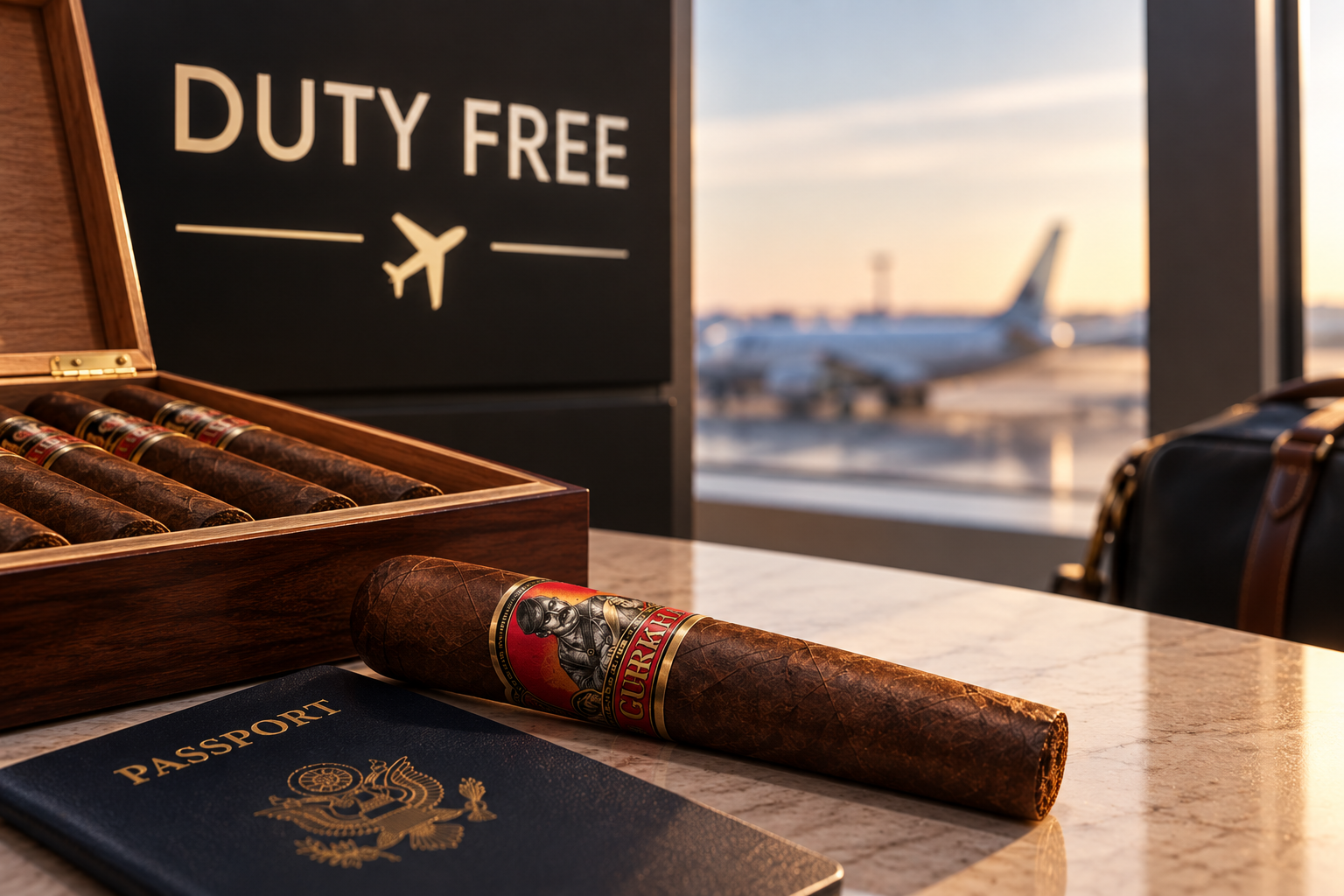
Hansotia distributed the initial cigars to his family's duty-free shops, where they immediately flew off the shelves. He then realized there was an untapped market in premium cigars. The more mature and well-aged a cigar, the more complex and blended its flavor, some of which buyers would pay a premium for. A box of well-aged cigars could sell for triple what people would pay for one fresh off the press, a lesson Hansotia learned quickly.
To a certain degree, Hansotia became the forefather of premium cigar retailing. He had a rare talent for marketing to the wealthy, and the business soon gained real traction.
Hansotia already had a wealth of knowledge in the luxury watch industry through duty free sales, so selling his cigars through his family's duty free channels was a no brainer. To make his mark in that market, he took a meticulous approach to designing the Gurkha boxes, giving them the luxury feel that was missing from the category at the time, sometimes even encasing the cigars in glass tubes known as "tubos" to elevate the packaging further. Since duty free was something of a wild west back then, Hansotia was able to sell sticks for $17 each, a premium price for the 90s that gave the brand an air of exclusivity.
By using Dominican Republic factories to roll and blend the cigars, Hansotia had the blueprint for success already in place. Knowing the price point was high, he made it possible for customers to buy a single stick instead of a full box. It was his way of making the brand more accessible without sacrificing that exclusive feel. But as the brand grew, duty free alone couldn't keep up with demand.
Gurkha had spent five years building the brand strictly through duty free when Miami Cigar owner Nestor Miranda approached Hansotia with a proposition: move the product into tobacco retail stores. The transition would prove to be one of the hardest the brand faced.
Hansotia now had to take on the role of middleman between the product and every retailer he supplied. It expanded the business, but it wasn't an easy shift. The payoff was real, though: "We've been here more than 20 years and every year we've seen a 20 percent growth," Hansotia told Cigar Aficionado.
With distribution solved and the brand's reputation growing, Hansotia turned his attention to what would define Gurkha for the next two decades: the cigars themselves.
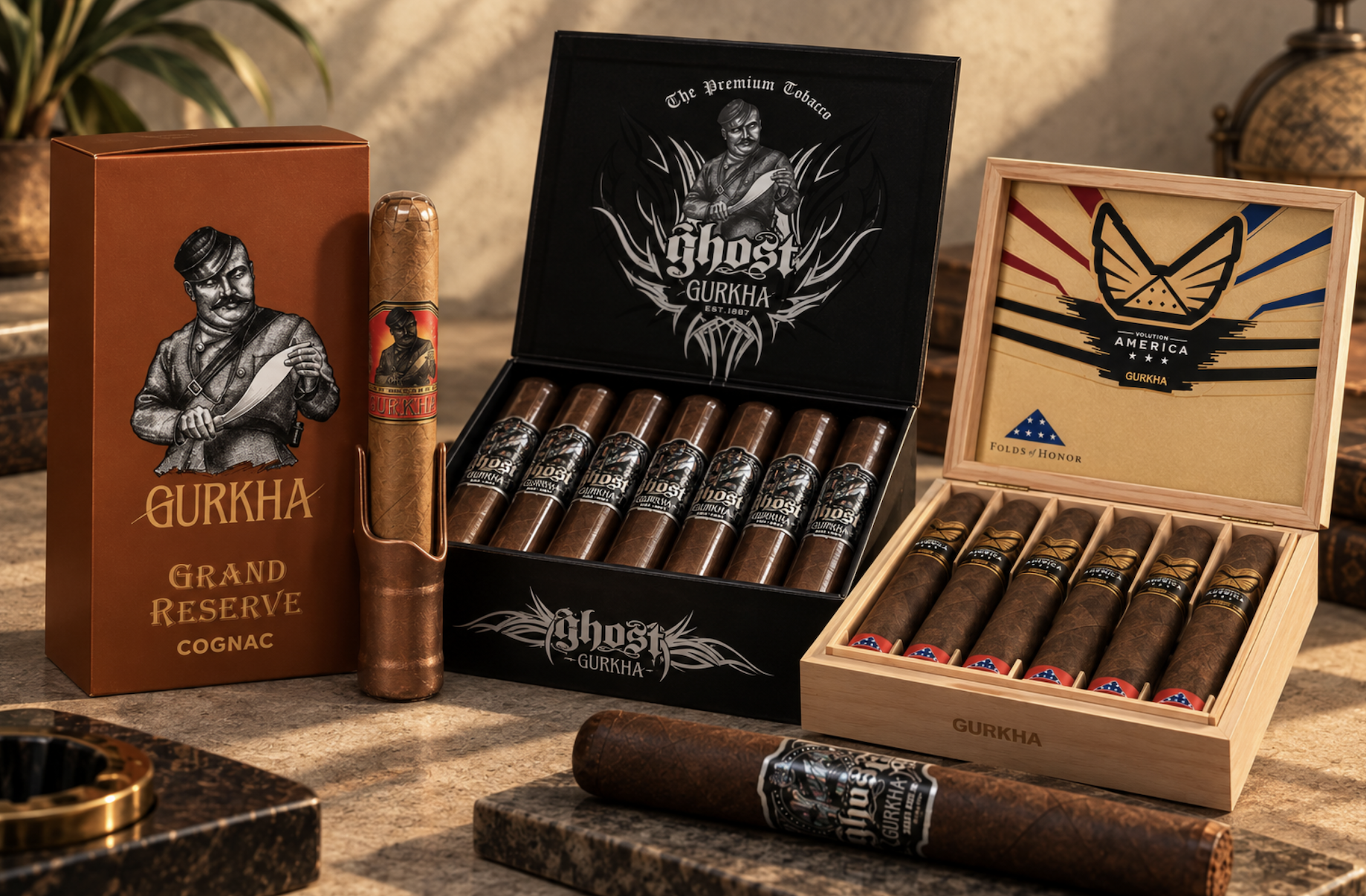
With a sprawling catalog and worldwide brand recognition, Gurkha has made a name for itself. However, it would not have reached its notoriety if it were not for its flagship line: Gurkha Grand Reserve Cognac.
When you hear the word cognac, it's no surprise the first thing that comes to mind is the drink. And you're not wrong. Cognac's flavor is impeccable, leaning fruity with a slight kick at the end. While it's a solid drink choice on its own, those same flavors are even more fortified in the Gurkha Grand Reserve Cognac cigar, a smoke infused with cognac and matured into a truly distinctive blend.
This cigar starts with premium tobacco leaves cultivated in the Dominican Republic's Cibao Valley, then wrapped in a Connecticut shade wrapper. What sets it apart is the infusion step: the cigars are soaked in Louis XIII, widely regarded as one of the finest cognacs in the world. After infusion, each cigar is sealed inside a crystal tube and finished with a wax cap, letting it rest and fully absorb the cognac's character over time.
The smoke is smooth enough to win over even cigar purists who typically stick to traditional blends.
The attention to detail doesn't stop at the cigar making process either. It's amplified in the presentation. Each tube gets dipped in wax to create a melted, dripping look. It's a beautiful sight, one that feels premium and full of personality.
If you think that's luxury, you're in for a treat with His Majesty's Reserve Cigars.
Priced anywhere from $750 to $1,500 for one stick, this really puts the lux in luxury. This cigar also has cognac present in its creation, but unlike the Grand Reserve, which is merely infused with the cognac, in the His Majesty's Reserve blend the aged tobacco is actually fermented in the Louis XIII cognac. It's extremely rare, with roughly 75 boxes produced each year, making this a super niche cigar that isn't for your everyday smoker. A Connecticut Maduro wrapper houses a 12-year aged Dominican binder and filler, the roadmap for this cigar.
While His Majesty settles into his smoke, the ghosts in his dungeon are lighting up too.
The Ghost features a Brazilian Arapiraca maduro wrapper, a Criollo 98 binder, and a Nicaraguan/Dominican filler, produced in the Dominican Republic. The line comes in three vitolas: Shadow, Asura, and Exorcist. Medium to full bodied, it's as spooky as it is tasty. The flavor notes come through in waves, starting sweet with an overwhelming earthy presence, then shifting in the second half toward cocoa and cinnamon. The Ghost isn't a one-off, either, as the Gurkha brand has an affinity for the darker side of the cigar world.
Line names like Gurkha Pure Evil, Gurkha Widowmaker, Gurkha Dragonslayer, Gurkha Revenant, Gurkha Beast, Gurkha Black Dragon, Gurkha Ninja, and Gurkha Kraken all lean into that sinister vibe. But spooky theming is just a spec in Gurkha’s vast catalogue, as there's also a strong patriotic and military thread running through the brand as well.
Hansotia stepped away from day to day leadership in 2020, and the brand is now run by president Jim Colucci, but the military inspired ethos he built into Gurkha has stuck around.
When it comes to patriotic and military cigars, the Gurkha Black Ops, the Gurkha Soldier, and the Gurkha Sniper are three that come to mind. With names like these, it's clear Hansotia had a special interest in the armed forces. He even kept a pile of bayonets in his office, some looking like they'd been through the Crusades.
That passion shows through in the brand's partnership with Folds of Honor on the Volition America cigar collection, where 13% of proceeds go toward educational scholarships for the children and spouses of fallen and disabled military members and first responders.
That penchant for the armed forces also showed up in Gurkha's SpecOps series, inspired by the Navy SEALs. The release came with a travel humidor, a survival knife with a leg sheath, and 20 medium bodied cigars.
There's a certain kind of cigar you reach for when you're not trying to make an event out of it, and Park Avenue is that cigar for the Gurkha lineup. The wrapper is an Ecuadorian Connecticut shade over a Dominican binder and aged Cuban-seed filler, and the profile stays mild to medium. The flavor profile leans creamy, nutty, and is easy to sit with. Give it ten minutes to toast the foot properly and the burn line holds steady the rest of the way through. That matters more than it sounds like it should: plenty of cigars in Gurkha's catalog run over an hour and demand real attention, but Park Avenue isn't asking for that kind of commitment. It's priced like a normal cigar too, nothing close to His Majesty's Reserve territory.
Royal Challenge picked up a win at the 2012 SAPPI European Printing Awards, which tells you something before you even light it. The Royal Challenge is a cigar built with intention. You can see it in the golden wrapper alone, which hints at just how delicate the smoke actually is. That delicacy carries into the flavor. It opens creamy and almond-forward, almost buttery, and stays smooth enough that new smokers won't get overwhelmed. About halfway through, a bit of caramel sweetness sneaks in without taking over. Between the mild-to-medium body and the low price of entry, it's an easy recommendation if someone's dipping a toe into Gurkha for the first time and doesn't want their first impression to be a $700 cigar.
Gurkha will forever be a brand as complex as the cigars it produces. Its origin story is one of ambition: the drive to keep evolving with the market and the people buying the product. What started as a detour from the watch business became a full reimagining of what a cigar could be. And the brand image built from the warriors who inspired it a century before the company existed is still stamped into the namesake today.
Whether you're picking up a rare His Majesty's Reserve or a Park Avenue, the story is in the leaf you're smoking. Take your time with it. That's a hundred years of history in your hands, not just mere tobacco.
Just don't let the Gurkha Ghost haunt you on the way out. And if he catches you, make sure you can outsmoke him.
0 Comment
Latest