WARNING: This product contains nicotine. Nicotine is an addictive chemical.


NEWSLETTER
Get special offers and find out what's new in the store. Sign up for the EV newsletter.WARNING: This product contains nicotine. Nicotine is an addictive chemical.
NEWSLETTER
Get special offers and find out what's new in the store. Sign up for the EV newsletter.Every so often, a brand does something so bold, so seemingly reckless, that it becomes part of industry legend forever. For Davidoff, that moment came in 1989, when founder Zino Davidoff, dissatisfied with the direction his Cuban-made cigars had taken, ordered 130,000 of them burned in an incinerator. It was an almost unthinkable move for a brand built entirely on Cuban prestige, and it set the stage for one of the most successful reinventions in cigar history.
Today, Davidoff stands as one of the most respected, meticulously produced premium cigar brands in the world, known for a level of quality control so exacting that even the people making the cigars have joked about how many get rejected. This guide walks you through Zino Davidoff’s remarkable story, the dramatic break from Cuba that reshaped the brand entirely, and which Davidoff lines are worth exploring today.

Davidoff’s roots trace back to 1911, when the Davidoff family opened a tobacco shop in Geneva, Switzerland. Zino Davidoff, whose father had run the business, spent his teenage years traveling extensively through Cuba and other parts of Latin America, studying tobacco cultivation, fermentation, and blending firsthand and building relationships with growers along the way. When he returned to Geneva, he brought that knowledge back with him, transforming the family shop into a genuine destination for serious cigar enthusiasts, long before that kind of expertise was common among retailers in Europe. Among his contributions to cigar culture, Zino is credited with popularizing the climate-controlled humidor, at a time when most retailers were still storing cigars under far more basic conditions.
Zino developed his own private cigar lines for the shop, named Chateau and Grand Cru after Bordeaux wine classifications, which quickly became a status symbol among European cigar smokers. For decades, these cigars were produced in Cuba, and the Davidoff name became closely associated with Cuban prestige and old-world European sophistication.
That relationship began to sour in the 1980s. As Cuban production scaled up to meet growing demand, Zino grew increasingly concerned that quality was slipping, and by the late 1980s, he’d had enough. In 1989, in a move that stunned the cigar world, he had 130,000 Cuban-made Davidoff cigars destroyed, declaring publicly that they weren’t worthy of carrying his name. The partnership with Cuba’s state cigar agency, Cubatoaco, officially ended in 1990.
Rather than fade away, Davidoff reinvented itself. Zino partnered with Hendrik “Henke” Kelner, a master blender who would go on to become almost synonymous with the Davidoff name for the next three decades, and together they rebuilt the brand from the ground up in the Dominican Republic. Production began in 1990, and the first Dominican-made Davidoff cigars were formally introduced later that year at a launch event in New York City, with Zino Davidoff himself in attendance. Kelner never attempted to replicate the flavor of the old Cuban Davidoffs; instead, he built an entirely new identity around Dominican tobacco, emphasizing elegance, smoothness, and consistency.
Zino Davidoff passed away in 1994 at the age of 87, but the brand he rebuilt from scratch has continued to thrive under Swiss ownership, expanding its reach into Nicaragua in 2013 while maintaining the same obsessive quality control that’s defined Davidoff since its Dominican rebirth.
Extraordinarily strict quality control. Kelner himself once joked that the company rejected more cigars than it accepted, and that reputation for uncompromising standards has remained central to the Davidoff identity for decades.
A genuine willingness to start over for the sake of quality. Few brands in any industry would burn their own product and walk away from a prestigious, decades-long supply relationship the way Davidoff did in 1989. That decision has become a defining piece of the brand’s identity.
Deep expertise in tobacco cultivation. From Zino’s early studies of fermentation and aging to Henke Kelner’s decades of hands-on experimentation with Dominican soil and seed varieties, Davidoff has always placed serious emphasis on understanding tobacco at the agricultural level, not just the rolling and blending stage.
A broad, carefully organized portfolio. Rather than releasing blends haphazardly, Davidoff has built out a structured lineup across the Dominican Republic and Nicaragua, giving smokers a clear sense of what to expect from each line.
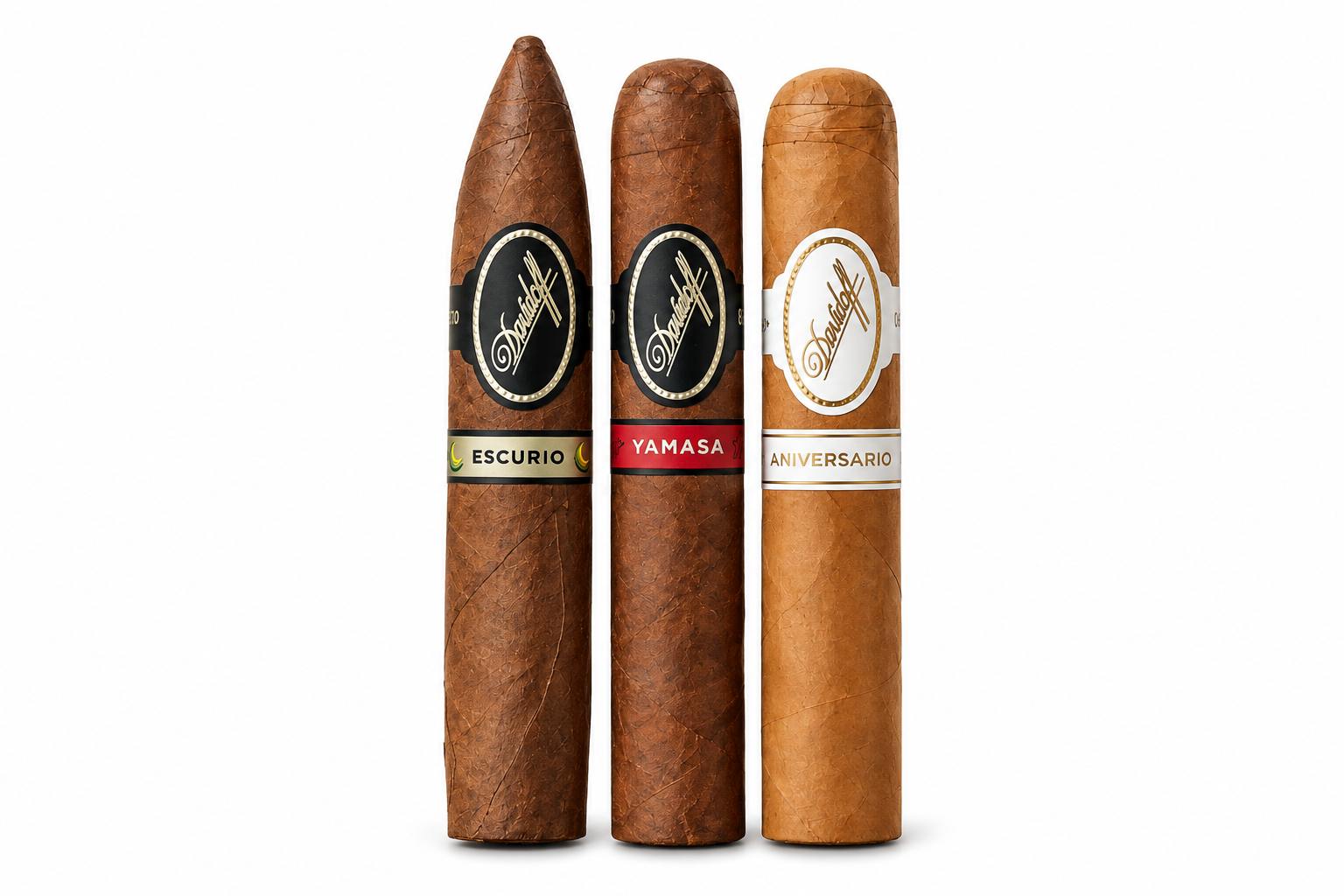
One of Davidoff’s foundational Dominican lines, the Signature Series offers a smooth, elegant, medium-bodied smoke experience with a Connecticut Shade wrapper. It’s often recommended as a great entry point into core Davidoff style, showcasing the refinement the brand has built its reputation on.
Tracing its name back to Zino’s original Bordeaux-inspired classifications, the Grand Cru Series delivers a mild-to-medium bodied, exceptionally smooth smoking experience with a Connecticut Shade wrapper. It’s considered one of the most approachable and classically “Davidoff” lines in the entire portfolio.
Originally released as a limited edition in 1991 before becoming an ongoing series, the Aniversario line is one of Davidoff’s most celebrated offerings, known for its elegant construction and rich, medium-bodied profile with notes of cedar, cream, and subtle spice. It remains a favorite for special occasions among longtime Davidoff fans.
Launched in 2013 as Davidoff’s first major expansion beyond the Dominican Republic, this line offers a bolder, spicier smoking experience built from Nicaraguan tobacco, while still carrying the meticulous construction standards the band is known for. It’s a great choice for smokers who want the Davidoff name attached to something with more intensity.
Named after the Yamasá region of the Dominican Republic, known for its complex, mineral-rich soil, this line uses a distinctive dark wrapper developed by Henke Kelner specifically for this blend. It delivers a rich, full-bodied smoking experience with notable depth and complexity, reflecting years of experimentation with the challenging Yamasá growing conditions.
A more adventurous release within the modern Davidoff lineup, Escurio combines tobaccos from multiple countries for a bold, spicy, full-bodied profile that stands apart from some of the brand’s more classically restrained offerings, appealing to smokers who want Davidoff’s construction quality with a bit more edge.
An all-Dominican puro built around Kelner’s proprietary H-133 wrapper leaf, grown specifically in the Yamasá regions, Puro d’Oro is known for its strong, flavorful profile and striking gold-accented band, representing years of word to develop a wrapper capable of carrying an entire blend on its own.
Start with the Signature Series or Grand Cru if you want the class Davidoff experience. These offer the smooth, refined profile the brand built its modern reputation on.
Try the Aniversario Series for a special occasion. It’s one of the most celebrated and elegant lines in the entire portfolio.
Go with the Davidoff Nicaragua or Yamasá if you want more intensity. Both offer real boldness while maintaining Davidoff’s signature construction quality.
Reach for Escurio if you want something a little different. It’s a great option for exploring a bolder, more adventurous side of the brand.
No. Davidoff ended its relationship with Cuban producers in 1990 after founder Zino Davidoff grew dissatisfied with declining quality standards. All Davidoff cigars have been produced in the Dominican Republic since 1990, with additional production later added in Nicaragua.
Zino Davidoff became increasingly concerned that Cuban production, scaled up to meet rising demand, was compromising the quality and consistency he expected from cigars carrying his name. In 1989, he had thousands of Cuban-made Davidoff cigars destroyed and officially ended the partnership shortly after.
Hendrik “Henke” Kelner is the master blender who partnered with Zino Davidoff to rebuild the brand in the Dominican Republic starting in 1990. He played a defining role in shaping Davidoff’s modern identity for roughly three decades before stepping back from the company in the late 2010s.
Few brands in the cigar world can claim a turning point as dramatic as Davidoff’s break from Cuba, and fewer still could have pulled off a reinvention as successful as the one Zino Davidoff and Henke Kelner built in the Dominican Republic. That willingness to prioritize quality over convenience, even when it meant burning a fortune in inventory and starting over from nothing, has remained at the heart of the Davidoff name ever since.
If you’re new to the brand, start with the Signature Series or Grand Cru to experience the smooth, elegant style Davidoff rebuilt its reputation on, then branch out toward the bolder Nicaragua or Yamasá lines as your palate develops. Given everything this brand has been through to maintain its standards, there’s a good reason it’s remained one of the most respected names in premium cigars for over three decades.
Want to check out Davidoff Cigars?
Browse our collection at Element Vape.
0 Comment
Sam is a music lover, snack enthusiast, and self-appointed arugula ambassador who somehow turned all of that into a whole career in writing. Fueled by all the comforts in life and an inexplicable obsession with the spiciest leaf in the salad game, she brings the same chaotic passion to every article that she brings to her own life.
Latest