WARNING: This product contains nicotine. Nicotine is an addictive chemical.


NEWSLETTER
Get special offers and find out what's new in the store. Sign up for the EV newsletter.WARNING: This product contains nicotine. Nicotine is an addictive chemical.
NEWSLETTER
Get special offers and find out what's new in the store. Sign up for the EV newsletter.1968 is wherein the seed of CAO cigars was first planted at the hands of Cano Aret Ozgener. Originating from Turkey, Ozgener was a pipe enthusiast, always found with one between his lips. But it wasn't until he finally settled in America that cigars came on his radar when introduced to him by his Columbia professor.
His love for pipes was unparalleled, even going as far as to modify pipes in his spare time, utilizing his background in engineering to modify the devices for more streamlined puffs. It was in meerschaum pipes that he found abnormalities he could improve upon with his engineering knowledge.
He worked as a professional engineer at DuPont, modifying his precious meerschaum pipes on the side while putting in full days at the plant.
The pipe tobacco world took a fondness to Ozgener's modified pipes, and before long Ozgener had connections with tobacconists in the Baltimore area, which opened doors for him to sell briar pipes and humidors under the CAO name.
It wasn't until 1977 that Ozgener took a leap of faith by leaving his engineering job to pursue his pipe dreams full-time.
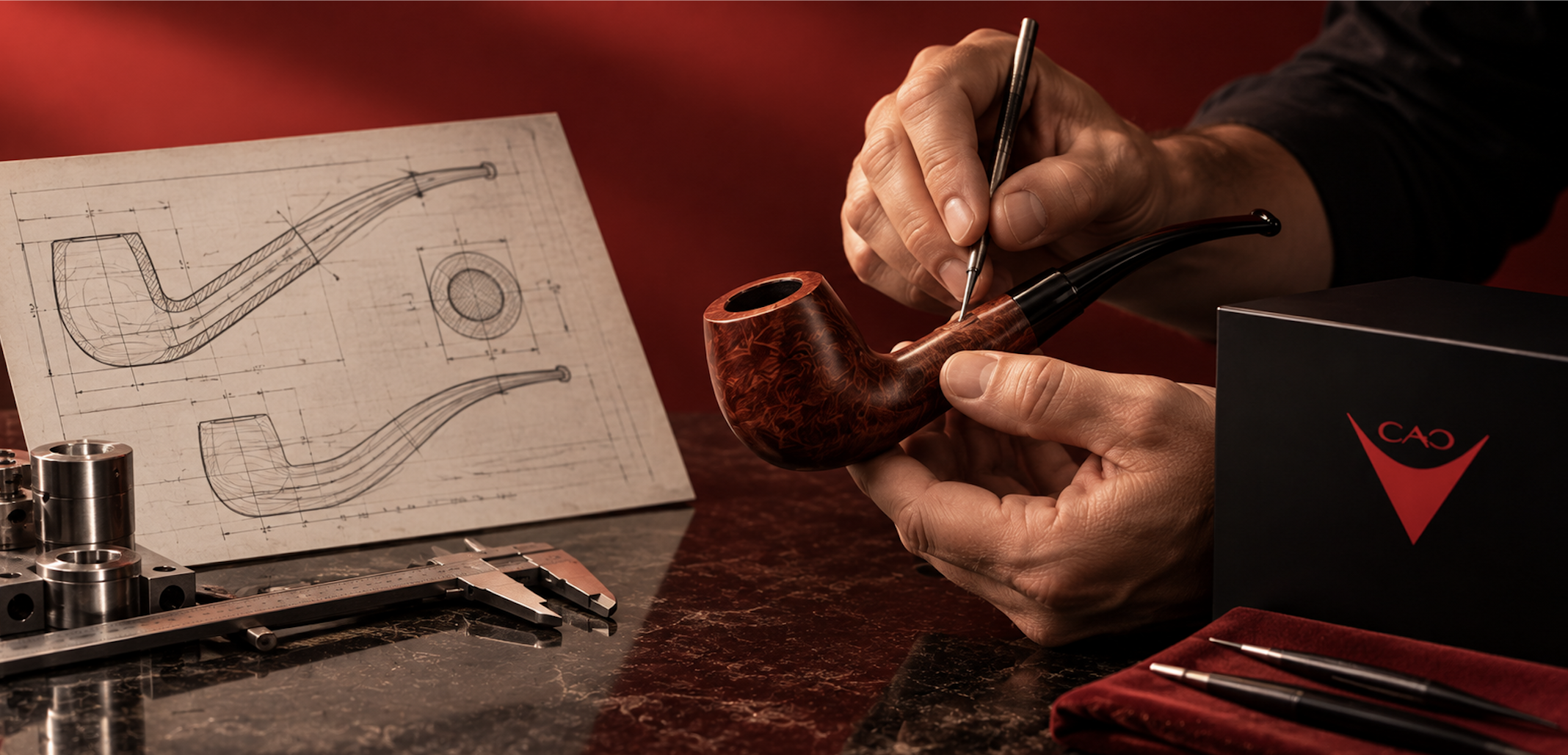
With a hard pivot, Ozgener took to creating state-of-the-art, antique-style humidors. People absolutely loved them. His tinkering with the boxes provided inspiration to hire Nashville-based artisans Todd Boyce and Lanie Gannon to help him improve and further develop his handmade humidors.
However, a new entrepreneurial endeavor was on the horizon: the ever-hypnotic allure of cigars. Though it wasn't without its own set of challenges. The first line of cigars produced by CAO, the Casa de Manuel line, was widely unsuccessful. This wasn't unexpected, as many fledgling cigar companies close within the first year. But Ozgener's next attempt with the CAO Black line was much more fruitful.
Wanting to appeal to the younger generation of cigar smokers, Ozgener decided to partner up with Honduran cigarmaker Nestor Plasencia and Nicaraguan tobacco grower Carlos Toraño. They were able to produce a flavor profile that young people were able to connect with.
Originally focusing on operations in Honduras, Ozgener eventually expanded operations into Nicaragua and Costa Rica in the late 90's.
Throughout, Ozgener held onto the same idea: build something that puts other people to work. In his own words: "To be able to do something that you like as a business is great. I have my son and daughter working with me and young people working for us, so I am contributing something to the younger generation and I am contributing something to this country also," Ozgener said in an interview with Cigar Aficionado.
That same dedication to loved ones and his local community is evident in every cigar that comes out of the CAO lineup.
The CAO Black line used to be recognized as the flagship, though these days plenty of people point to the CAO Flathead V660 Carb as the brand's modern signature smoke.
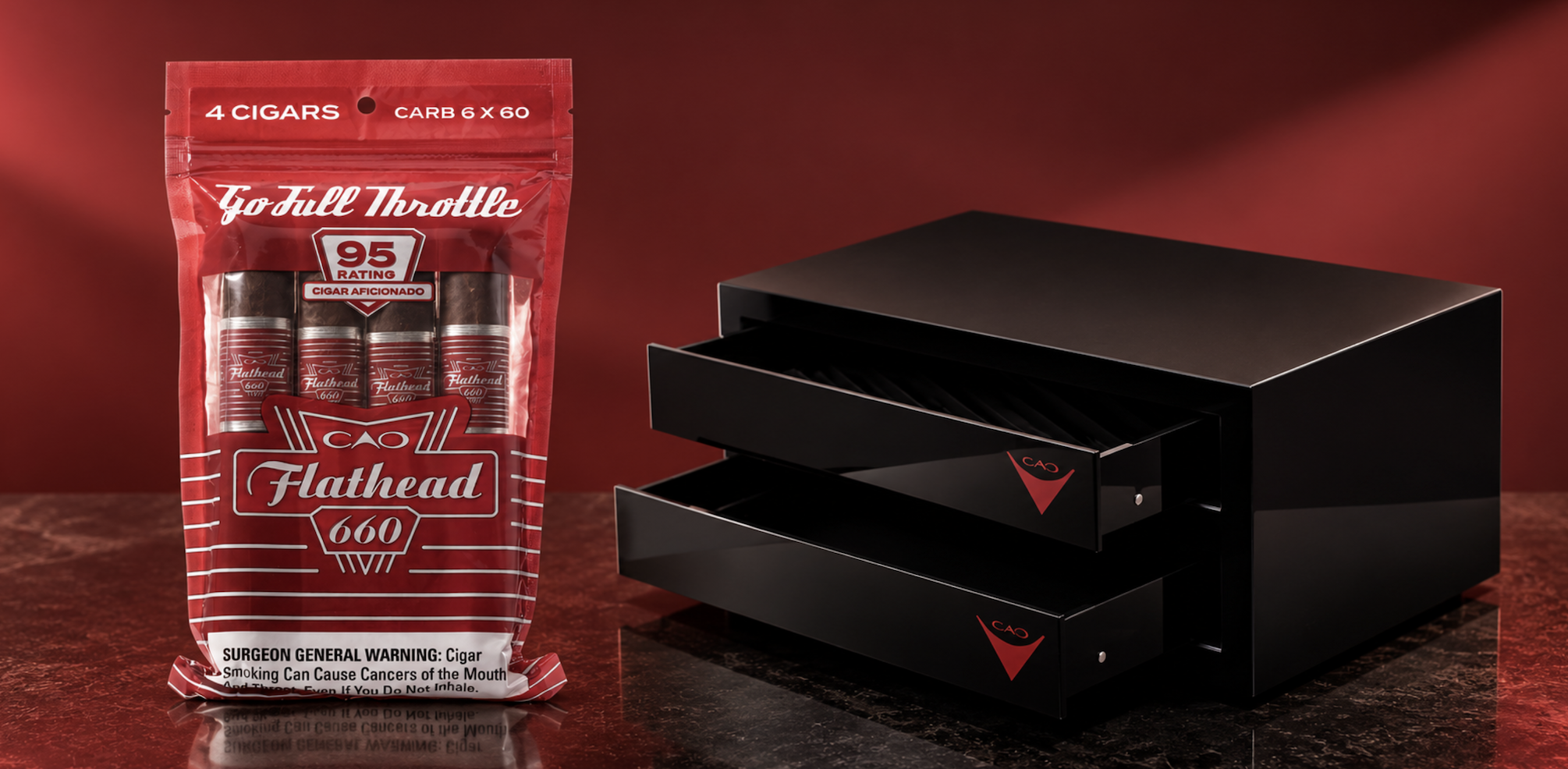
This cigar is a gordo that takes inspiration from muscle cars, made with a Connecticut broadleaf wrapper encompassing a Cuban-seed binder, accompanied by a Nicaraguan Ligero and Dominican Piloto Cubano filler. The flat cap head makes cutting and lighting easy and provides a level surface area for smoking, mitigating the risk of canoeing and, even more so, the risk of cutting past the shoulder of the cigar.
Receiving a 95 rating from Cigar Aficionado, this cigar is truly a spectacle. Not only is the presentation cheeky, with each box resembling the engine of a hot rod, but it also comes with a print of a pinup girl. It's a brawny cigar with frontmark names pulled straight from a hot rod's engine bay.
Sit with a bourbon or a stout as you enjoy the Flathead, and fall in love with the sweet, almost fruity undercurrent running beneath an otherwise leathery, earthy flavor profile. It's rated so highly for a number of reasons, but namely for how its flavors meld together into such a complex palate. This cigar does not fall flat on its head.
If you try the CAO Flathead V660 Carb and end up liking it, give the Flathead 660 Carb Fresh Pack Sampler a try. It's a great way to explore the line, since it comes with four Flathead cigars to work through. What I appreciate about the sampler is that it lets you track how the cigar changes as it matures. Try one after a month, let the remaining sampler keep resting, then check back in a couple more months to see how the flavor has shifted.
Okay, back to where the brand actually started: the CAO Black line.
If you're a purist, you might say the newer stuff has nothing on the Black line, as many consumers still consider this the crown jewel of the CAO name. Creamy, delectable goodness is the name of the game with this cigar. It's one of those rare smokes that's truly amenable to any type of smoker. Medium-bodied, it features a Connecticut Ecuador wrapper housing a spicy long-filler. Available in a variety of vitolas, like Corona, Robusto, Toro, Torpedo, and Churchill, this cigar is a gem.
When you consider that this is what put the company on the map, it comes as no surprise that it received a 10/10 rating from Cigar Buyer Magazine, largely due to its taste. But since it's been a mainstay since the mid-90s, it's become something of a rarity to find and enjoy. Very few retailers carry it, and when you do find a batch, it's usually in tiny portions, since they don't mass-produce it like they do other cigars in the collection.
But none of these smokes would be worth anything without a good humidor to properly age and mature them to their fullest potential, which is why the CAO Vision LED Humidor is one of my favorite products the company makes.
So, as a newer cigar smoker, I didn't realize the impact your humidor choice has on your smokes. That being said, it's totally fine to have a travel humidor or a smaller case if you're not an avid smoker, but if you've upgraded your collection to require a serious setup, the CAO Vision LED Humidor is not for the faint of heart. It features two pull-out drawers, with roughly 15 cigar spaces per drawer, give or take how many Churchills you're trying to stuff in it.
My favorite feature is that it lights up when you open the drawers. It's USB-C rechargeable, so you can keep that glow going, and it adds a nice luxe element that makes maturing and smoking these cigars feel that much more special. Pair that with a Boveda pack and you're set with a wonderful stack of cigars and a beautiful case to display them.
CAO Cigars has built its reputation around experimentation. Rather than relying on a single house style, the brand has explored tobaccos from countries such as Brazil, Italy, Nicaragua, Honduras, and the Dominican Republic. That global approach gives many CAO cigar lines noticeably different flavor profiles and personalities.
International tobacco sourcing has become one of CAO's defining characteristics. Several CAO cigar blends highlight tobacco from specific regions, allowing smokers to experience how growing conditions, curing methods, and tobacco varieties can influence flavor. Lines such as CAO Brazilia and CAO Italia are well-known examples of this approach.
The CAO World Collection is a group of cigars built around distinctive tobaccos and regional influences. Popular releases such as CAO Brazilia, CAO Italia, CAO Colombia, and CAO America showcase different tobacco origins while maintaining CAO's emphasis on bold and unconventional blending.
CAO was founded by Cano A. Ozgener, an engineer whose early work in the tobacco industry centered on pipes and smoking accessories. His engineering background influenced the company's early focus on design and craftsmanship before CAO expanded into premium handmade cigars and developed into an internationally recognized cigar brand.
Some of the best-known CAO cigars include CAO Brazilia, CAO Flathead, CAO Italia, CAO America, and other releases within the World Collection. The best choice depends on whether you prefer richer, fuller-bodied cigars or blends with more balanced and approachable flavor profiles.
CAO cigars range from approachable medium-bodied blends to richer, full-bodied options. Strength varies considerably between cigar lines, which makes CAO appealing to smokers who want to explore different flavor intensities without leaving the same brand portfolio.
There is no single CAO flavor profile. Depending on the blend, CAO cigars can feature notes of earth, cocoa, coffee, pepper, cedar, leather, sweetness, and spice. Wrapper choice, filler tobacco, and country of origin all contribute to the differences between individual CAO cigar lines.
First-time CAO smokers should choose based on their preferred strength and flavor profile rather than simply selecting the brand's most powerful blend. A medium-bodied CAO cigar can provide a good introduction, while experienced smokers may prefer richer options such as Brazilia or Flathead.
CAO was sold to Scandinavian Tobacco Group in 2007, and a few years later found its way into the General Cigar portfolio. It's done well worldwide ever since, maintaining its boutique status, and for 13 years was blended under the watchful eye of Rick Rodriguez, who's now the master blender behind West Tampa Tobacco Co.
The thing about the cigar world is that every brand is intertwined in some way or another, which makes smoking from each brand that much more special. There's such a rich history in this industry, unparalleled by other corners of the tobacco world.
The CAO name, though now under different ownership, has maintained that same sense of quality, craftsmanship, and excellence as spearheaded by Cano Ozgener in the '70s.
Ozgener passed away in 2018 after a long battle with cancer, but the mark he left was prolific, not only in the cigar industry but in the arts as well. In 2012, he and his son Tim founded OZ Arts Nashville, a nonprofit contemporary arts center supporting up-and-coming artists, and in lieu of flowers, his family asked that donations be made there in his memory. Ozgener himself became a prolific artist late in life, producing close to 500 paintings and dozens of sculptures after picking up a paintbrush at age 70.
He wasn't just a cigar maestro, he was a painter, a sculptor, and by every account, a man who never stopped building things.
So next time you smoke a CAO, appreciate not only the taste, but the artistry and engineering, because both are woven into the history behind it.
0 Comment
Latest