WARNING: This product contains nicotine. Nicotine is an addictive chemical.


NEWSLETTER
Get special offers and find out what's new in the store. Sign up for the EV newsletter.WARNING: This product contains nicotine. Nicotine is an addictive chemical.
NEWSLETTER
Get special offers and find out what's new in the store. Sign up for the EV newsletter.Established in 1996 as the American cigar boom approached its end, Alec Bradley overcame a difficult start to become one of the most recognizable names in the premium cigar industry. Distinctive releases like Filthy Hooligan gave the brand an unmistakable personality, while acclaimed lines such as Tempus and Prensado established its reputation for complex, highly rated cigars.
Success, however, was never guaranteed. Founder Alan Rubin entered the tobacco industry with enthusiasm and business experience but little knowledge of cigar production. Early concepts struggled, manufacturing problems created serious financial pressure, and the contracting cigar market threatened the young company before it had found a clear identity. With 2026 marking Alec Bradley’s 30th anniversary, let’s look back at how the brand survived those early setbacks, achieved international recognition, and entered a new era under Scandinavian Tobacco Group.
Entering the cigar industry in 1996 seemed like a great move. Premium cigars were enjoying renewed popularity in the United States, with new companies rushing to meet the growing demand. By the time Alec Bradley entered the market, however, the cigar boom was nearing its end. Consumer demand began to decline, and retailers grew more selective as the number of available cigars continued to climb. Many of the brands created during the boom disappeared just as quickly as they had arrived.
Against this shifting landscape, Alan Rubin introduced Bogey’s Stogies, a golf-inspired line intended for pro shops, country clubs, and resort courses. He believed golfers represented his target audience, but the concept failed to gain meaningful traction. Rather than establishing Alec Bradley in the premium cigar market, its first major idea left the company with no real direction or identity.
Production issues added even more uncertainty. At the 1996 Retail Tobacco Dealers of America trade show, Rubin connected with a Honduran factory owner and entered into an agreement to have cigars produced for the fledgling company. Rubin later recalled that the manufacturer “was taking my money and not giving me product,” setting him back about $60,000. For a young company in the 1990s, it was a devastating loss.
With an unsuccessful first release and unreliable production, Alec Bradley was running out of breathing room. Rubin had prior business experience and plenty of determination, but he still lacked the tobacco knowledge and industry relationships required to compete against established cigar makers.
With the 1990s behind him, Alan Rubin reportedly had just $3,000 left to make his venture into the cigar industry work. Partnering with Ralph Montero, he turned to Hendrik “Henke” Kelner for help. Kelner, the renowned cigar maker behind Davidoff and AVO, had excess production capacity at his Occidental Cigar Factory in Santiago, Dominican Republic, after the collapse of the cigar boom. He agreed to produce a cigar for the struggling company.
There was no money for elaborate boxes, bands, or packaging. Rubin settled for simple cellophane wrapping instead. The resulting cigar was Occidental Reserve, named after Kelner’s factory.
Rubin ordered 1,000 samples and made every one count. He and Montero placed two cigars into each of 500 silver mailing tubes, sent them to premium tobacconists across the United States, and followed up with phone calls. The campaign helped secure business and brought Alec Bradley approximately 300 new retail accounts.
Occidental Reserve wasn’t a Top 25 cigar. It didn’t win any major awards either. What it became was a reliable cigar that retailers continued to reorder, which was exactly what Alec Bradley needed. Those recurring sales kept the company afloat and allowed Rubin to eliminate the debt it carried.
Rubin credited Occidental Reserve with saving the company. More ambitious releases would eventually establish Alec Bradley as a respected premium brand, but none of them would have been possible without the unassuming bundled cigar that kept the lights on.
Occidental Reserve kept Alec Bradley alive, but Rubin did not stop experimenting. The Trilogy cigar followed in 2002, attracting attention with its unusual triangular press. The large-ring-gauge MAXX series arrived in 2005, followed by Tempus in 2007. The following year, the Tempus Centuria earned 94 points and claimed the No. 25 spot on Cigar Aficionado’s list of the Top 25 Cigars of 2008.
Alec Bradley was gaining traction. More importantly, it was proving that it could hang with some serious contenders in the premium cigar industry.
The real breakthrough came with the release of Prensado in 2009. Two years later, Cigar Aficionado awarded the Prensado Churchill 96 points and named it the 2011 Cigar of the Year. Demand exploded almost overnight. Alec Bradley and the Raíces Cubanas factory were not ready for the scale of the response.
Production increased rapidly as the company tried to keep pace. That placed tremendous pressure on the factory and its rollers, and before long, consistency and construction began to suffer. Winning Cigar of the Year was the breakthrough Rubin had been working toward, but it created a new problem: Alec Bradley now had to figure out how to meet the demand without compromising the cigar that had created it.
Rubin and the Raíces Cubanas factory spent the next couple of years ironing out those production issues and bringing output back under control. By 2014, the recovery was becoming clear. The Prensado Robusto received a 92-point rating from Cigar Aficionado, with its construction once again drawing praise.
Alec Bradley had survived the cigar boom’s collapse, an unsuccessful first concept, unreliable manufacturing, debt, and now the growing pains that followed the biggest award in its history. The transition from struggling cigar company to major international brand was finally complete.
Alec Bradley should not be confused with Alec & Bradley, the separate cigar company founded by Alan Rubin's sons, Alec and Bradley Rubin. Utilizing their own funds and expertise within the cigar industry with likely some consultation from their father, they've ekked out a space for themselves, delivering great cigars like Blind Faith, Gatekeeper, and Kintsugi. Although the brands share a family connection and both are found together under the Scandinavian Tobacco Group portfolio, each respective brands' cigars technically fly under different brand banners. Since they are both represented in our humidor, we will identify the Alec & Bradley releases as they appear.
In 2023, Scandinavian Tobacco Group announced it was purchasing Alec Bradley. This was not a distressed company being swallowed by a tobacco conglomerate. Alec Bradley had already rescued itself, grown considerably, and proven that it could contend on the international stage. The deal was valued at $72.5 million, giving STG control of the brand portfolio, blends, intellectual property, and the reputation Rubin had spent nearly three decades building.
To some cigar smokers, the acquisition may have looked like Alec Bradley was selling out. There was always the concern that a giant corporation could place profits over quality and strip away what made the company special. At least initially, that was not how STG approached it. Alec Bradley’s production partners remained in place, while sales and distribution moved under STG’s much larger network. Alan Rubin stayed on as an advisor, while Alec and Bradley Rubin accepted positions within STG. The company no longer belonged to the family, but the family had not completely disappeared from it either.
One of the first interesting products of the acquisition was Safe Keepings. Its recipe came from the blend book that STG acquired as part of the sale, which contained ideas that Alec Bradley had developed but never released. After going through those archived blends, the team selected one and commissioned its production through Oliva’s Tabolisa factory in Nicaragua.
Safe Keepings showed what the acquisition could make possible. The idea came from Alec Bradley’s past, while STG supplied access to resources and manufacturing relationships that had not previously been available to the company. It was an old Alec Bradley concept finally brought to life under new ownership.
There are some interesting similarities between Alan Rubin’s story and Rafael Nodal’s work with Aging Room. Neither entered the cigar business with generations of tobacco knowledge behind him, and both endured early hardships while trying to build the relationships and experience needed to compete. Their paths eventually connected them with much larger companies, although under different circumstances. Alec Bradley was acquired by STG, while Nodal and Boutique Blends entered into a strategic alliance with Altadis U.S.A.
In both cases, joining forces with a larger company provided access to deeper tobacco inventories, wider distribution, and industry relationships that would have been difficult to develop independently. The smaller brands brought the ideas. The larger companies gave them more ways to bring those ideas to life.
Now that you've learned about the history, troubles, and successes that have made Alec Bradley into the global powerhouse it is, we must get into the cigars themselves.
Our current humidor spans much of the Alec Bradley portfolio, offering mellow and approachable blends to heavier cigars that lean into dark tobacco, pepper, and strength. Within this list, you will encounter cigars from Alec & Bradley, the separate brand created by Alan Rubin's sons.
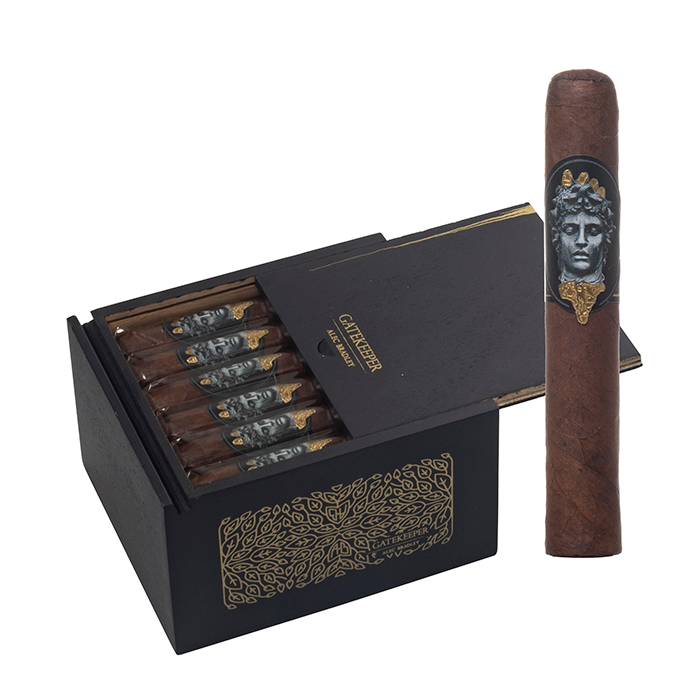
A release from Alan Rubin’s sons, Alec and Bradley Rubin, Gatekeeper was created in collaboration with legendary cigar maker Ernesto Perez-Carrillo. Made at Perez-Carrillo’s Tabacalera La Alianza factory in the Dominican Republic, the cigar features an Ecuadorian Habano wrapper, a Nicaraguan binder, and fillers from Nicaragua and the Dominican Republic. Landing at medium in strength and body, Gatekeeper delivers notes of toasted nuts, cedar, leather, and spice. It has enough going on for an experienced smoker, but it never becomes so heavy that someone still developing their palate couldn’t enjoy it.
Working with Perez-Carrillo exposed the brothers to tobaccos, techniques, and ideas they had not explored before. That experience became the inspiration behind the name. Perez-Carrillo wasn’t a gatekeeper trying to keep them out. He was the person who knew the cigar world, which doors were worth opening, and where those doors could take them.
Available Vitolas:
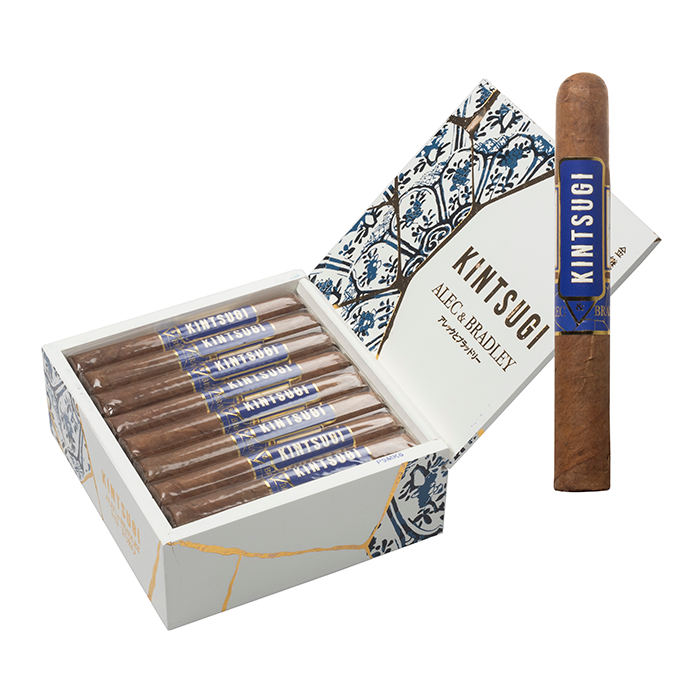
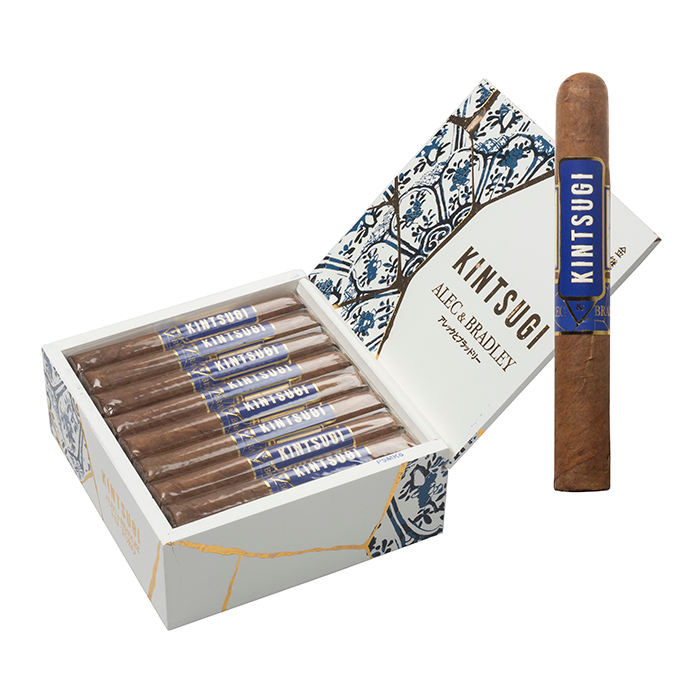
Following Gatekeeper, Alec and Bradley Rubin delivered Kintsugi. Announced in March 2020 with shipments slated for June, the COVID-19 pandemic delayed its release until fall 2020. The name takes inspiration from the Japanese art of repairing pottery with lacquer mixed with powdered gold, silver, or platinum, highlighting an object’s history instead of hiding its damage. The Rubin brothers used Kintsugi as a metaphor for the cigar industry’s fight against FDA regulation, with different groups fractured in their strategies despite sharing the same objective.
Made at the Raíces Cubanas factory in Danlí, Honduras, Kintsugi came enveloped in a Honduran Habano wrapper from the Trojes region. Sitting beneath the wrapper is a dual binder from Nicaragua and Honduras, followed by long-filler tobaccos from both countries. Delivering rich notes of cinnamon, espresso, and hazelnut, Kintsugi earned the No. 25 spot on Cigar Aficionado’s Top 25 Cigars of 2021 with a 92-point rating. An impressive achievement for such a young brand with only three releases at the time.
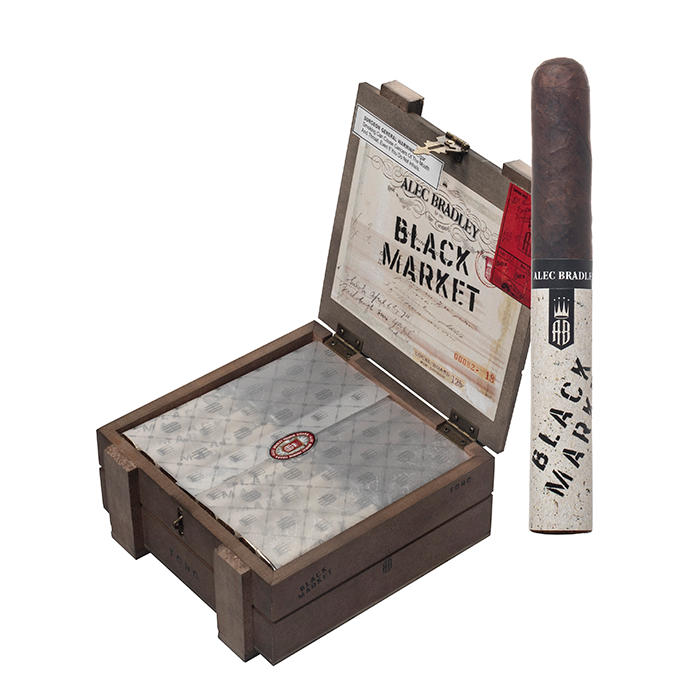
The Black Market cigar was released in 2011, the same year that the Prensado received its Cigar of the Year award. Although overshadowed by its older brother's success, the Black Market cigar wasn't just forgotten about. It carried itself as the harder-edged, stronger sibling. Developed in response to the strength race that makers were caught up in, Alec Bradley created a powerhouse cigar without forgetting about balance. While Prensado showcased delicate careful blending, Black Market delivered a brash flavor bomb built for those who wanted to hit the cigar and have the cigar hit back, evident in the cargo-crate style packaging.
Rolled by the Plasencias in Honduras, Black Market is wrapped in Nicaraguan leaf over a Sumatran-seed binder from Ecuador, with long-filler from Honduras and a rare Panamanian tobacco. It took 18 test blends and over a year of trial to unlock that tobacco's potential and land on its signature flavor profile. Revealing depth, spice, and quiet sweetness, Black Market showcases great medium to full-bodied flavor without sacrificing balance. With a 94-point, #6 finish in 2022 from Cigar Aficionado, Black Market proved it could stand on its own.
Available Vitolas:
Toro - 6 x 50
Churchill - 7 x 50
Torpedo - 6.13 x 54
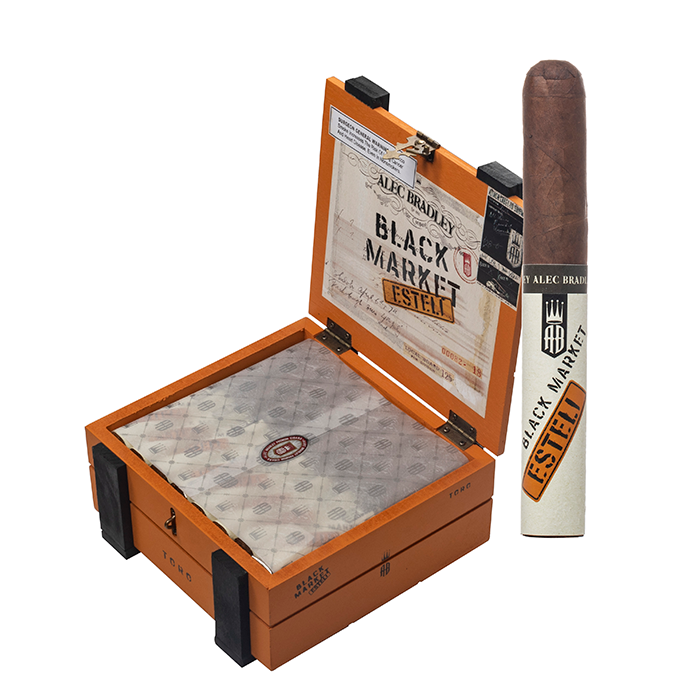
Black Market Estelí is the spin-off from the original Black Market, shifting the spotlight onto its source. Manufactured by Plasencia in Estelí, Nicaragua, the blend drops the rare Panamanian tobacco that defined the original in favor of a Nicaraguan approach, letting the nation's leaf, known for its strength and intensity, take center stage. The result is a bolder, more complex profile that's sharper and more defined than the original, built for those who like Black Market with a little extra edge. Released in late 2017, Black Market Estelí earned a 93-point rating and went on to finish as the No. 9 Cigar of the Year for 2018.
Wrapped in Nicaraguan leaf over a double binder of Nicaraguan and Honduran tobacco, with Nicaraguan filler rounding it out, Black Market Estelí offers notes of leather, pepper, and cocoa to the discerning palate.
Available Vitolas:
Robusto - 5 x 52
Toro - 6 x 52
Torpedo - 6.13 x 52
Punk - 4.25 x 42
Churchill - 7 x 50
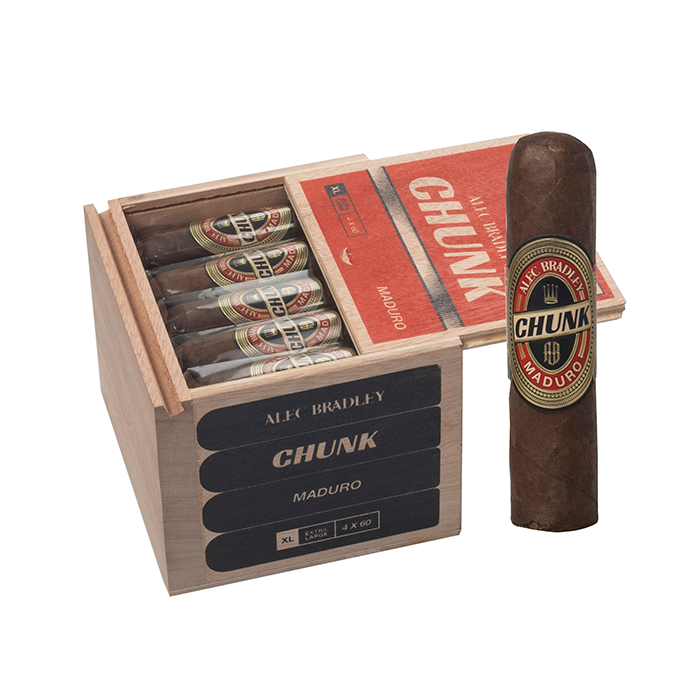
A 2024 addition under the STG ownership era, Chunk Maduro is built for those who love short and stout cigars without sacrificing any aspect of their smoking experience. Draped in a Mexican San Andres wrapper over a Honduran Jamastran binder with long fillers from the Dominican Republic and Nicaragua, the Chunk Maduro delivers a medium-bodied smoking experience laden with notes of molasses, nuttiness, and pepper. Although the shorter stature of the cigars might make some think this is a quick smoke, the ring gauge makes up for it, allowing a longer burn.
Rated a solid 90 from Cigar Aficionado, this maduro beauty can be paired with whiskey, stouts, and ports, but for me, I'd usually pair with good times and company.
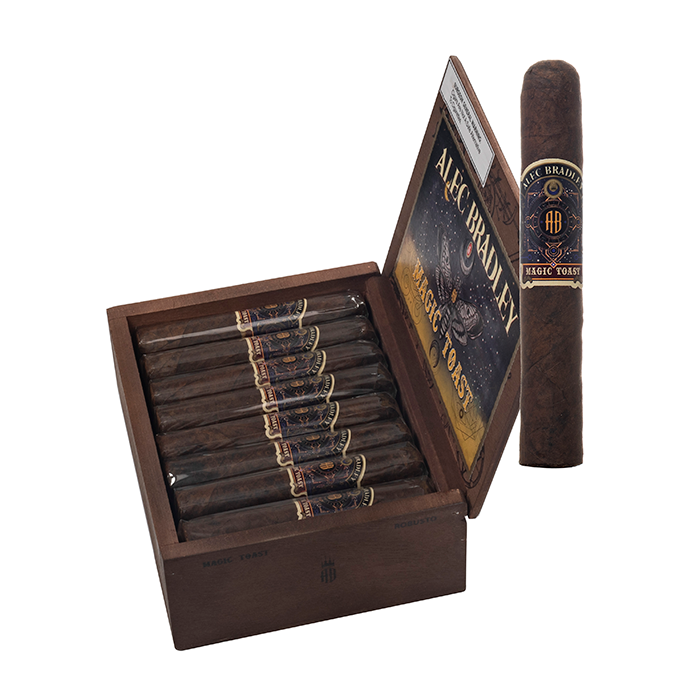
What do you do if your flight has been delayed? For me, I usually hunker down for a long wait, or get a bit angry, but not crash-out angry because airport jail is real and nothing is worth being placed on an airline's no-fly list. But if you are Alan Rubin or Ralph Montero, you go to visit a tobacco farm that's contracted with your company and find an exceptional batch of tobacco that impressed you so much it deserves a toast to the company's future.
That's the story that inspired the Magic Toast. Announced in 2018 with much buzz surrounding it, Alec Bradley actually had the blend pinned down in 2016, when the FDA had specified an August deadline, after which any new blends would require a costly premarket approval.
Produced at Raices Cubanas in Danli, Honduras, the same factory that handled Prensado, the Magic Toast cigar features a dark and oily Honduran wrapper, double binder of Honduran and Nicaraguan leaf, and filler from both Honduras and Nicaragua. Reportedly, some of the filler tobacco also comes from the field where the toast occurred. Delivering notes of natural sweetness, chocolate, and cedar, the Magic Toast cigar hasn't won any official awards or rankings from Cigar Aficionado, but is generally considered a good cigar with plenty of reviewers praising its construction and complexity.
Available Vitolas:
Robusto - 5 x 52
Toro - 6 x 52
Gordo - 6 x 60
Chunk - 4.5 x 60
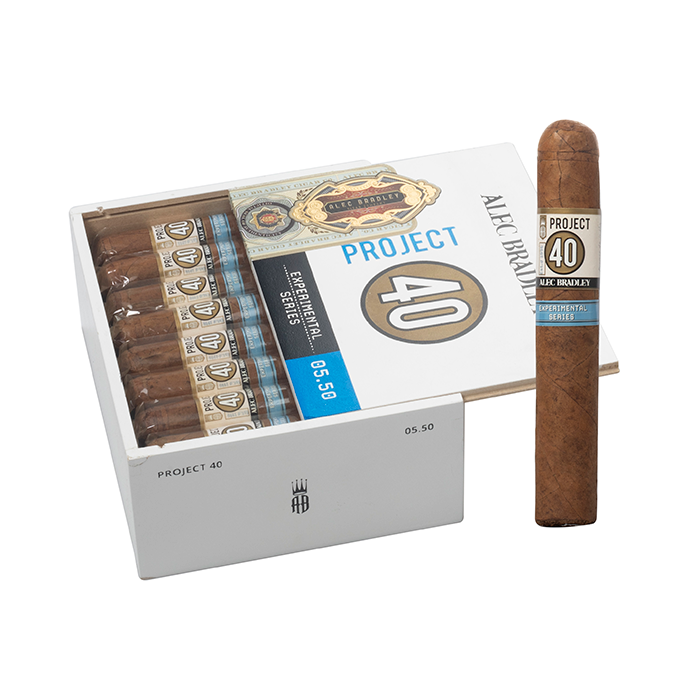
Part of the Experimental Series, the Project 40 Cigar was born from an idea within psychology. This theory on happiness states that 50 percent of your happiness is tied to genetics, 10 percent from circumstance, and 40 percent by your intentional thoughts and habits. Rubin created this cigar, encouraging people to "Take control of your happiness."
Just like the Magic Toast, Project 40 was rushed to market before the FDA's 2016 regulations deadline, then formally announced and globally released.
Starting with a core of Nicaraguan filler, then Brazilian Habano binder, and finished with a Nicaraguan Colorado wrapper, the Project 40 delivers notes of spices, chocolate, and nuts. Reaching a lofty 93 points by Cigar Aficionado, with a #24 finish on 2019's Cigars of the Year list, the Project 40 offers flavorful happiness at a budget-friendly price cause happiness shouldn't be paywalled.
Available Vitolas:
05.50 - 5 x 50 (Robusto)
06.52 - 6 x 52 (Toro)
07.52 - 7 x 52 (Churchill)
06.60 - 6 x 60 (Gordo)
07.70 - 7 x 70
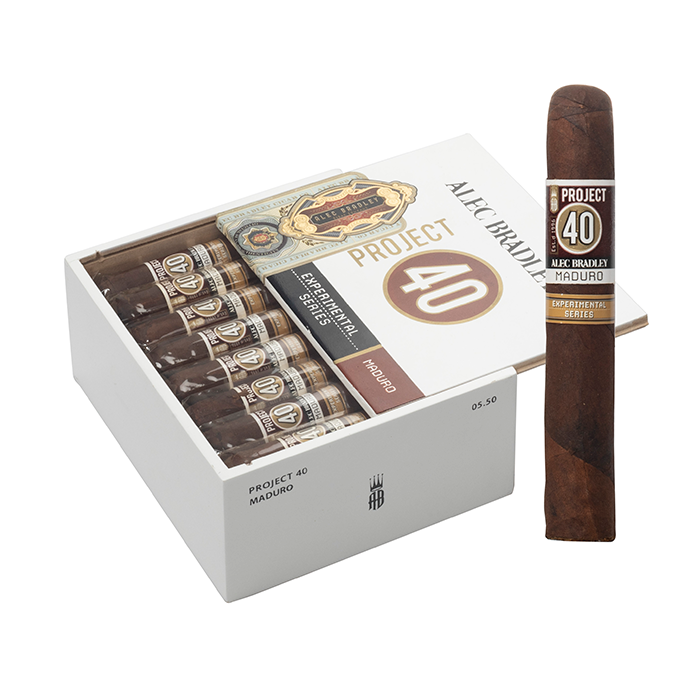
Made with the same intentions as its lighter counterpart, the Project 40 Maduro is the darker chapter in the Experimental Series. Launched in October 2020, the Project 40 Maduro is made in Esteli, Nicaragua. Calling upon a Mexican San Andres wrapper, Brazilian Habano binder, and Nicaraguan filler, the Project 40 Maduro is dark and oily, bursting at the brim with nuanced flavors like coffee, cocoa, and earth, allowing for true medium to full flavor expression from the San Andres wrapper.
Earning a solid 90 point rating from Cigar Aficionado, the 05.50 vitola conveys an exceptional snapshot of Alan Rubin's philosophy. It's proof that chasing your own happiness can taste this good.
Available Vitolas:
05.50 - 5 x 50 (Robusto)
06.52 - 6 x 52 (Toro)
06.60 - 6 x 60 (Gordo)
07.70 - 7 x 70 (Double Toro)
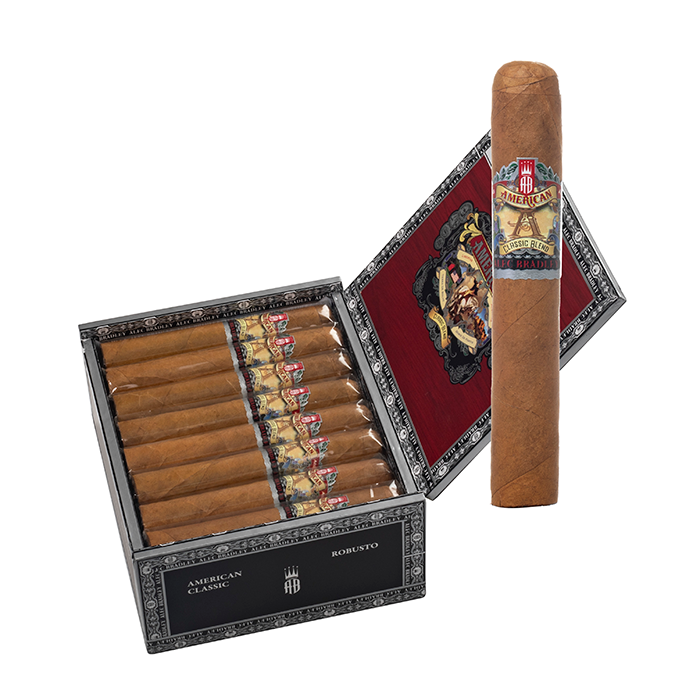
A simple blend, designed to deliver a satisfying smoke from a time when cigars were simple, balanced, and dependable. Harkening classic smokes from the early 20th century, the smoking experience can be described as an homage to old Tampa-style premium cigars, helping fulfill Alan Rubin's vision of an accessible, "American Spirit" type of smoke. Cloaked in a Honduran Connecticut seed wrapper surrounding a core of Nicaraguan filler and binder, the American Classic delivers a mellow to medium smoking experience. Expect notes of natural sweetness, toasted nuts, and subtle coffee notes.
Awarded 90 points (Torpedo) from Cigar Aficionado, the American Classic is the perfect mild cigar for beginners, but flavorful enough for more experienced smokers to enjoy.
Available Vitolas:
Robusto - 5 x 50
Corona - 5.5 x 42
Toro - 6 x 50
Gordo - 6 x 60
Torpedo - 6.12 x 52
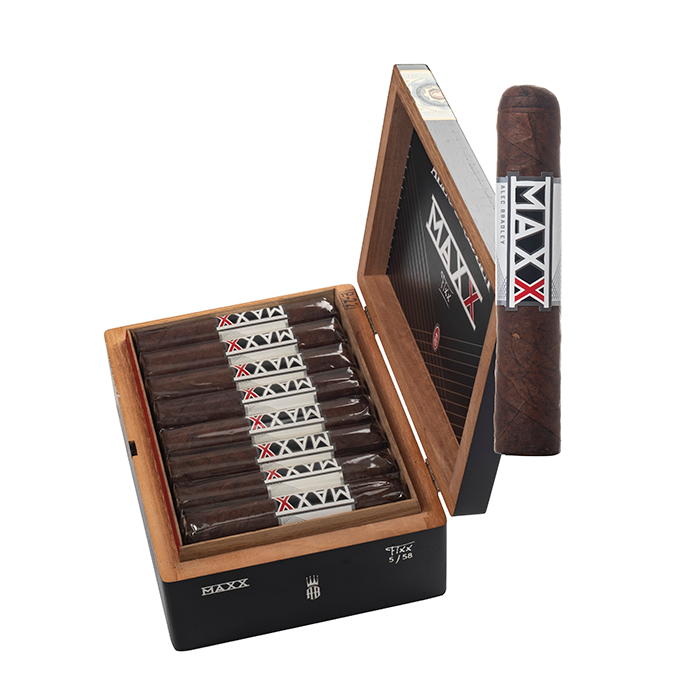
Released in 2005, the Maxx cigars were one of the plays that Alec Bradley tried after being saved by the Occidental Reserve. Alan Rubin believed the market would enjoy larger ring gauge cigars, delivering a budget-friendly blend of tobaccos from five different countries. At the time of release, Rubin was only charging $5 retail for each cigar, regardless of vitola. Although it wasn't the Tempus, the Maxx Cigars were generally well received and helped build on the momentum created by the now-defunct Trilogy cigar.
Wrapped in a Nicaraguan Habano leaf surrounding a core of Colombian, Nicaraguan, Mexican, and Honduran long-fillers bound by a Costa Rican binder, the Maxx cigars offer a medium-bodied smoking experience packed with flavors of toasted bread, earth, and natural sweetness. The Nano vitola received 91 points from Cigar Aficionado in 2020. There's a nice irony here: in a line built around big ring gauges, it's the smallest vitola that earned the highest rating.
Available Vitolas:
Nano - 4 x 46 (Petite Corona / Rothschild)
Fixx - 5 x 58 (Large Robusto)
Culture - 6 x 54 (Toro)
Freak - 6.3 x 60 (Gordo)
Super Freak - 8.5 x 60 (Gran Gordo / Giant)
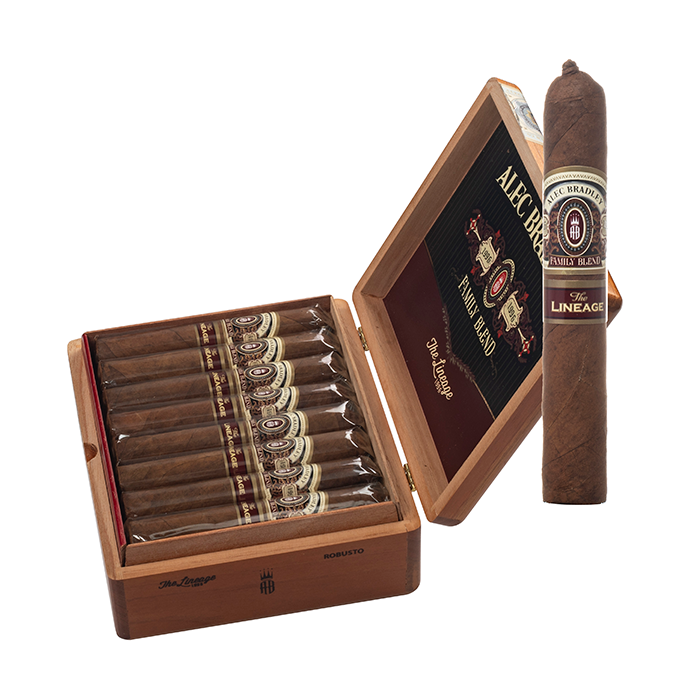
Released in 2014 to commemorate both of Alan Rubin's sons coming to (smoking) age, the Lineage cigar was a shift away from conceptual releases. Celebrating a significant family milestone by reflecting on the brand's past, these cigars are rolled by a longtime partner of the brand, the Raices Cubanas factory in Danli, Honduras.
Encasing a heart of Honduran and Nicaraguan long-filler tobacco held together by a Nicaraguan binder, wrapped in a dark and oily Honduran Trojes leaf, all vitolas within this line are finished with a signature pigtail cap, except the discontinued Torpedo. Medium-bodied in nature, the Lineage cigar produces exceptional flavors of earth, cedar, and a subtle citrus note that adds brightness to the blend.
Awarded 90 points in August 2018 by Cigar Aficionado (Robusto), the Lineage cigar is the perfect addition to the Family Blend, celebrating the sons that Alan Rubin named his company after.
Available Vitolas:
Robusto - 5.25 x 52
Toro - 6 x 54
Gordo - 6 x 60
665 - 6.5 x 65
770 - 7 x 70
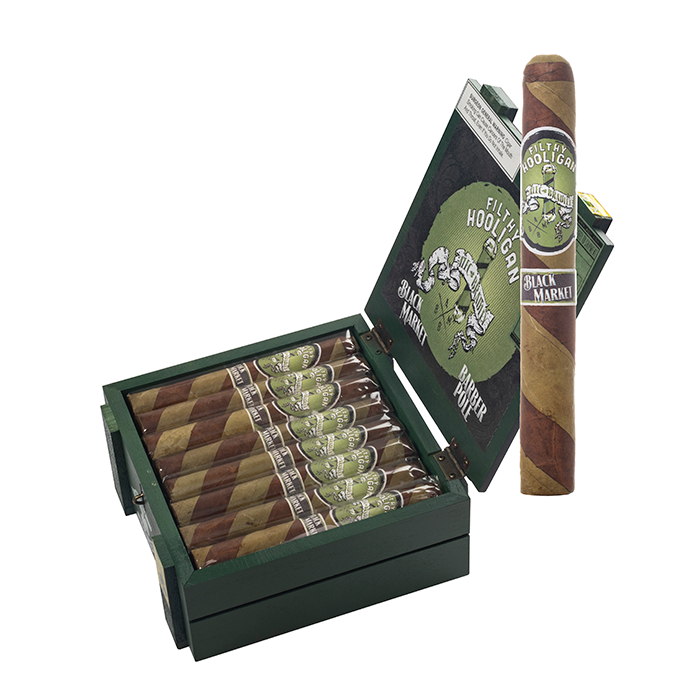
Originally released in January 2013 as a St. Patrick's Day limited release with the name "Dirty Hooligan". The Filthy Hooligan was an augmentation of the Black Market blend, changing the outermost leaf with a green candela wrapper. This was certainly an eye-catching cigar from a big brand within the cigar industry. However, weeks before the release, it caught the eye of Jonathan Drew of Drew Estate. Jonathan Drew felt the cigar's name was too close to his existing line of products, the Dirty Rat of the Liga Privada line. Notably, instead of using lawyers and legal channels to rectify the situation, he texted Alan Rubin about it with his concerns on the naming overlap. Alan Rubin, seeing his point and honoring their friendship and respect for one another, changed the name to the iconic "Filthy Hooligan" moniker that we know it to be today, even though much of the marketing material and bands already had the former "Dirty" name on them.
The Filthy Hooligan has changed since then, today the cigar pairs a candela wrapper with a dark Nicaraguan Jalapa wrapper, creating its signature barber-shop pole design. Explicitly described by Alec Bradley as a more flavorful blend with broader appeal, these changes came with new bands and green-and-black striped packaging to match the exterior wrapper.
Available Vitolas:
Toro - 6 x 50
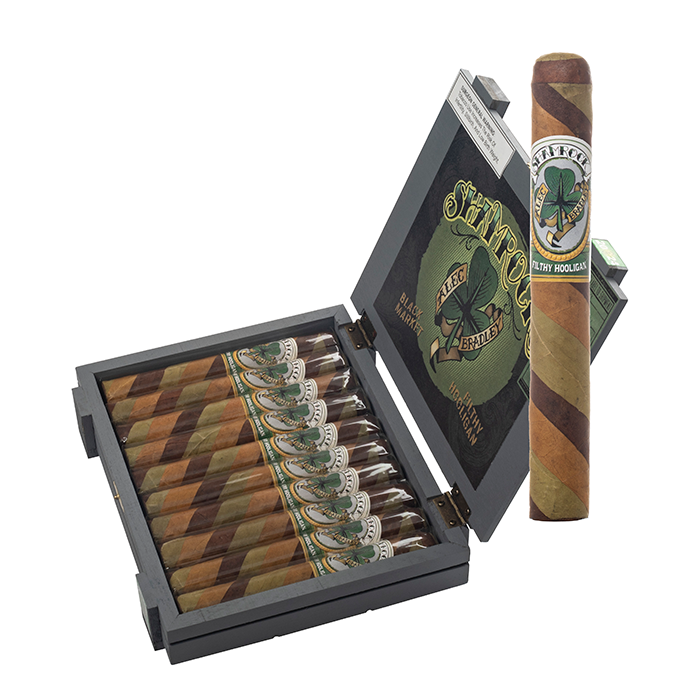
Released in 2019 as an addition to the Alec Bradley Filthy Hooligan line, the Shamrock has become a yearly release that we can look forward to. Featuring three distinct wrappers: a Honduran Candela, Nicaraguan Oscuro, and Nicaraguan Habano, this tri-wrapper cigar is eye-catching and is released yearly, welcoming in the Spring season. Offering a medium smoking experience, this triple barber pole cigar features a Sumatran binder with Honduran and Panamanian filler to deliver notes of cinnamon, toasted nuts, and measured pepper for a lively and structured smoke.
Rolled in Plasencia's Tabacos de Oriente in Honduras, the Shamrock's three wrappers come together seamlessly,a testament to the skill of Plasencia's torcedors and precision their craft demands.
Available Vitolas:
Toro - 6 x 50
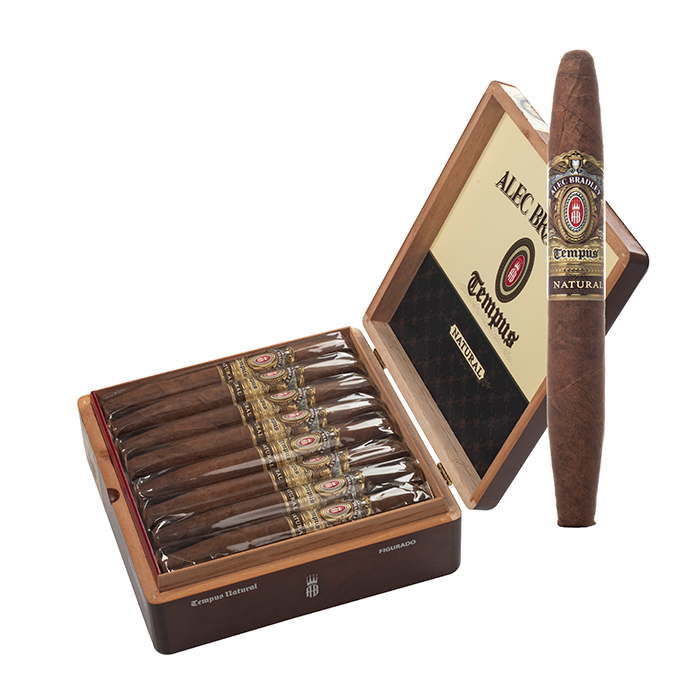
Released in 2008, the Tempus Natural is what catapulted Alec Bradley from "good value smokes" to "serious award-winning blends". Moving away from the mild to medium blends, like the Trilogy and Maxx that helped build their name and credibility, Alan Rubin was set on creating a full-bodied smoke. With a core of Honduran and Nicaraguan fillers surrounded by a dual binder of Honduran and Sumatran tobaccos, Rubin found his centerpiece in a Colorado-red Honduran Trojes wrapper that spoke to him. Showcased front and center, the wrapper delivers exquisite notes of wood, nuts, and subtle natural sweetness, balancing the full-bodied expression of the tobacco.
Originally scoring 91 points from Cigar Aficionado in 2008, the Tempus received a #25 spot for the Tempus Centuria, a churchill measuring 7 x 49. Then in 2017, the Tempus Natural took the #5 position award, receiving 94 points.
Available Vitolas:
Robusto - 5 x 50 (Terra Novo)
Corona - 5.5 x 42 (Genesis)
Toro - 6 x 52 (Medius)
Gordo - 6 x 60 (Magnus)
Torpedo - 6.12 x 52 (Imperator)
Figurado - 6.75 x 54 (Magistri)
Churchill - 7 x 49 (Centuria)
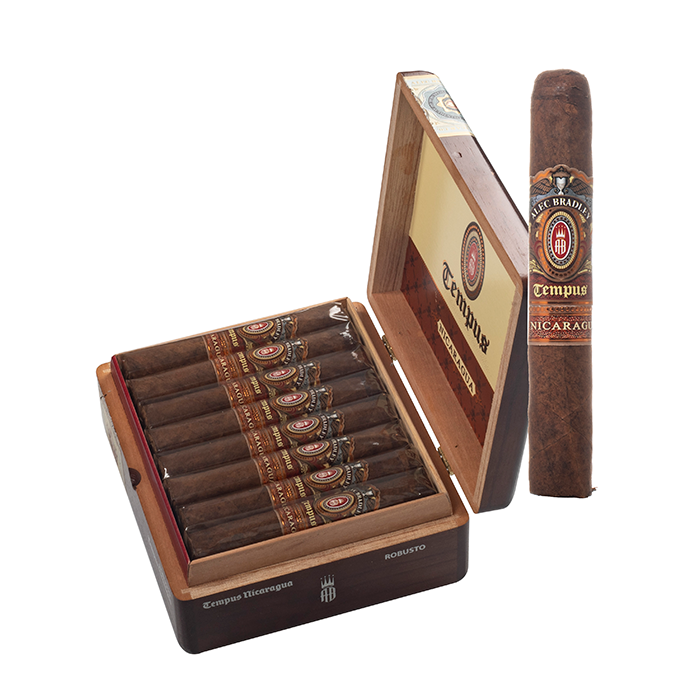
Nicaraguan tobacco is well known for its strength, but Alec Bradley set out to prove it could deliver more than just raw power. Building off the success of the Tempus Natural, Alec Bradley traded out the Honduran and Sumatran elements of the cigar for an all-Nicaraguan cast in the wrapper, binder, and filler departments. This Nicaraguan puro truly showcases the country's tobacco with complexity and nuance. The resulting Tempus is one that steps forward with balance and flavor, instead of pure rugged power.
Receiving a 90 point review from Cigar Aficionado in 2017, the Tempus Nicaragua settles into notes of earthy minerality, warm baking spice, and the signature Nicaraguan black pepper note, all building within the smoking experience, adding a crescendoing intensity without becoming overpowering.
Available Vitolas:
Robusto - 5 x 50 (Terra Novo)
Toro - 6 x 52 (Medius)
Gordo - 6 x 60 (Magnus)
Torpedo - 6.12 (Imperator)
Churchill - 7 x 49 (Centuria)
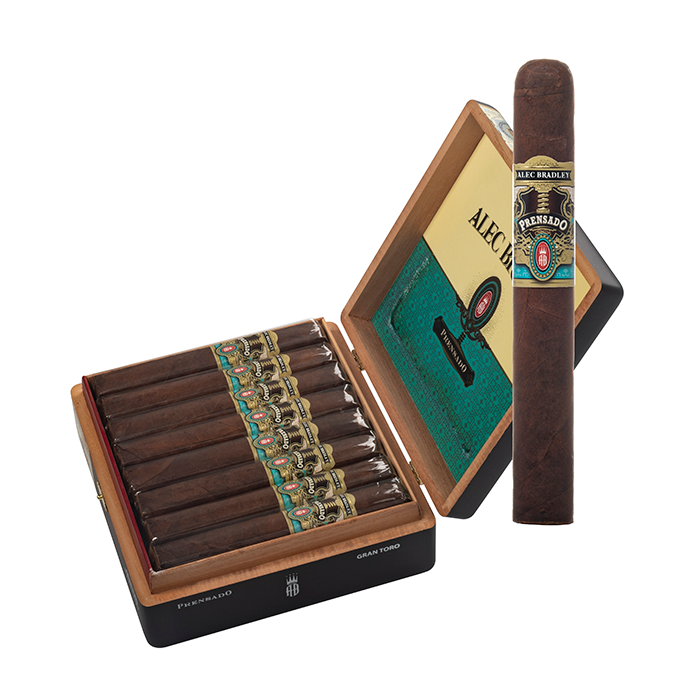
Created as a tribute to Old-World cigar making traditions, the Prensado is made at the Raices Cubanas factory. Built with intention, patience, and respect for the craft, the Prensado scored a lofty 96 points, taking Cigar Aficionado's #1 Cigar of the Year (2011) and a #8 finish in 2023's Cigar of the Year rankings, this time taking home 95 points. Made using a triple cap and the Cuban entubado method for bunching, the Prensado features a smooth draw, flawless construction, and immaculate function. This high-scoring cigar is surely deserving of its awards, offering notes of leather, chocolate, and spice throughout the cigar. Delivering a medium to full-bodied smoking experience, the Honduran wrapper, Nicaraguan binder, and a blend of Honduran and Nicaraguan filler tobaccos create a splash of deliciousness.
Available Vitolas:
Robusto - 5 x 50
Corona Gorda - 5.625 x 46
Gran Toro - 6 x 54
Double Toro - 6 x 62
Torpedo - 6.12 x 52
Churchill - 7 x 48
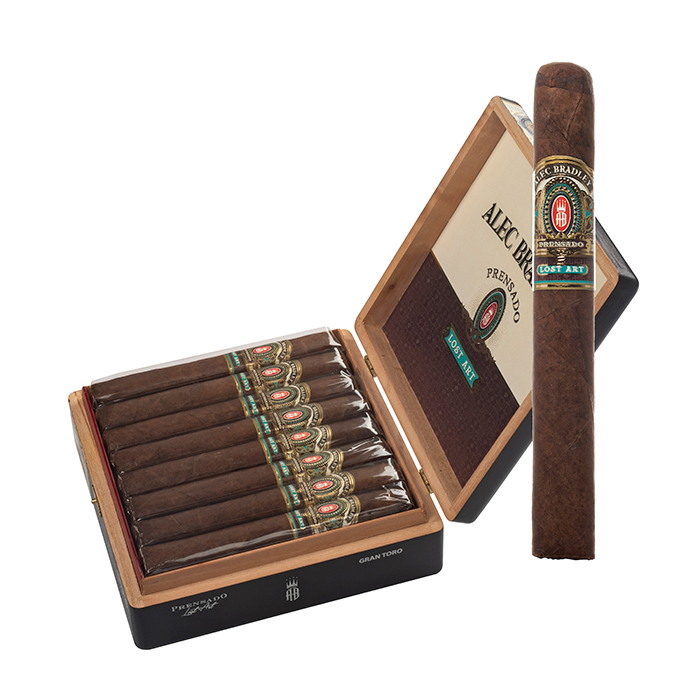
Debuting in limited quantities in 2016 before formally launching in 2017, the Prensado Lost Art still pays tribute to Old-World cigar-making traditions, carrying over the entubado bunching, triple cap, and semi-pressed finish from its predecessor. A Honduran Corojo wrapper encases a core of Honduran and Nicaraguan long-fillers. The main change lies in the binder: where the original Prensado relies on a single Nicaraguan Jalapa leaf, the Lost Art steps it up with a dual binder blending Honduran and Nicaraguan tobacco. It's less a reformulation of the blend and more a refinement of it. The result is a medium to full-bodied smoking experience that offers up notes of espresso, leather, and pepper to create a unparalleled smoking experience.
Earning a respectable 91 points from Cigar Aficionado for the Torpedo (Feb 2018) and Churchill (Feb 2019) vitolas, the Prensado Lost Art is a great cigar that showcases both Alec Bradley's blending prowess and the immaculate construction quality by Raices Cubanas.
Available Vitolas:
Robusto - 5 x 52
Gran Toro - 6.25 x 52
Churchill - 7 x 50
Torpedo - 6.5 x 52
Double T - 6 x 60
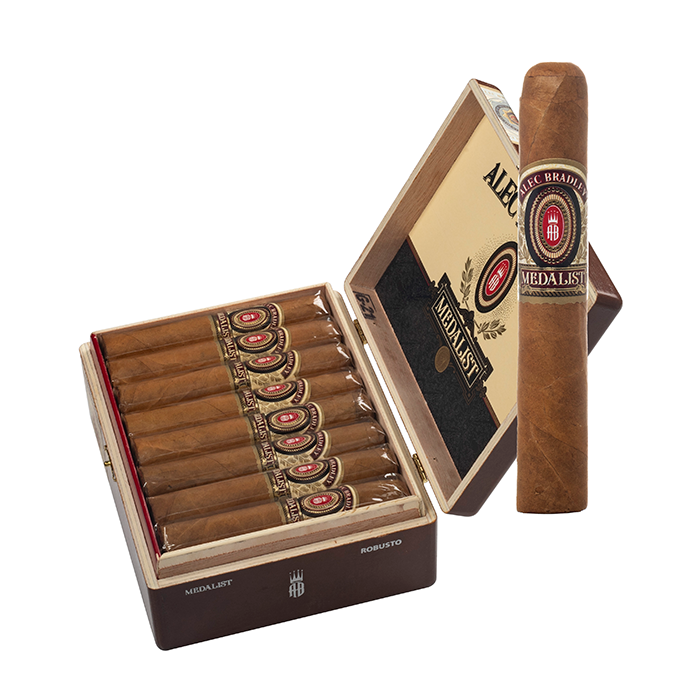
Medalist was originally a mild and affordable cigar that Alan Rubin tried to market in the 1990s, before any of the success from the Black Market, Maxx, Tempus, or Prensado cigars. Then in 2018, the cigar was rebooted to remind people of the company's past, trying to gain market share from milder cigar smokers who usually avoided Alec Bradley as they were more known for their full-bodied cigars. With this strong callback to Rubin's roots and a market widening play to expand their reputation that felt like it was set on strength and intensity, the Medalist was to be known as a mild but refined cigar.
Made with a Honduran shade-grown wrapper, Honduran binder, and filler hailing from Honduras and Nicaragua, this crowd-pleasing cigar carries the classic cream and cedar notes that many mild-cigar smokers tend to enjoy. It's rolled at Tabacos de Oriente S.A., a Plasencia-owned factory that has made Medalist since the line's original 1990s debut.
Available Vitolas:
Robusto - 5 x 52
Toro - 6 x 54
Gordo - 6 x 60
Churchill - 7 x 50
Released in 2024 to celebrate Halloween, the Filthy Ghooligan is a departure from the Filthy Hooligan cigar, maintaining only the name, size, and barbershop pole aesthetic. With an overhaul of the wrapper, binder, and filler, this is the first concept that branched from its standard St. Patricks Day / Spring release and is essentially a new cigar, rather than a spin-off that builds on the blend.
With notes of cocoa, pepper, and earth, the Filthy Ghooligan is perfect for those that want something darker or spicier. A more intense take on the Hooligan tradition, the Filthy Ghooligan delivers a medium to full smoking experience. With filler consisting of Nicaraguan Condega, Nicaraguan Esteli, Nicaraguan Jalapa, and Dominican Piloto tobaccos encased by an Indonesian Besuki binder, the Filthy Ghooligan uses a US Broadleaf and Ecuadorean Habano wrapper for the signature barbershop pole design.
Available Vitolas:
Toro - 6 x 50
Released in 2024, Alec Bradley Safe Keepings began as an unreleased recipe preserved in Alan Rubin’s blend book, which STG acquired when it purchased the Alec Bradley cigar business. After reviewing the archives, Bradley Rubin and the team selected the blend to bring into production. Made at Oliva’s TABOLISA factory in Estelí, Nicaragua, Safe Keepings is a Nicaraguan puro featuring a Nicaraguan Habano wrapper and binder around fillers from Jalapa, Condega, and Estelí, with Criollo ’98 tobacco included in the blend.
Emphasizing pepper, layered spice, and cocoa, Safe Keepings delivers a medium-to-full-bodied profile. It also marks the first Alec Bradley cigar produced by Oliva, introducing a new manufacturing relationship while drawing from the brand’s past. That fuller body should not be confused with overwhelming nicotine strength: published tastings have generally placed its strength in the medium range.
Available Vitolas:
Corona - 5.625 x 46
Robusto - 5 x 52
Toro - 6 x 52
Gordo - 6 x 60
Marking the brand's 30th anniversary, the Alec Bradley Thirty Years is made with a Honduran Trojes wrapper, dual Honduran Jamastran and Nicaraguan Jalapa binder, and a filler blend of Nicaraugan Esteli and Jalapa with Honduran Jamastran and Trojes. Made in the Raices Cubanas in Honduras, one of their long-time manufacturers, showcasing the brand coming full circle, as the Thirty Years cigar continues that relationship.
Delivering notes of leather, toast, pepper, and cinnamon, the Alec Bradley Thirty Years cigar is described as a medium to full-bodied. Created in collaboration by the three Rubins, Alec and Bradley originally developed the blend over several months with Alan sampling the various blends until they all agreed on the final recipe.
Available Vitolas:
Robusto - 5 x 52
Toro - 6 x 54
Gordo - 6 x 60
Perfecto - 6.75 x 54
A regular production released in 2025, the Do Not Disturb (DND) is a exploration of the brand's milder side. Made in the Dominican Republic, the DND cigar combines an Ecuadorian Connecticut wrapper, Dominican Criollo binder, and filler made of Dominican Piloto and Mexican ligero. Offering a mellow to medium profile, the tasting notes of earth, cedar, herbs, and grass, gently moving away from the standard cedar and creamy flavors of most Connecticut wrapped cigars. Awarded 88 points by CIgar Aficionado, this cigar is like a fortified Connecticut cigar thanks to the ligero tobaccos inside.
Available Vitolas:
Robusto - 5 x 50
Toro - 6 x 52
Gordo - 6 x 60
From a cabinet salesman's gamble in 1996 to a brand with a Cigar of the Year title under its belt, Alec Bradley's story is written into every blend in this guide. MAXX bet big on ring gauge when the market said go small. Tempus proved the brand could chase full-bodied complexity and win. Prensado took that promise all the way to the top. And along the way, Alan Rubin never lost sight of where he started: Medalist calls back to the mild, approachable cigars that first put Alec Bradley on the map, while Lineage ties the whole journey back to family, the reason the company carries its name in the first place.
Whether you're after something playful and limited (Filthy Hooligan, Shamrock), something steeped in tradition (Prensado, Lost Art), or something built to prove a point (Project 40, Tempus Nicaragua), Alec Bradley's catalog reflects a company that's never stopped experimenting and never forgot why it started. Pick a blend, light it up, and taste nearly three decades of risk, reinvention, and respect for the craft.
Alan Rubin founded Alec Bradley in 1996 and named the company after his sons, Alec and Bradley Rubin. The brand entered the market near the end of the American cigar boom and eventually gained recognition through lines including Tempus, Prensado, and Black Market.
Alec Bradley is the brand founded by Alan Rubin. Alec & Bradley is the separate brand created by his sons, Alec and Bradley Rubin. The brands share a family connection, but releases such as Gatekeeper, Kintsugi, and Blind Faith belong to the Alec & Bradley banner.
Scandinavian Tobacco Group, also known as STG, acquired the Alec Bradley cigar business in 2023 in a deal valued at $72.5 million. The acquisition brought the brand portfolio and its blends into STG’s business after nearly three decades under the Rubin family.
Occidental Reserve helped keep Alec Bradley in business after its early releases struggled. Alan Rubin and Ralph Montero worked with cigar maker Henke Kelner to produce the line in the Dominican Republic. A sample mailing campaign brought in retail accounts, and recurring orders helped stabilize the company.
Alec Bradley cigars are produced by different factory partners, so the country of manufacture depends on the line. Prensado and Magic Toast are made at Raíces Cubanas in Honduras, while Black Market Estelí is made in Nicaragua. Alec & Bradley Gatekeeper is produced at Ernesto Perez-Carrillo’s Tabacalera La Alianza factory in the Dominican Republic.
The Alec Bradley Prensado Churchill earned a 96-point rating and was named Cigar Aficionado’s 2011 Cigar of the Year. That award was a major turning point for the brand. Prensado combines a Honduran wrapper, a Nicaraguan binder, and Honduran and Nicaraguan filler tobaccos.
Original Black Market uses a Nicaraguan wrapper, a Sumatran-seed binder, and Honduran and Panamanian fillers. Black Market Estelí uses a Nicaraguan wrapper, Honduran and Nicaraguan binders, and Nicaraguan filler. Estelí shifts the blend toward Nicaraguan tobacco, with leather, pepper, and cocoa notes, while the original includes the distinctive Panamanian leaf.
Prensado uses a Honduran wrapper, a Nicaraguan binder, and Honduran and Nicaraguan fillers. Prensado Lost Art uses a Honduran Corojo wrapper and adds a dual binder of Honduran and Nicaraguan tobacco around Honduran and Nicaraguan fillers. Both are medium to full in body; the guide describes Prensado with leather, chocolate, and spice, and Lost Art with espresso, leather, and pepper.
Project 40 uses a Nicaraguan Colorado wrapper over a Brazilian Habano binder and Nicaraguan filler. Project 40 Maduro changes the wrapper to Mexican San Andrés while retaining the same binder and filler origins. The guide describes Project 40 with spice, chocolate, and nut notes, and the Maduro version with coffee, cocoa, and earth.
Modern Filthy Hooligan features a two-leaf barber pole wrapper that combines green candela with darker Nicaraguan leaf. Shamrock uses three wrapper leaves: Honduran Candela, Nicaraguan Oscuro, and Nicaraguan Habano. Filthy Ghooligan is a Halloween release with U.S. Broadleaf and Ecuadorian Habano wrappers and a different binder and filler blend. Hooligan and Shamrock are associated with spring and St. Patrick’s Day releases.
No. The Alec Bradley portfolio includes different body levels. American Classic is mellow to medium, Medalist is mild, and Prensado and Black Market are medium to full. Alec & Bradley Gatekeeper and Kintsugi provide medium-bodied examples within the related brand. Body and flavor intensity vary by blend and are not precise measurements of nicotine content.
Kintsugi is named after the Japanese art of repairing broken pottery with precious-metal accents that highlight its history. The cigar uses a Honduran Trojes wrapper, Honduran and Nicaraguan binders, and fillers from both countries. Its tasting profile includes cinnamon, espresso, and hazelnut.
0 Comment
Brandon is an eclectic creative into modified cars, cigars, and sneakers, with a background in cannabis culture as a strain reviewer. Off the clock, he’s usually at a hole-in-the-wall spot you haven’t discovered yet, ordering more than he should.
Latest