WARNING: This product contains nicotine. Nicotine is an addictive chemical.


NEWSLETTER
Get special offers and find out what's new in the store. Sign up for the EV newsletter.WARNING: This product contains nicotine. Nicotine is an addictive chemical.
NEWSLETTER
Get special offers and find out what's new in the store. Sign up for the EV newsletter.Posted: August 30, 2026

Inspired by the lingering sweetness Rocky Patel remembers from classic Cuban cigars, Sapphire was more than a year in the making. Rocky and his team worked through more than 100 trial blends, digging into an inventory of aged tobaccos that stretches as far back as the 2014 crop.
With much to say about this blend, the Rocky Patel Sapphire represents more than just a meticulously developed cigar. Beneath its Mexican San Andrés wrapper, every tobacco used in the construction of Sapphire comes from Rocky Patel's own farms. Among them is a Honduran leaf from the Jamastran Valley, marking the first time tobacco grown on Rocky Patel's own Honduran farm has been used in one of the company's production blends.
It's a significant milestone for Rocky Patel, whose long tenure in the cigar industry began with other companies producing his cigars. Over the decades, Rocky Patel has gradually taken greater control over manufacturing, fermentation, tobacco cultivation, and other stages of production. The addition of its Jamastran farm continues that push toward vertical integration, falling in line with comments Rocky made as early as 2020 about expanding the company's tobacco-growing operations and gaining greater control over production from seed to smoke.
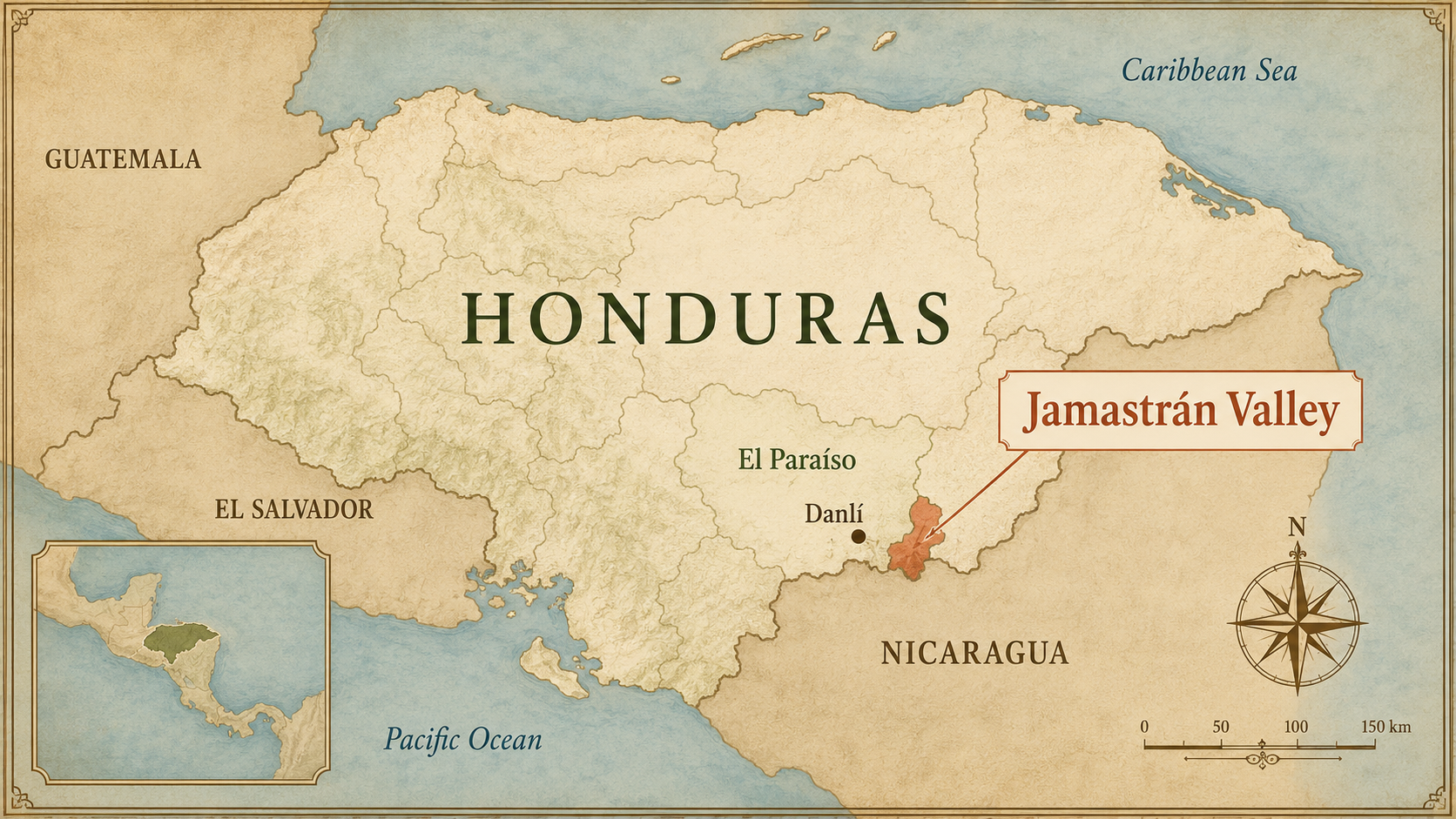
Rocky Patel has a longstanding relationship with the Plasencia family, one of Central America's largest tobacco growers and cigar manufacturers. In fact, Rocky Patel's roots in Honduras stretch back to the company's earliest years, when its cigars were produced through Plasencia's Honduran operations.
While Rocky Patel has never directly attributed its push toward vertical integration to the Plasencia family, it's not hard to imagine that the relationship left an impression. As a fledgling cigar company, Rocky Patel had a front-row seat to an operation capable of growing and processing its own tobacco while manufacturing cigars at an enormous scale. Seeing firsthand the control and access that came with an operation like Plasencia may have planted an early seed for what Rocky Patel would eventually build for itself.
Over the following decades, Rocky Patel expanded its own manufacturing and tobacco-growing operations, particularly in Nicaragua. Establishing a farm in Honduras represents another step in that progression, giving the company greater control over its access to Honduran tobacco.
There is also a practical reason for operating on both sides of the Honduras-Nicaragua border. Rocky Patel has previously explained that maintaining operations in both countries provides a degree of redundancy should political instability or other disruptions affect production in either one. As early as 2020, Rocky was publicly discussing plans to grow tobacco in Jamastran as part of the company's continued expansion.
Sapphire brings that plan into the blend itself. While Rocky Patel has used Jamastran tobacco for years, Sapphire marks the first time tobacco grown on the company's own Honduran farm has appeared in one of its production blends.
Creating the Sapphire blend was no easy feat. Its fillers draw from Rocky Patel's farms in Estelí, Jalapa, and Condega, encompassing the three major growing regions at the heart of Nicaragua's premium tobacco industry. Those fillers are held together by two binders, one from Estelí and the other from the company's Jamastran farm in Honduras.
This gives Sapphire an interesting distinction: geographic diversity without sacrificing vertical integration. Beneath the externally sourced Mexican San Andrés wrapper, Rocky Patel draws from its own farms across four tobacco-growing regions in two countries before bringing those tobaccos together at the company's TAVICUSA factory in Estelí.
Having access to multiple growing regions gives Rocky Patel a broader palette of tobaccos grown under different soils, climates, and conditions, while ownership of those farms provides greater control over cultivation, processing, and access to that tobacco. Sapphire can therefore combine the characteristics of several distinct terroirs without relying on several independent growers to assemble its interior blend.
That level of control is particularly relevant to what Rocky was trying to accomplish with Sapphire. Nicaraguan and Honduran tobaccos can provide considerable strength and depth, but the objective here was to balance those characteristics with the lingering sweetness Rocky remembers from classic Cuban cigars. More than 100 trial blends were ultimately required before the team settled on the final composition.
The result is a geographically diverse cigar spanning three countries: a Mexican San Andrés wrapper over Rocky Patel-grown binders and fillers from Estelí, Jalapa, Condega, and Jamastran, all brought together at TAVICUSA in Nicaragua.
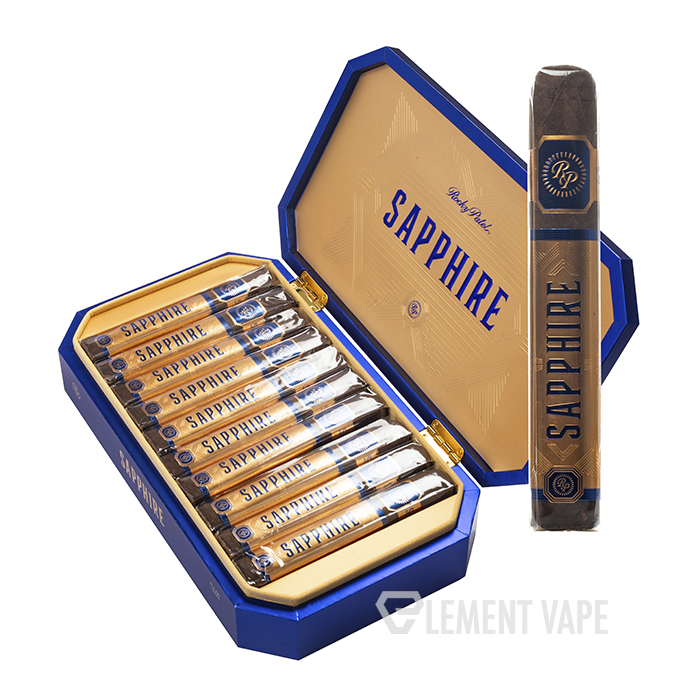
All of the Rocky Patel Sapphire vitolas are box-pressed, with four different sizes available to experience the blend across a range of lengths and ring gauges. Each comes presented in a polished blue box with large beveled edges reminiscent of a cut gemstone, carrying the Sapphire theme beyond the cigar itself.
| Vitola | Size |
|---|---|
| Rocky Patel Sapphire Corona Gorda | 6 x 46 |
| Rocky Patel Sapphire Robusto | 5½ x 50 |
| Rocky Patel Sapphire Toro | 6½ x 52 |
| Rocky Patel Sapphire Sixty | 6 x 60 |
While each Sapphire vitola uses the same blend, the range of ring gauges gives smokers several ways to experience it. The Corona Gorda and Sixty offer the greatest contrast, ranging from a slender 46 ring gauge to a substantial 60. The Corona Gorda's narrower proportions provide a more wrapper-forward expression of the blend, while the Sixty allows the larger filler bunch to play a greater role in the overall experience.
Sitting between those two extremes are the Robusto and Toro. At 5½ x 50 and 6½ x 52 respectively, they offer similar proportions, with the Toro adding an inch of length and a slightly larger ring gauge for those looking for a longer smoking experience.
For a deeper look at why these dimensions can matter even when the tobacco blend remains the same, check out Thin vs. Thick Cigars: How Ring Gauge Affects Flavor.
According to Rocky Patel's website, the Sapphire comes in at a Medium rating. However, Rocky himself has described the cigar as being "on the fuller side of medium," as reported by Thomas Pappalardo of Cigar Aficionado.
While still falling within the medium range, Sapphire appears to sit toward its richer, more substantial end rather than presenting itself as an outright powerhouse, as Nicaraguan-dominant blends often can. In that sense, Sapphire showcases the ability of Nicaraguan tobacco to deliver not just strength and intensity, but elegance and refinement.
Rocky Patel's own website highlights notes of coffee bean, espresso, caramel, sweet spice, and hints of chocolate. With the blend aiming to recreate the lingering sweetness Rocky remembered from Cuban cigars roughly 20 years ago, that sweetness ultimately became one of the defining characteristics of the Sapphire.
With its combination of coffee, caramel, chocolate, and lingering sweetness, Sapphire lends itself particularly well to an after-dinner or dessert cigar. For myself, I feel those coffee and espresso notes could also make it an interesting pairing with a morning cup of coffee, although since its on the fuller side of medium strength making it a more substantial morning smoke than traditionally milder options.
The Rocky Patel Sapphire is more than another addition to an already expansive portfolio. From more than 100 trial blends to the debut of tobacco grown on Rocky Patel's own Jamastran farm, the RP Sapphire represents several chapters of the company's evolution coming together in a single cigar.
What began as an attempt to capture the lingering sweetness Rocky remembered from Cuban cigars decades ago ultimately became a showcase of how far the company has come. With access to its own tobacco across Nicaragua and Honduras, greater control over production, and decades of blending experience behind it, Sapphire offers a glimpse at what the modern Rocky Patel operation is capable of producing.
Hopefully, this isn't the last of these types of releases from Rocky Patel. With Gold Label, Emerald, and Sapphire already in the lineup, there's only one logical next step: Ruby. Give us retailers that final piece and we can finally put together the Wizard of Oz sampler pack, with Gold Label for the Yellow Brick Road, Emerald for the Emerald City, Sapphire for Dorothy's blue dress, and Ruby for her iconic slippers.
If you really enjoyed reading about the Sapphire cigars, learn more about the rest of Rocky Patel's offerings in our Ultimate Guide to Rocky Patel Cigars.
Rocky Patel Sapphire is a box-pressed, medium-strength cigar introduced in 2026. It follows Rocky Patel Gold Label and Emerald as the third release in the brand's unofficial series inspired by precious metals and gemstones.
Rocky Patel Sapphire features a Mexican San Andrés wrapper over dual binders from Estelí, Nicaragua, and the Jamastrán Valley of Honduras. Its Nicaraguan filler tobaccos come from the growing regions of Estelí, Jalapa, and Condega.
Rocky Patel officially rates Sapphire as a medium-strength cigar, although Rocky has described it as sitting on the fuller side of medium. It offers substantial flavor and depth without presenting itself as an outright Nicaraguan powerhouse.
Rocky Patel highlights notes of coffee bean, espresso, caramel, sweet spice, and hints of chocolate. The blend is especially defined by its smooth profile and lingering natural sweetness.
Rocky Patel Sapphire is available in four box-pressed sizes: Corona Gorda at 6 x 46, Robusto at 5 1/2 x 50, Toro at 6 1/2 x 52, and Sixty at 6 x 60.
Sapphire took more than a year and over 100 blend variations to develop. Rocky Patel's team used carefully aged tobacco, including leaves grown as far back as 2014, while pursuing the lingering sweetness Rocky remembered from older Cuban cigars.
No. Rocky Patel Sapphire is made in Nicaragua using tobacco from Mexico, Nicaragua, and Honduras. Its profile was inspired by the lingering sweetness associated with older Cuban cigars, but it does not contain Cuban tobacco.
0 Comment
Brandon is an eclectic creative into modified cars, cigars, and sneakers, with a background in cannabis culture as a strain reviewer. Off the clock, he’s usually at a hole-in-the-wall spot you haven’t discovered yet, ordering more than he should.
Latest