WARNING: This product contains nicotine. Nicotine is an addictive chemical.


NEWSLETTER
Get special offers and find out what's new in the store. Sign up for the EV newsletter.WARNING: This product contains nicotine. Nicotine is an addictive chemical.
NEWSLETTER
Get special offers and find out what's new in the store. Sign up for the EV newsletter.Posted: October 20, 2026

When you walk into any dispensary looking for flower the conversation almost writes itself. If you’re in the market for energy and mental clarity, the budtender reaches for a sativa. But if you want to decompress and melt into the couch, the budtender steers you toward an indica. And somewhere in between, there's always a hybrid waiting. Budtenders have been running this playbook for years, and most consumers have gone right along with it because on the surface it feels intuitive.
The problem is that the science doesn't really back it up. The indica/sativa/hybrid schema was never meant to describe how cannabis makes you feel. It was a botanical classification system, originally introduced by Carl Linnaeus in the 18th century to distinguish cannabis plants by their physical traits. Somewhere along the way those botanical labels got repackaged as experience descriptors, and that shift is at the root of a lot of consumer confusion today.
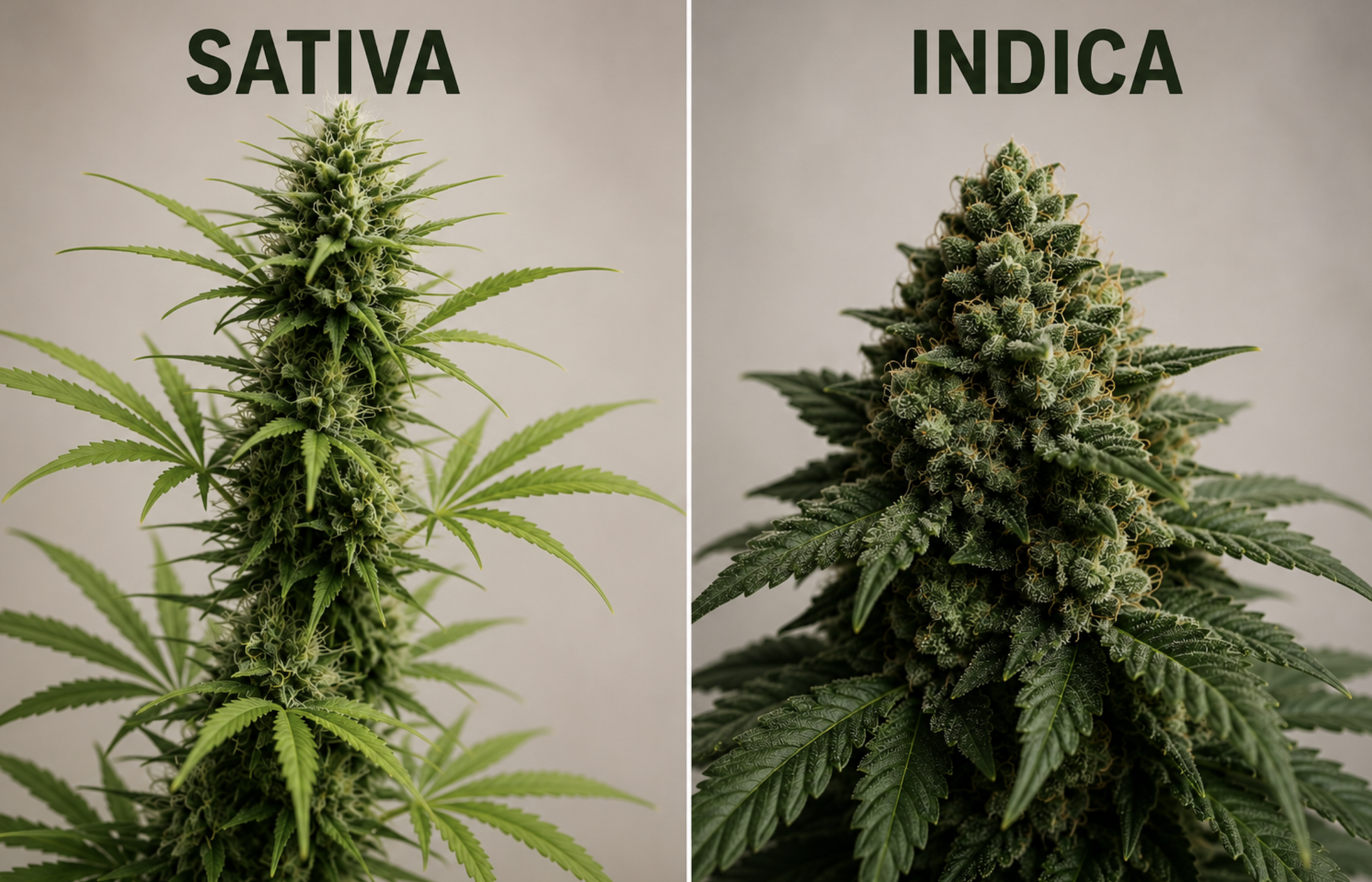
The indica plant is short, bushy, and originates from Afghanistan, while the sativa plant features narrow leaves and a tall, slender frame with roots tracing back to India which are distinctions that, according to McPartland's research, speak to botany far more than they speak to the experience of the consumer.
The sativa and indica distinction doesn't hold up much better on the pharmacological side either. Terpenes, the organic compounds responsible for a plant's aroma and flavor, are what actually drive the effects consumers experience after smoking, at least according to Dr. Ethan Russo, a board-certified neurologist and psychopharmacology researcher serving as Medical Director of PHYTECS.
In a conversation with cannabis researcher Daniele Piomelli published in the National Library of Medicine, Russo argued that decades of crossbreeding and hybridization have made it impossible to predict how a plant will affect you based on its physical appearance alone, and that the real story lies in a strain's terpene profile.
A smoking experience is shaped by far more than just THC percentage. The overall effect, whether calming, energizing, euphoric, or deeply relaxing, is largely determined by the interaction between terpenes and cannabinoids working together within the plant.
Terpenes are aromatic compounds found in the trichomes, or resin glands, of cannabis. In nature, they help protect the plant from harsh weather, predators, and insects. For humans, however, terpenes do much more than create flavor and aroma; they also influence mood, perception, and the overall psychoactive experience.
The body naturally produces its own cannabinoids, called endocannabinoids, which help regulate internal balance and functions like mood, stress, sleep, and appetite. Phytocannabinoids from cannabis mimic and interact with this same system, creating a wide range of effects depending on the specific chemical composition of the plant. Terpenes interact closely with cannabinoids such as THC and CBD through what is known as the entourage effect.
The entourage effect refers to the synergy between cannabinoids, terpenes, and other compounds like flavonoids. Rather than acting independently, these compounds amplify and shape one another’s effects, creating a more balanced and full-spectrum experience than isolated cannabinoids alone. This is also why the same strain can feel different depending on the grower, cultivation methods, curing process, or even the individual consuming it because the chemical balance is never exactly the same.
Researchers have suggested that this interaction may have implications beyond recreation. As noted by Sari Goldstein Ferber and colleagues in research published through the National Library of Medicine, the entourage effect may help explain the therapeutic potential of cannabis-derived compounds in treating conditions such as anxiety, depression, and other mood disorders. Their findings point toward the possibility that naturally occurring cannabinoid and terpene combinations could eventually contribute to the development of new psychiatric medications.
If terpenes are what actually shape the experience, then learning how to read a terpene profile becomes far more useful than relying on the indica, sativa, or hybrid label alone. The next time you're shopping for flower, don't stop at the category printed on the jar. Take a closer look at the terpene breakdown. Understanding which compounds are present can give you a much clearer idea of how a strain might actually feel once consumed. Here are a few of the most common terpenes worth knowing:
What this means practically is that you should stop basing your purchasing decisions solely on whether a strain is labeled indica, sativa, or hybrid. A more informed starting point is looking at the actual cannabinoid ratios. A large reason people associate sativa with high energy is that those products tend to be high in THC and low in CBD, while indica products are generally more balanced between the two. When you can, look at the ratios so you know what you're actually getting into rather than taking a label at face value.
If a full breakdown isn't available, pay close attention to the cannabinoid profile, terpene profile, and the consumption method. The same strain in an edible and in a jar of flower will hit differently because of how your body processes each one, so the medium matters just as much as the strain itself. Finding what works for you is somewhat of a trial and error process, but the key is paying attention to the lab data and ingredients rather than the category label on the front of the package.
One of the most underused tools available to consumers, especially when shopping online, is the Certificate of Analysis, commonly called a COA. Most reputable hemp brands publish these on their websites, and a COA breaks down the exact chemical composition of a product including its cannabinoid and terpene content. This is exactly the kind of biochemical data that Dr. Russo argues should be standard across both medical and recreational markets, because it gives consumers access to the information that actually predicts how a product will affect them. If you can't have a conversation with a budtender in person, a COA is the next best thing.
Indica, sativa, and hybrid are not useless terms, and for newer consumers they serve as a reasonable entry point into a pretty overwhelming product landscape. But they are not the full picture, and treating them as gospel has been misleading consumers for a long time. An indica product doesn't guarantee a body high, and a sativa doesn't guarantee energy. The chemical profile is what tells that story, and that information is available to you if you know where to look.
The biggest takeaway is to sample different products, take notes on how your body responds, and use that information to build a clearer picture of what works for you. Next time you're at the dispensary, ask your budtender about the terpenes and cannabinoids in what you're considering instead of just pointing at a category. And if you're shopping online, pull up the COA before you add anything to your cart.
At the end of the day the best strain for you is the one that works for you, and the only way to find that out is through dedicated, rigorous, and very enjoyable personal research. You're welcome for the excuse.
Ready to find the terpenes and cannabinoids right for you?
Check out our vast collection of hemp on Element Vape.
0 Comment
Latest

